Beyond the Fairway: The Unregulated Rise of Golf Carts on American Streets and Its Hidden Costs
A quiet but significant shift is occurring across US municipalities as more cities permit golf carts on public roads, often despite the vehicles not meeting standard street-legal requirements. This article moves beyond the surface-level novelty to analyze the deeper economic and regulatory patterns driving this trend. We examine the hidden logic behind local governments' decisions, the potential long-term impacts on urban infrastructure, public safety, and the automotive market, and question whether this represents a pragmatic adaptation to community needs or a risky regulatory loophole. The analysis positions this trend within broader conversations about micromobility, aging populations, and the fragmentation of US transportation policy.
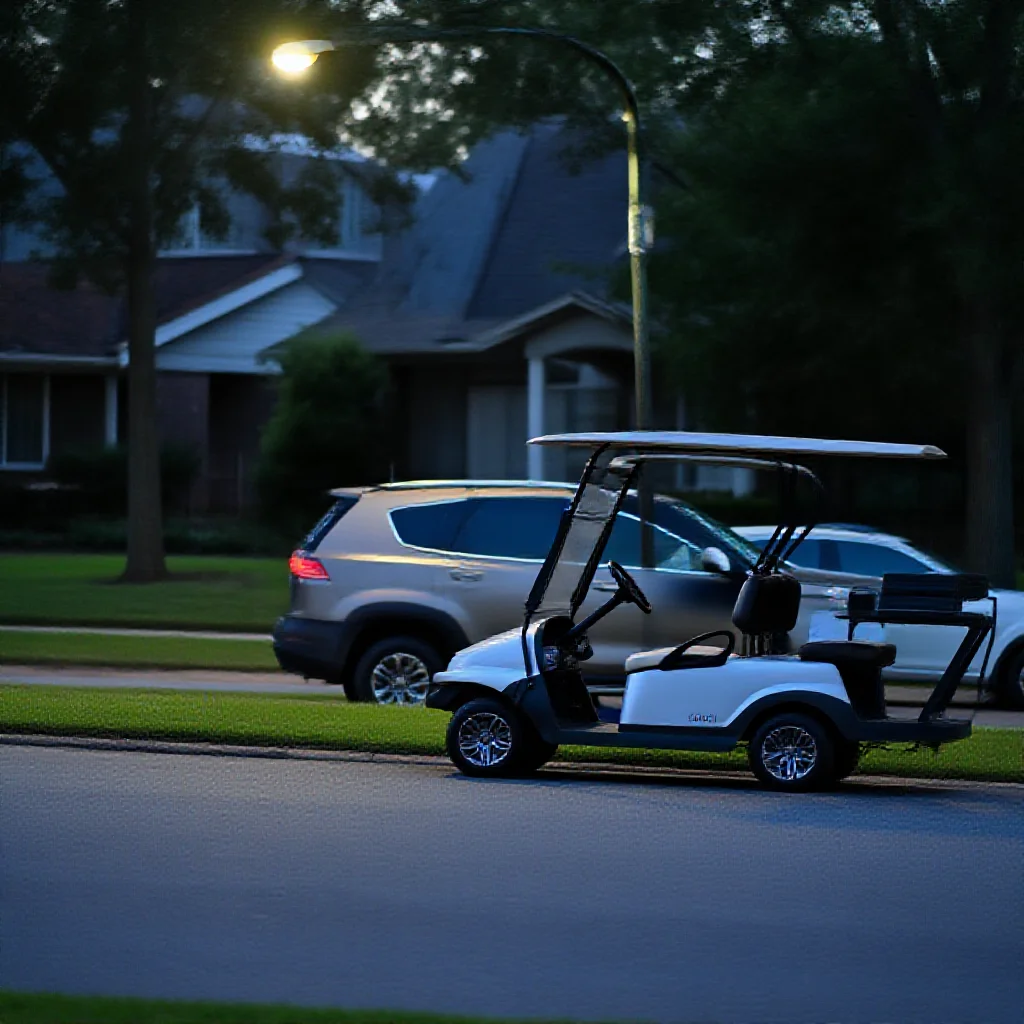
Beyond the Fairway: The Unregulated Rise of Golf Carts on American Streets and Its Hidden Costs
Introduction: The Quiet Revolution on Suburban Streets
A new class of vehicle is becoming a common sight on American residential roads. Beyond the manicured greens of country clubs, golf carts are navigating suburban streets, running errands in downtown districts, and parked outside schools. This proliferation is not accidental but sanctioned by a growing number of municipal governments. The core paradox is that this authorization frequently occurs despite the vehicles not meeting standard Federal Motor Vehicle Safety Standards (FMVSS) for street-legal operation. This trend represents more than a novelty; it reveals deeper economic pressures, regulatory gaps, and a fundamental shift in societal norms regarding low-speed, localized mobility.
Decoding the Municipal Logic: Why Cities Are Saying Yes
The decision by local governments to permit golf carts on public roads is driven by a confluence of pragmatic factors.
**Economic Pragmatism:** For municipalities, the calculus involves minimal capital expenditure. Golf carts utilize existing roadways without demanding the infrastructure investments required for dedicated bike lanes or public transit. This offers a perceived solution for "last-mile" connectivity at near-zero public cost, though it potentially defers liabilities related to safety and infrastructure adaptation.
**Political Popularity:** These ordinances often respond to specific demographic pressures. In retirement communities and tightly-knit suburban enclaves, golf carts provide a convenient, low-cost form of local transit. Legalizing their use is a highly visible policy that caters to constituent demand for accessible mobility options.
**The Regulatory Gray Zone:** The legal framework enabling this trend is fragmented. The National Highway Traffic Safety Administration (NHTSA defines "Low-Speed Vehicles" (LSVs) as street-legal vehicles with a top speed between 20 and 25 mph, requiring specific safety equipment like seat belts, windshields, turn signals, and a Vehicle Identification Number (VIN). Many states have laws permitting local jurisdictions to authorize simpler "golf carts" on roads with speed limits of 35 mph or less, often with far fewer mandated features. Cities are exploiting this gap between federal LSV standards and more permissive state laws. A recent analysis confirms this accelerating trend, noting increased municipal adoption of such ordinances (Source 1: electrek.co, March 12, 2026).
The Unseen Ripple Effects: Safety, Infrastructure, and Market Distortion
The normalization of non-compliant vehicles on public roads generates systemic effects beyond immediate convenience.
**Safety Illusion:** The perception of safety in low-speed, low-traffic environments is not consistently supported by data. Golf carts, typically lacking standard automotive safety structures, seat belts, and advanced lighting, present significant risks in collisions with heavier, faster vehicles. Their integration into mixed-speed traffic creates unpredictable interactions at intersections and on shared roadways.
**Infrastructure Debt:** Public infrastructure is being silently repurposed. Roads, signage, and parking facilities engineered for standard automobiles are now accommodating a different vehicle class. This creates a latent liability for future municipalities, which may face pressure to retrofit infrastructure—such as smaller parking spaces, dedicated lanes, or unique signage—to formally manage this new traffic.
**Market Signal:** Municipal acceptance acts as a de facto subsidy for a specific vehicle type. It stimulates a gray market for vehicles that are explicitly not manufactured to federal street-legal standards, potentially distorting the market for compliant LSVs and electric microcars. Consumers may opt for cheaper, non-compliant golf carts over regulated LSVs, inadvertently stunting the growth of a safer, standardized low-speed vehicle industry.
A Fork in the Road: Pragmatic Adaptation or Dangerous Precedent?
The trend presents two divergent interpretive frameworks for the future of local transportation.
**The 'Slow Mobility' Argument:** Proponents frame this as a logical, bottom-up adaptation to contemporary needs. It represents a move toward reducing car dependency for short trips, decreasing emissions, and fostering community-oriented travel. In this view, the trend is a pragmatic response to the demand for efficient, hyper-local mobility, filling a gap left by traditional automotive and public transit planning.
**The Slippery Slope Critique:** Critics identify a risk of regulatory fragmentation. If vehicle safety becomes a locally variable condition rather than a consistent national standard, it could lead to a patchwork transportation system with unequal levels of occupant protection. This precedent may encourage the use of other non-compliant vehicles on public roads, complicating enforcement and accident liability.
**The Supply Chain Blind Spot:** A deeper analysis points to a supply chain consideration. The widespread municipal approval creates a stable demand signal for manufacturers of non-compliant vehicles. This entrenches a parallel manufacturing and distribution channel that operates outside the FMVSS framework, making future regulatory harmonization or safety upgrades more complex to implement across the installed base of vehicles.
Conclusion: An Uncharted Trajectory
The integration of golf carts into the American street network is a significant, data-confirmed development (Source 1: electrek.co, March 12, 2026). It is a phenomenon born from local economic incentives, demographic shifts, and regulatory ambiguity. Its long-term impact will be determined by the interplay of accident statistics, infrastructure costs, and potential state or federal regulatory responses. The trend sits at the intersection of micromobility evolution, aging demographics, and the decentralization of transportation policy. Whether it culminates in a formalized class of community vehicles or becomes a case study in regulatory mismatch will depend on the measurement of its true costs against its perceived community benefits.