Beyond the Ballot: How Ann Arbor''s Public Energy Utility Redefines Urban Power Economics
Ann Arbor, Michigan's voter-approved Sustainable Energy Utility (SEU) represents a radical departure from traditional utility models. By creating a city-run entity to install and maintain solar and battery systems for opt-in residents, it directly tackles energy poverty while accelerating decarbonization. This analysis explores the hidden economic logic of the SEU, examining its potential to disrupt the private utility monopoly, its innovative financing that separates infrastructure ownership from energy consumption, and its targeted pilot in the high-burden Bryant neighborhood as a blueprint for equitable climate action. The model, validated by University of Michigan research, offers a scalable template for cities aiming to regain local control over their energy future.
Beyond the Ballot: How Ann Arbor's Public Energy Utility Redefines Urban Power Economics
Introduction: The Vote for a New Energy Paradigm
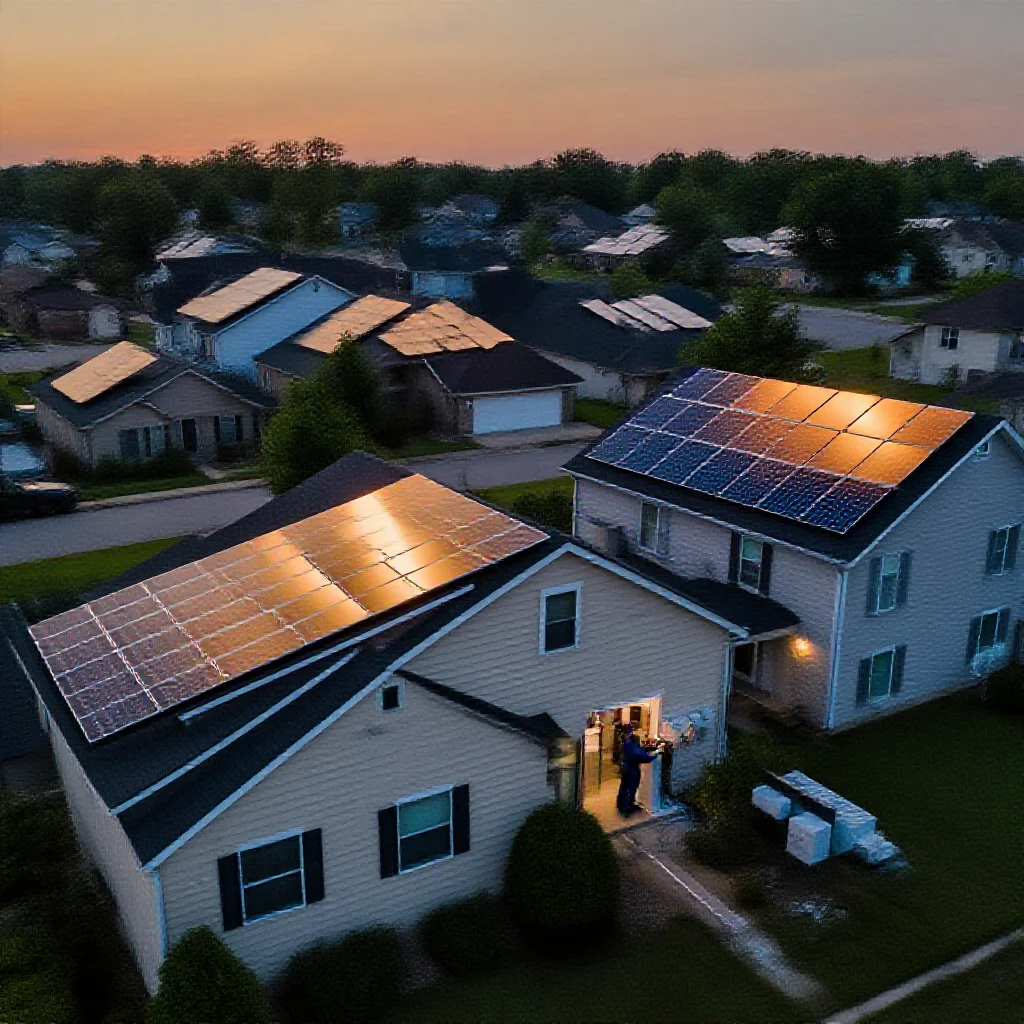
In November 2024, Ann Arbor, Michigan, approved the creation of a city-run Sustainable Energy Utility (SEU) with nearly 80% voter support. (Source 1: [Primary Data]) This mandate signals a structural challenge to the incumbent private utility model. The SEU operates on an "opt-in, you-own-the-power" principle: the city will install, own, and maintain solar panels and battery storage systems on participating residences, with customers paying for the electricity generated rather than the infrastructure itself. This initiative emerges against a backdrop of ambitious municipal climate targets. A 2023 city analysis projected Ann Arbor would miss its 2030 goal of a 100% renewable electricity grid by more than 40%. (Source 2: [Primary Data]) The SEU is positioned not merely as a supplementary program but as a strategic accelerator to close this gap.
Deconstructing the SEU: The Hidden Economic Logic
The SEU’s financial architecture represents a deliberate decoupling of capital expenditure from operational consumption. As articulated by city officials, the model functions where "the city owns and finances the system upfront, and [customers] pay for that electricity through a monthly bill." (Source 3: [Shoshannah Lenski Quote]) This separates the burden of high upfront costs—borne by the city through bonding or other financing—from the resident’s monthly energy budget. The economic thesis hinges on affordability through scale. The operational plan projects serving 100-150 customers in the 2026 pilot, expanding to 1,000 in 2027, and growing by several thousand annually thereafter. (Source 4: [Primary Data]) This planned scaling is designed to create a deflationary cost curve for participants through bulk procurement and standardized installation.
Long-term municipal balance sheet impact is a critical variable. The model frames the SEU not as a traditional public cost center but as a potential revenue-generating public asset. Recurring payments from participants for energy output are intended to service the initial debt and fund ongoing operations and expansion. This challenges conventional fiscal views of public utility ventures, positioning the SEU as an investment in durable public infrastructure with a direct, quantifiable return on investment in the form of local energy production, retained capital, and reduced community-wide energy expenditure.
The Bryant Neighborhood Pilot: A Case Study in Targeted Equity
The selection of the Bryant neighborhood for the pilot phase is a targeted intervention, not a random test. The community comprises approximately 260 homes, where a quarter of residents pay more than a third of their incomes on utilities. (Source 5: [Primary Data]) This constitutes a condition of acute energy poverty. The pilot’s foundation is evidence-based and community-led. Outreach by figures like Krystal Steward of the Community Action Network began in 2021, with physical installations of solar panels on some homes occurring in 2022. (Source 6: [Primary Data]) This established a foundation of engagement prior to the SEU vote.
The pilot’s success in this high-need community is the primary test of the model’s social equity promise. Technical feasibility of distributed solar is established; the untested variable is the financial and operational efficacy of a public utility model in alleviating energy cost burdens at scale within a defined, vulnerable population. Failure here would undermine the SEU’s core rationale beyond decarbonization. Success would provide a replicable blueprint for integrating equity into municipal climate infrastructure policy.
Disruption and Resistance: The SEU in the Broader Energy Market
The SEU operates as a focused competitor within a regulated monopoly market dominated by DTE Energy. Its model applies competitive pressure specifically on the distributed generation and customer-retention fronts. DTE’s public response, via spokesperson Ryan Lowry, acknowledges the SEU while minimizing its threat: "When coupled with DTE’s planned investments in clean energy, these voluntary, fee-based programs help accelerate economy-wide decarbonization while maintaining reliability and affordability." (Source 7: [Ryan Lowry Quote]) This statement frames the SEU as a complementary, niche program rather than a systemic challenger.
Independent analysis suggests a broader disruptive potential. A University of Michigan study evaluated four municipal energy options and found the SEU model had the greatest potential to lower energy prices and emissions, boost reliability, and assist low-income communities. (Source 8: [Primary Data]) This external validation provides a credible counterpoint to incumbent utility narratives. The strategic appeal, as summarized by researcher Mike Shriberg, is that it offers "some benefits of local control without some of the costs" associated with a full municipal takeover of the grid. (Source 9: [Mike Shriberg Quote]) The SEU thus represents a middle path, disrupting the service and ownership model without immediately confronting the entrenched legal and physical complexities of grid infrastructure ownership.
Conclusion: A Scalable Template for Localized Energy Futures
The Ann Arbor SEU model presents a scalable template for municipalities seeking to regain agency over energy affordability and decarbonization timelines. Its innovation lies in the financial and ownership structure, not merely the technology deployed. The expression of interest from over 1,500 residents citywide indicates significant latent demand for an alternative. (Source 10: [Primary Data])
Market and industry predictions hinge on the outcomes of the Bryant pilot and subsequent scaling. A successful demonstration will likely catalyze similar initiatives in other jurisdictions served by private utilities, particularly where climate goals and affordability concerns converge. It may also compel incumbent utilities to accelerate and deepen their own community solar and affordability programs in response. Conversely, financial or operational shortcomings in the pilot phase would reinforce the perceived risks of public energy ventures and strengthen the position of traditional utility models. The SEU’s ultimate impact will be determined by its ability to prove that a public utility model can deliver cleaner, more affordable, and more equitable energy outcomes at scale, thereby redefining the economic logic of urban power generation.