The Great Retreat: How Climate Risk is Reshaping the U.S. Insurance Market
The U.S. insurance market is undergoing a fundamental, climate-driven realignment. As premiums skyrocket and major insurers retreat from high-risk states like California and Florida, a new economic reality is emerging. This article analyzes the data behind the crisis, exploring the dual trends of rising consumer costs and corporate withdrawal. It examines the long-term consequences for housing markets, regional economies, and financial stability, arguing that the insurance industry's retreat is not a temporary correction but a permanent restructuring of risk distribution in America.
The Great Retreat: How Climate Risk is Reshaping the U.S. Insurance Market
Introduction: The Data of Retreat – Premiums Soar as Insurers Flee
The United States insurance market is exhibiting symptoms of systemic realignment. The national average annual premium for homeowners insurance rose to $2,377 in 2024, representing a 21% increase from the previous year (Source 1: [Primary Data]). This aggregate figure, however, masks severe geographic disparities. In Florida, the average annual premium is $11,759, while Louisiana’s average is $6,354 (Source 1: [Primary Data]). Concurrently, major carriers have ceased writing new policies in specific states. These are not isolated disruptions but interconnected manifestations of a single driver: the recalibration of financial models to account for perpetual, climate-amplified risk. This analysis examines the retreat’s epicenters, the climate data engine repricing risk, and the consequent shift from risk pooling to risk segregation.

The Fault Lines: Mapping the Epicenters of Market Instability
Strategic withdrawals by national insurers establish a precedent for market behavior. In 2022, Allstate paused new homeowners, condo, and commercial insurance policies in California. This was followed in 2023 by State Farm’s announcement that it would stop accepting new applications for business and personal lines property and casualty insurance in the state (Source 1: [Primary Data]). These sequential decisions signal a calculated retreat from a market deemed untenable under current regulatory and risk models.
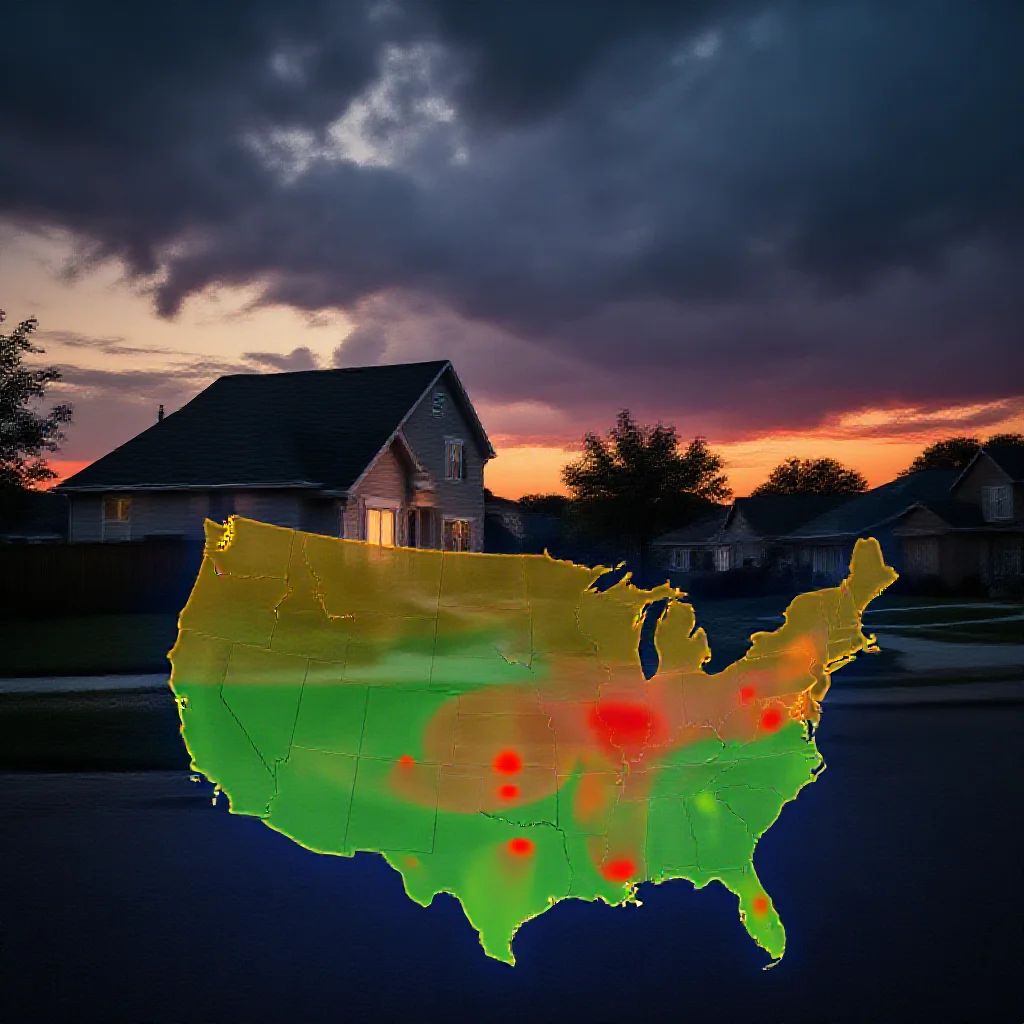
In southeastern states, the crisis manifests as corporate insolvency rather than strategic withdrawal. Since 2022, seven insurers covering Florida have been declared insolvent. In Louisiana, twelve insurers have become insolvent or left the state since 2021 (Source 1: [Primary Data]). This pattern indicates a fundamental failure of the private market in regions subjected to repeated, high-cost climate events. The geographic concentration of these failures—in California, Florida, and Louisiana—maps directly to areas of extreme wildfire, hurricane, and flood exposure, illustrating the industry’s move toward a managed retreat from specific geographies.

The Engine of Crisis: Climate Data and the Repricing of Perpetual Risk
The frequency of catastrophic events is eroding the historical foundation of actuarial science. In 2023, the United States experienced 28 separate weather and climate disasters that each caused at least $1 billion in damage (Source 1: [Primary Data]). This volume of billion-dollar events transforms what was once considered tail risk into a recurrent operational cost. Actuarial models reliant on historical loss data are rendered obsolete when the past is no longer a reliable proxy for future conditions.
This repricing of risk is accelerated by the public quantification of long-term climate exposure. Research entities like the First Street Foundation model and disseminate granular data on climate risk (Source 1: [Primary Data]). These models provide a forward-looking assessment of peril—such as flood, fire, and wind—over a 30-year period, creating an alternative data set that challenges traditional insurer models. This external pressure increases transparency for regulators, capital markets, and consumers, forcing a more rapid financial acknowledgment of accumulating physical risk.

The Hidden Economic Logic: From Risk Pooling to Risk Segregation
The core function of insurance is the pooling of diffuse, uncorrelated risks across a broad population. Climate change is systematically dismantling this model by concentrating highly correlated, catastrophic risk in specific regions. When a significant portion of an insurer’s portfolio faces simultaneous loss from a single event, such as a hurricane or wildfire complex, the fundamental mechanism of risk pooling breaks down. The result is a market shift toward risk segregation.
The long-term consequence is the potential erosion of the private insurance model for primary residences in high-exposure areas. As private capital withdraws, the ultimate liability shifts. This typically falls to state-backed insurers of last resort, which often carry less robust capital reserves and may rely on post-event assessments or public funds. The alternative is the transfer of full risk to the homeowner. This segregation triggers secondary economic effects. Mortgage lenders may hesitate to underwrite loans in uninsurable or prohibitively expensive-to-insure areas. Property values may stagnate or decline as carrying costs rise and liquidity falls. The logical endpoint is an impact on regional economic development and long-term population migration patterns, as financial signals redirect capital and residents away from zones of concentrated climate risk.

Conclusion: Neutral Market Projections
The current instability is not a temporary market correction but a permanent restructuring. The available data indicates a continued trajectory of premium increases in high-exposure regions, with the potential for stabilization or decrease in areas deemed lower risk. The geographic footprint of private homeowners insurance is likely to contract further. State-sponsored residual market mechanisms will see increased policy counts and financial strain, prompting legislative debates over sustainability, pricing, and land use.
The insurance industry’s retreat functions as a leading economic indicator. Its underwriting decisions and pricing models are direct translations of physical climate risk into financial terms. The observed patterns—premium spikes, corporate withdrawals, and insurer insolvencies—provide a concrete, data-driven preview of broader economic reallocation. The market is systematically segregating risk, a process that will redefine asset values, influence municipal finance, and reshape the human geography of the United States in the coming decades.