Beyond the Check: The Systemic Delays and Economic Ripple Effects of Georgia''s Hurricane Helene Farm Relief
While Georgia farmers have finally begun receiving federal disaster payments in early 2025 for Hurricane Helene''s September 2024 devastation, the months-long delay reveals a critical vulnerability in the U.S. agricultural safety net. This analysis moves beyond the headline of a $1.5 billion USDA allocation to examine the hidden economic logic of disaster relief: how bureaucratic timelines directly impact farm solvency, local economies, and future planting decisions. We explore why the gap between disaster declaration and fund distribution is a predictable, yet often unaddressed, systemic flaw, and what the delayed cash infusion means for Georgia''s agricultural supply chain and credit markets in the coming year.
Beyond the Check: The Systemic Delays and Economic Ripple Effects of Georgia's Hurricane Helene Farm Relief
**Summary:** While Georgia farmers have finally begun receiving federal disaster payments in early 2025 for Hurricane Helene's September 2024 devastation, the months-long delay reveals a critical vulnerability in the U.S. agricultural safety net. This analysis moves beyond the headline of a $1.5 billion USDA allocation to examine the hidden economic logic of disaster relief: how bureaucratic timelines directly impact farm solvency, local economies, and future planting decisions.
---
The Delayed Lifeline: Tracing the Timeline from Helene to Relief
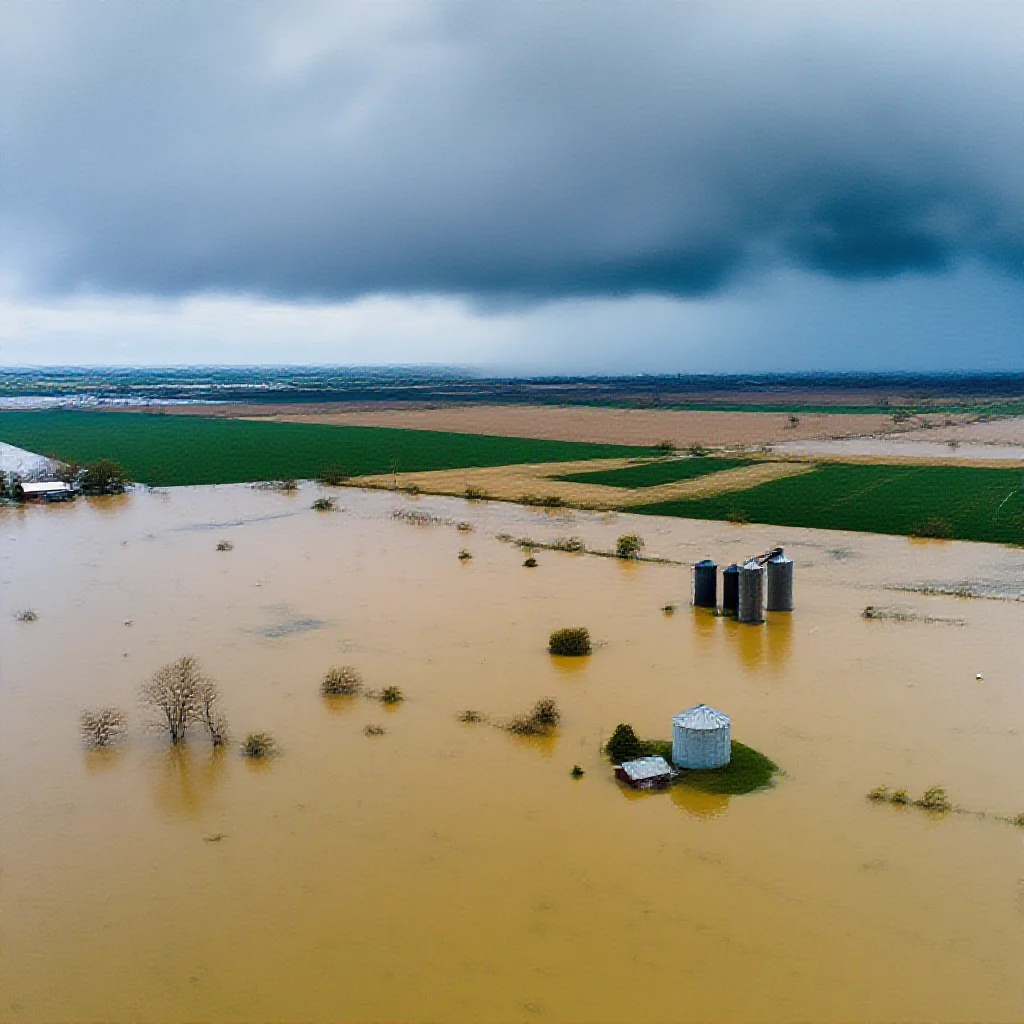
Hurricane Helene inflicted significant damage on Georgia's agricultural sector in September 2024. (Source 1: [Primary Data]) The immediate response from the federal government was the allocation of $1.5 billion in disaster relief funds by the U.S. Department of Agriculture (USDA) in October 2024. (Source 2: [Primary Data]) The administrative pipeline, however, resulted in a critical gap. The first relief payments to Georgia farmers were not distributed until early 2025. (Source 3: [Primary Data])
This four-to-five-month interval between disaster declaration and fund distribution defines the initial crisis phase for agricultural producers. The USDA's Farm Service Agency (FSA), the administering body for the program, operates a system where payments are calculated based on verified crop losses and damage to farm structures and equipment. (Source 4: [Primary Data]) This verification process, while necessary for determining payment amounts, establishes a built-in latency between the disaster event and the delivery of financial aid.
The Hidden Cost of Waiting: Economic Logic of Disaster Relief Timing
The economic impact of a natural disaster on a farm operation is not a single event but a compounding crisis. The $1.5 billion allocation represents a static figure; the timing of its disbursement is a dynamic and critical variable in recovery calculus.
During the months following Helene, farms faced immediate cash flow obligations without corresponding revenue. Debt servicing on land and equipment continued. Repairs to essential infrastructure were delayed due to lack of capital. Most critically, the period from late 2024 into early 2025 is when producers pre-pay or commit financially to inputs for the next planting season—seed, fertilizer, and chemicals. A liquidity freeze at this juncture forces difficult decisions: reduce acreage, seek high-interest credit, or forgo optimal inputs.
The economic ripple extends beyond the farm gate. Local agribusinesses, including equipment dealers, seed suppliers, and repair services, experience a contraction in demand when farmer liquidity is constrained. Regional banks and credit agencies face increased risk profiles on agricultural portfolios. The delay in relief payments, therefore, acts as a liquidity shock to the entire local agricultural economy, amplifying the initial physical damage with systemic financial stress.
A Predictable Flaw? Systemic Bottlenecks in Agricultural Disaster Response
The delay observed in Georgia is not an anomaly but a recurring feature of the current agricultural disaster response framework. The system is engineered around a fundamental tension: the imperative for accurate, audit-proof damage assessment versus the economic necessity for rapid liquidity injection.
The FSA's process for "loss-based payments" prioritizes precision and accountability. This requires damage documentation, yield history verification, and administrative processing at both county and federal levels. When contrasted with other disaster response models, such as expedited emergency business loan programs that advance funds based on estimated loss with subsequent reconciliation, the agricultural model reveals a design philosophy favoring auditability over agility.
The consequence is a predictable bottleneck. The system is structured to prevent improper payments, but this inherent caution creates a standardized period of financial vulnerability for producers. The hardship caused by the four-to-five-month gap is, in effect, a systemic output, a calculated trade-off where financial accuracy is secured at the cost of immediate economic stabilization.
Long-Term Repercussions: Impact on Georgia's Agricultural Future
The timing of disaster relief directly influences strategic decisions that shape the agricultural landscape for subsequent seasons. The delayed cash infusion in early 2025 will influence planting decisions for the 2025 crop year. Producers may shift toward less capital-intensive or perceived lower-risk crops to conserve working capital, potentially altering local supply chains for processors and buyers.
A liquidity shock of this nature also has structural implications for the industry. Smaller or under-capitalized farm operations, with less access to alternative credit lines, may be unable to withstand the extended gap between disaster and relief. This financial pressure can accelerate trends toward farm consolidation, as distressed assets are absorbed by larger, more financially resilient entities.
Furthermore, the pattern of slow recovery can affect supply chain confidence. Buyers and processors relying on Georgia for consistent commodity volumes may begin to factor in "recovery risk" following weather events, potentially seeking more geographically diversified sourcing to mitigate future disruptions. The long-term competitiveness of certain agricultural regions within the state may be influenced by the demonstrated speed and efficacy of post-disaster financial mechanisms.
--- *Analysis indicates that the efficiency of fund distribution is as material to economic recovery as the allocation amount itself. Future iterations of agricultural disaster policy that incorporate mechanisms for accelerated, provisional payments could mitigate the systemic liquidity crisis documented in the wake of Hurricane Helene. The Georgia case provides a model for analyzing the direct correlation between bureaucratic latency and regional economic stress within the agricultural sector.*