Eco Visuals
The Green Rush Paradox: How Critical Minerals Mining Undermines Amazon Land Reform
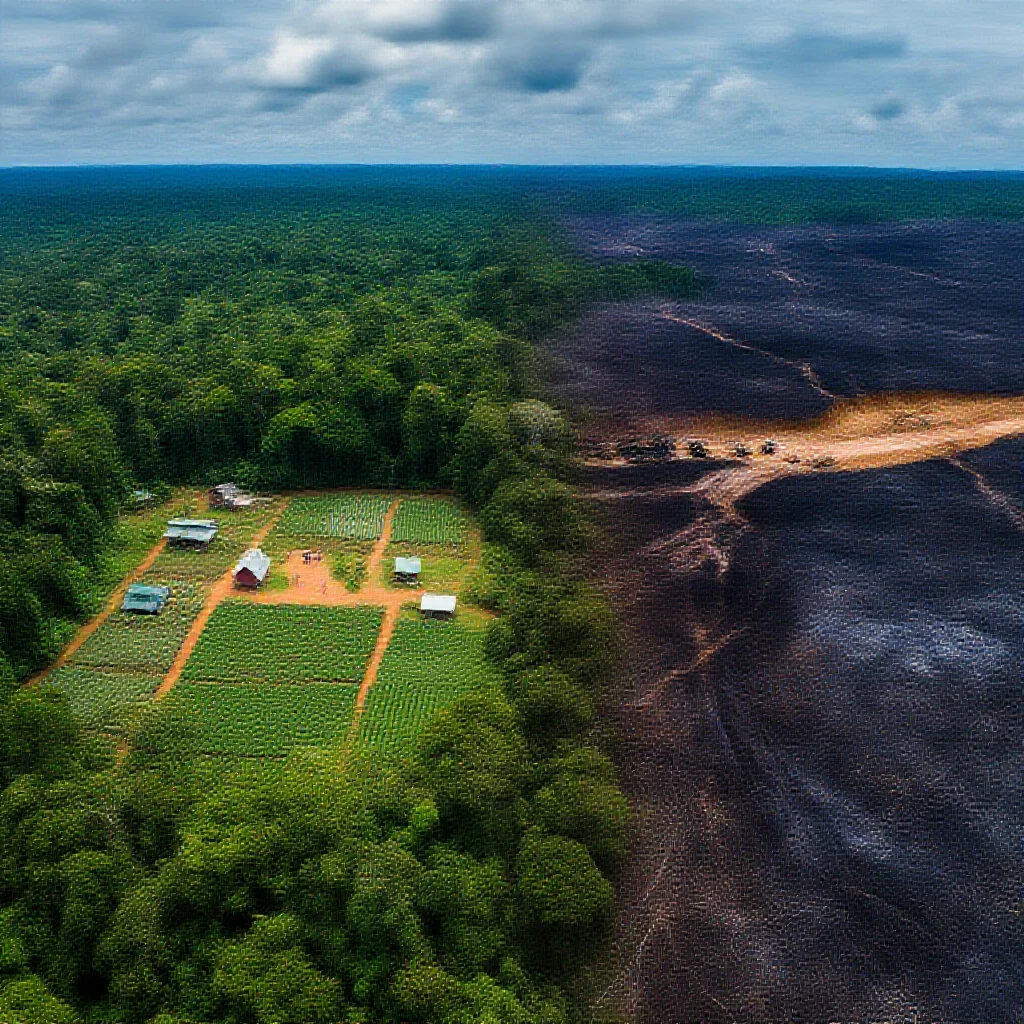
A new mining rush for critical minerals, driven by the global green energy transition, is creating a profound paradox in the Brazilian Amazon. While these minerals are essential for decarbonization, their extraction is directly threatening the stability and sustainability of land reform settlements—key areas for agrarian reform and forest conservation. This article explores the hidden economic logic of this conflict, where the demand for 'green' commodities is fueling deforestation and land tenure insecurity. It examines the pressure from overlapping mining claims, the long-term implications for local communities and global supply chains, and why this clash represents a critical fault line in sustainable development.
The Green Rush Paradox: How Critical Minerals Mining Undermines Amazon Land Reform
Introduction: The Green Energy's Dark Shadow in the Amazon
The global technological transition toward decarbonization is precipitating a surge in demand for minerals such as lithium, cobalt, nickel, and copper. This demand has triggered a new resource extraction rush, frequently labeled a "critical minerals rush." A consequential paradox is emerging in the Brazilian Amazon: the raw materials deemed essential for "green" technologies are simultaneously applying destabilizing pressure on established agrarian reform and forest conservation zones. The primary battlegrounds for this conflict are Brazil's Land Reform Settlements, or *Assentamentos*. These are areas formally designated by the state for agrarian redistribution, intended to support small-scale agriculture and forest-based livelihoods. The encroachment of mining interests into these territories represents a direct collision between two models of resource use: diffuse, community-based land stewardship and concentrated, industrial extraction.
Deconstructing the Conflict: Mining Claims vs. Agrarian Rights
The conflict is rooted in a legal and spatial overlap. Under Brazilian law, mineral rights are separate from surface land rights and are administered by the federal government through the National Mining Agency (ANM). Mining concessions can be, and are, legally staked on lands where the surface has been allocated for agrarian reform by the National Institute for Colonization and Agrarian Reform (INCRA). This creates a fundamental power imbalance. Corporate or speculative mining interests, backed by formal concession titles, confront settlers whose land tenure, while socially recognized, is often procedurally incomplete or perceived as informal. The pressure extends beyond the physical footprint of a mine. The specter of mining drives land speculation, incentivizes illegal land grabbing, and can lead to the dissolution of community cohesion as external actors seek to consolidate control over mineral-rich areas. Deforestation is one visible symptom; the erosion of socio-economic stability within settlements is a less visible but equally critical consequence.
The Core Axis: The Extractive Logic of the 'Green' Economy
The pressure on Amazonian settlements is not an isolated phenomenon but a direct outcome of the supply chain logic underpinning the contemporary green economy. A mineral extracted from a contested claim in the Amazon may ultimately be processed into a component for an electric vehicle battery or a permanent magnet for a wind turbine. The environmental and social costs of extraction are externalized to the point of origin. This creates a market failure: the commodity price for critical minerals does not internalize the value of the sustainable land-use systems it displaces, such as agroforestry or standing forest maintained by settlers. Downstream consumers and corporations may achieve Environmental, Social, and Governance (ESG) metrics by adopting these technologies, while the upstream procurement undermines other critical sustainability goals, namely forest conservation and rural community rights.
Slow Analysis: The Long-Term Audit of a Broken System
This conflict is structural, not incidental. A systemic analysis reveals its embedded nature. Data cross-referencing from Brazil's National Institute for Colonization and Agrarian Reform (INCRA) and the National Mining Agency (ANM) would show significant geographical overlap between registered mining claims and the boundaries of land reform settlements (Source 1: [Institutional Data Overlay]). The long-term cost of this overlap is measurable. Academic and institutional research has consistently identified secured land tenure for smallholders and communities as a primary factor in reducing deforestation rates. Land reform settlements, when fully realized and supported, function as buffers against expansive deforestation driven by large-scale agriculture and extraction. Therefore, the undermining of these settlements through mining pressure sabotages a proven institutional model for promoting rural stability and forest preservation. The audit trail leads to a conclusion that weakening settlements for mineral access may result in a net increase in deforestation, counteracting the climate benefits sought from the end-use technologies.
The Unreported Entry Point: Land Reform Settlements as Carbon Sinks and Supply Chain Buffers
A novel analytical viewpoint recasts land reform settlements not merely as social welfare projects but as functional, managed ecosystems providing systemic services. These settlements, when practicing diversified agroforestry or maintaining forest reserves, operate as active carbon sinks and biodiversity reservoirs. Furthermore, they serve as supply chain buffers in a different sense: they represent an alternative, non-extractive economic pathway for regional development. Their destabilization eliminates this alternative, locking the region more firmly into a mono-economic dependency on commodity extraction. The economic logic that views these lands solely as mineral deposits fails to account for their current and potential value as productive, sustainable landscapes that contribute to climate resilience and diversified rural incomes.
Neutral Market/Industry Predictions
The current trajectory suggests increasing tension. Demand projections for critical minerals remain robust, driven by global decarbonization policy targets. This will sustain financial and political pressure to unlock mineral reserves, including those underlying Amazonian settlements. In the absence of significant regulatory reform to reconcile mineral and agrarian rights, conflict will likely intensify. Market mechanisms such as "green" or "ethical" sourcing certifications may attempt to segment supply chains, but their ability to resolve fundamental tenure conflicts at the point of extraction remains unproven. A probable outcome is the continued fragmentation of settlement integrity in high-potential mineral zones, accompanied by increased litigation and social mobilization. The stability of long-term mineral supply from these regions may be compromised by the very social and environmental instability that expedient extraction creates. The paradox is thus projected to deepen, presenting a persistent challenge to the coherence of sustainable development strategies.