Guam v. United States: How a Supreme Court Case Could Redefine Environmental Justice and Federal Accountability
The U.S. Supreme Court case *Guam v. United States* is more than a dispute over $160 million in cleanup costs for the toxic Ordot Dump. It represents a critical test of federal accountability for environmental damage on Indigenous lands and a potential shift in how the costs of military legacy pollution are allocated. This analysis explores the case's hidden economic logic—where statutes of limitations become a tool for fiscal evasion—and its profound implications for environmental justice, the remediation of CHamoru ancestral lands, and the future of cost-recovery for federally-caused contamination nationwide. The outcome could set a precedent that either strengthens or undermines the polluter-pays principle for government agencies.
Guam v. United States: How a Supreme Court Case Could Redefine Environmental Justice and Federal Accountability
Beyond the Legal Brief: The Ordot Dump as a Case Study in Legacy Pollution
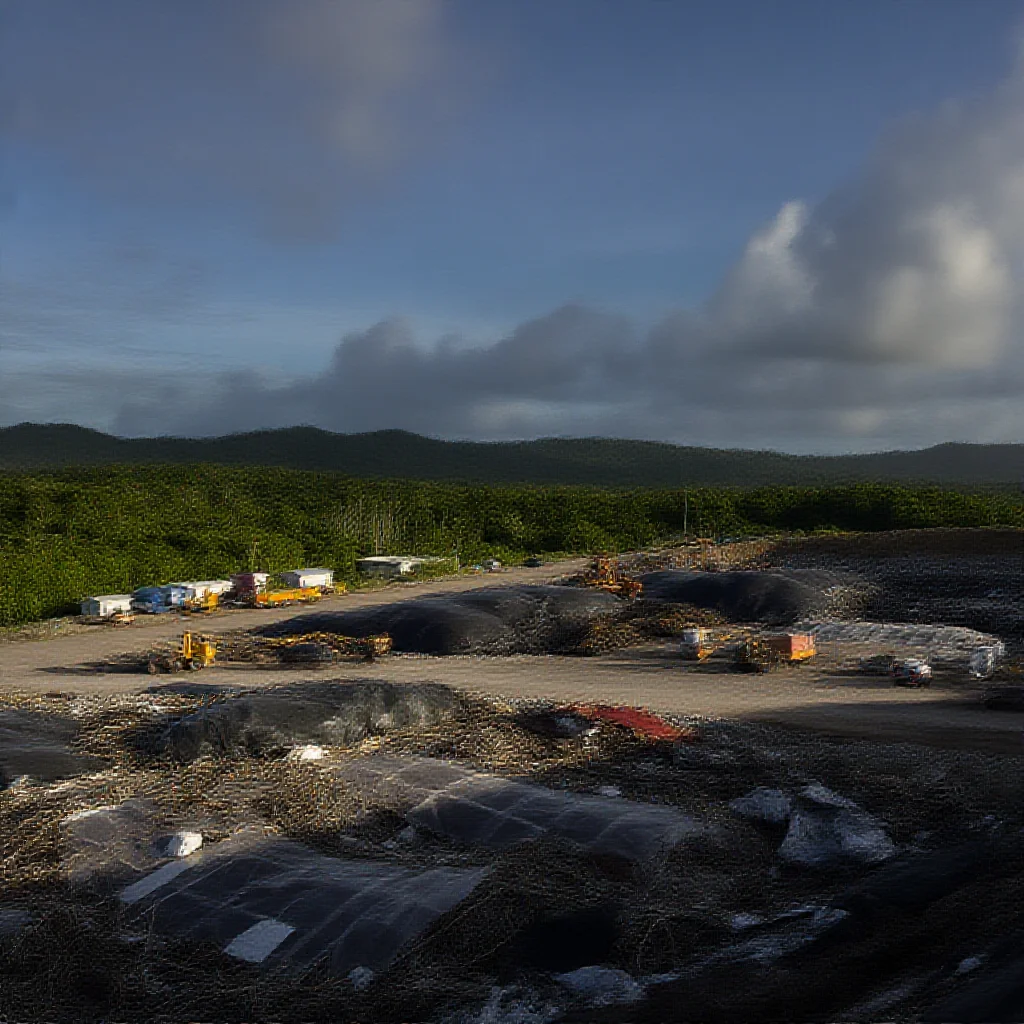
The legal dispute docketed as *Guam v. United States* presents a direct financial question: can the Government of Guam recover approximately $160 million in remediation costs from the U.S. Navy (Source 1: [Primary Data]). The conflict originates from the Ordot Dump, a former landfill on the island of Guam. Following World War II, the U.S. Navy utilized the site for disposal of munitions and chemical weapons waste (Source 1: [Primary Data]). This activity established a legacy of contamination that transformed the location into a persistent environmental and public health concern.
This case extends beyond a local fiscal dispute. It functions as a procedural and financial microcosm of a global pattern: the long-term environmental and economic consequences of military operations. The search for a responsible party for cleanup costs, when the original polluting actions occurred decades prior, reveals systemic challenges in environmental liability frameworks.
The Hidden Economic Logic: Statute of Limitations as a Fiscal Shield
The central legal mechanism in this case is the statute of limitations. In 2017, the D.C. Circuit Court ruled against Guam, barring its cost-recovery lawsuit based on a procedural time limit (Source 1: [Primary Data]). The court determined that the statute of limitations began when Guam and the U.S. Environmental Protection Agency (EPA) entered a consent decree in 2004 to close the dump, not when Guam incurred the actual cleanup expenses (Source 1: [Primary Data]).
This legal interpretation introduces a distinct economic strategy. By framing the start of the limitation period from the date of regulatory agreement rather than the date of cost expenditure, the ruling creates a pathway for the federal government to evade financial responsibility. The economic effect is a transfer of remediation costs from the federal treasury to a territorial government with limited fiscal capacity. This establishes a pattern where statutory deadlines can be leveraged to avoid substantial environmental liabilities, imposing an unequal burden on smaller, less-resourced entities.
The Unspoken Stake: Environmental Justice for the CHamoru People
The legal and financial mechanics of *Guam v. United States* operate within a specific geographical and cultural context: the ancestral lands of the CHamoru people. The 2004 consent decree with the EPA was a regulatory necessity, but the cleanup addresses contamination that affects cultural resources, water quality, and public health on Indigenous land.
An equity analysis indicates that territories and Indigenous communities frequently bear disproportionate costs for environmental damage resulting from federal actions. The case tests whether U.S. environmental law, particularly statutes like the Comprehensive Environmental Response, Compensation, and Liability Act (CERCLA), adequately accounts for the colonial context of pollution in non-state territories. The outcome will influence the practical application of environmental justice principles where federal agencies are the polluting entities.
Supreme Court Showdown: Precedents and Potential Ripples
The case was argued before the U.S. Supreme Court on April 26, 2021 (Source 1: [Primary Data]). The justices' questions during oral arguments focused on the interplay between different environmental statutes and the precise trigger for cost-recovery claims. The U.S. Department of Justice argued for a strict application of the statute of limitations, while Guam’s counsel contended that its claim did not accrue until it performed the remedial work and paid for it.
The Court’s decision will hinge on statutory interpretation, with precedents under CERCLA providing critical analogies. A ruling for the United States would have an immediate financial impact, leaving Guam solely responsible for the $160 million in cleanup costs. A ruling for Guam would affirm a broader window for cost recovery, strengthening the leverage of states and territories in seeking reimbursement from federal agencies for federally-caused contamination.
The Ripple Effect: Implications for Military Bases and Federal Facilities Nationwide
The precedent set by *Guam v. United States* will influence liability calculations for environmental remediation at thousands of federal facilities across the United States and its territories. A ruling favoring the federal government’s statute of limitations defense could discourage other entities from pursuing cost-recovery actions against the U.S. government for legacy pollution, knowing that complex, multi-year cleanup processes may exceed procedural filing deadlines.
Conversely, a ruling for Guam would incentivize more aggressive cost-recovery litigation by states, territories, and potentially private parties. It would reinforce the "polluter-pays" principle even when the polluter is a government agency. This would likely increase the projected liabilities on the federal balance sheet for environmental cleanup, potentially altering how the Department of Defense and other agencies budget for and manage remediation of closed facilities.
Conclusion: A Benchmark for Federal Environmental Accountability
*Guam v. United States* is a benchmark case for federal environmental accountability. The Supreme Court’s ruling will determine whether procedural rules can absolve substantive responsibility for pollution that persists for generations. The decision will either solidify a fiscal shield for federal agencies or reaffirm a mechanism for subordinate governments to allocate cleanup costs back to their source. The technical legal outcome will directly shape the economic and environmental landscape for communities living with the legacy of federal operations, setting a definitive course for future cost-recovery litigation nationwide.