Beyond the Melt: The Hidden Economic and Scientific Value of Europe''s Disappearing Glacier Archives
As European Alpine glaciers vanish, a frantic scientific race is underway to extract their ice cores—not merely for climate history, but as irreplaceable raw data for future technologies and economic models. This article argues that these ice archives represent a new class of non-renewable intellectual property, crucial for calibrating next-generation climate models, validating satellite data, and underpinning trillion-dollar risk assessments for industries from insurance to agriculture. The storage of these cores in remote vaults like the Ice Memory Foundation's Antarctic facility transforms them from research samples into strategic assets, raising questions about data sovereignty, long-term access, and who benefits from the predictive power locked within ancient ice.
Beyond the Melt: The Hidden Economic and Scientific Value of Europe's Disappearing Glacier Archives
Introduction: The Race Against Time in the Alps
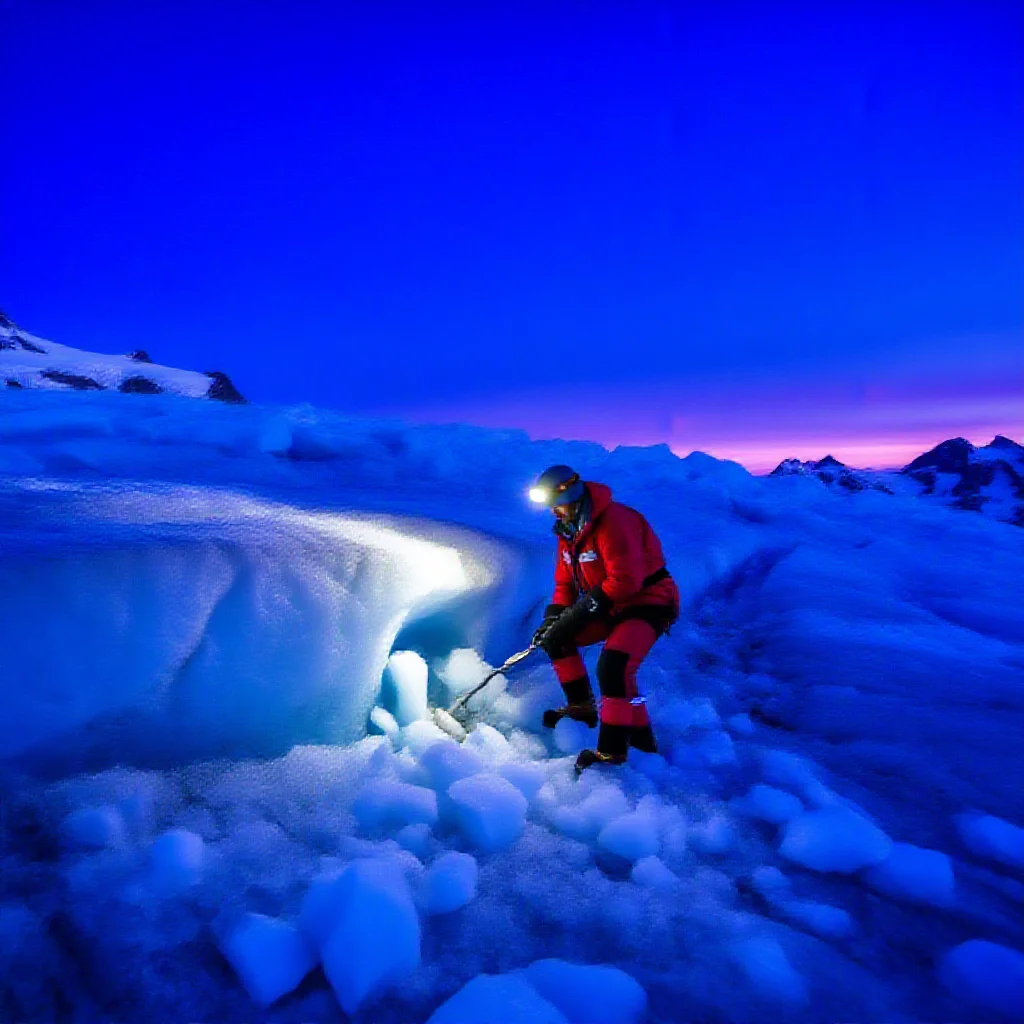
The visual documentation of glacial retreat across the European Alps is a well-established climate indicator. A more critical operation occurs on the ice itself: teams of scientists engaged in systematic drilling to extract ice cores from glaciers like the Col du Dôme and Corbassière. This activity transcends ecological monitoring. It constitutes a salvage operation for a finite data resource. The core thesis is that the physical disappearance of these glaciers equates to the irreversible loss of a primary calibration dataset for Earth's climate system. This loss carries direct implications for the accuracy of predictive scientific models and, by extension, for long-range economic and risk-assessment frameworks.
Ice Cores as Non-Renewable Intellectual Property
An ice core is a physical archive, a vertical timeline of atmospheric deposition. Its layers encode data on past greenhouse gas concentrations, aerosol pollutants, volcanic eruptions, and temperature variability. This archive serves as a ground-truth dataset against which climate models are tested and refined. The critical distinction from digital data is its non-renewable nature. Once a glacier melts and its stratigraphic sequence is lost, the specific, localized historical record it contained cannot be recreated or resampled. This characteristic classifies such ice cores as appreciating assets in a scientific and economic context. Their value increases as the source glaciers vanish and as analytical technologies advance, enabling future extraction of information not currently decipherable. The asset class is analogous to other non-renewable scientific baselines, such as cores from undisturbed seabeds or mineral samples from unique geological formations, which serve as irreplaceable reference points.
The Downstream Economic Impact: Who Needs This Data?
The utility of this high-fidelity paleoclimate data extends beyond academic research into commercial and regulatory sectors.
* **Climate Modeling & Insurance:** The precision of future climate projections depends on the robustness of model calibration against past conditions. Ice core data from the Alps provides regional, high-resolution climate histories that reduce uncertainty in models. This reduction in uncertainty directly impacts the actuarial calculations of reinsurance firms like Swiss Re and Munich Re, which price catastrophic risk (e.g., flood, drought) and underwrite long-term infrastructure projects. More accurate models lead to more precise risk pricing and capital allocation.
* **Agriculture & Water Security:** Alpine glacier meltwater is a crucial freshwater source for European rivers. Ice core records of past precipitation patterns, drought frequency, and temperature shifts provide empirical data on long-term hydroclimatic variability. This information is vital for governments and agribusinesses in forecasting regional water availability, planning crop cycles, and managing commodity market exposures.
* **Technology & Green Tech Validation:** The historical atmospheric composition data locked in ice serves as a benchmark. It is used to validate the accuracy of remote sensing satellites monitoring current greenhouse gas levels. Furthermore, models assessing the efficacy of carbon capture and storage technologies or the environmental impact of proposed geoengineering solutions require validated historical baselines for credible scenario analysis. Institutions like the IPCC integrate such paleodata into their assessment reports, which form the scientific foundation for international climate policy and green technology investment.
The Antarctic Vault: Archiving for a Post-Glacier World
The response to this data extinction risk is institutionalized preservation. The Ice Memory Foundation is orchestrating the extraction, transport, and secure storage of ice cores from endangered glaciers worldwide in a dedicated vault at the Concordia Station in Antarctica. This initiative redefines the narrative from simple sample storage to strategic, long-term preservation. The facility is designed to safeguard these cores for centuries, under natural freezer conditions, for future generations of scientists equipped with analytical tools not yet invented.
A long-term cost-benefit analysis emerges. The significant financial and logistical investment in drilling, transporting, and curating these cores is weighed against their potential future value. This value may be realized in solving climate-related problems not yet conceived or in providing definitive answers to future legal or geopolitical questions regarding climate liability and change attribution. The establishment of such a vault, however, raises unresolved questions of data sovereignty, access protocols, and the equitable distribution of benefits derived from cores extracted from sovereign territories but stored in a global commons.
Conclusion: The Market for Certainty in an Uncertain Climate
The melting of Alpine glaciers is a physical and ecological transition with a parallel, less visible dimension: the conversion of a natural archive into a curated, strategic data reserve. The economic value of these ice cores is intrinsically linked to the market's demand for certainty. As physical climate risks escalate, the demand for high-fidelity, empirical data to constrain financial and operational uncertainty will increase. The entities that control, can access, and can expertly interpret these non-renewable data archives will hold a form of intellectual capital critical for validating the next generation of climate models, financial risk instruments, and adaptation technologies. The ongoing salvage operation in the Alps, therefore, is not merely an act of conservation but a foundational investment in the data infrastructure required to navigate a post-glacial world.