Hornwort''s Ancient Blueprint: How a 400-Million-Year-Old Plant Could Revolutionize Sustainable Agriculture
Research into the humble hornwort, one of Earth''s oldest land plants, is uncovering a genetic toolkit for drought tolerance and natural nitrogen fixation. Scientists from the Boyce Thompson Institute and Cornell University are decoding its symbiotic relationship with cyanobacteria, a partnership that allows it to pull nitrogen from the air. This deep biological audit reveals a potential paradigm shift: transferring these traits to major crops could drastically reduce the global agricultural industry''s dependency on energy-intensive synthetic fertilizers. The implications extend beyond farm economics to reshaping the environmental and geopolitical landscape of food production.
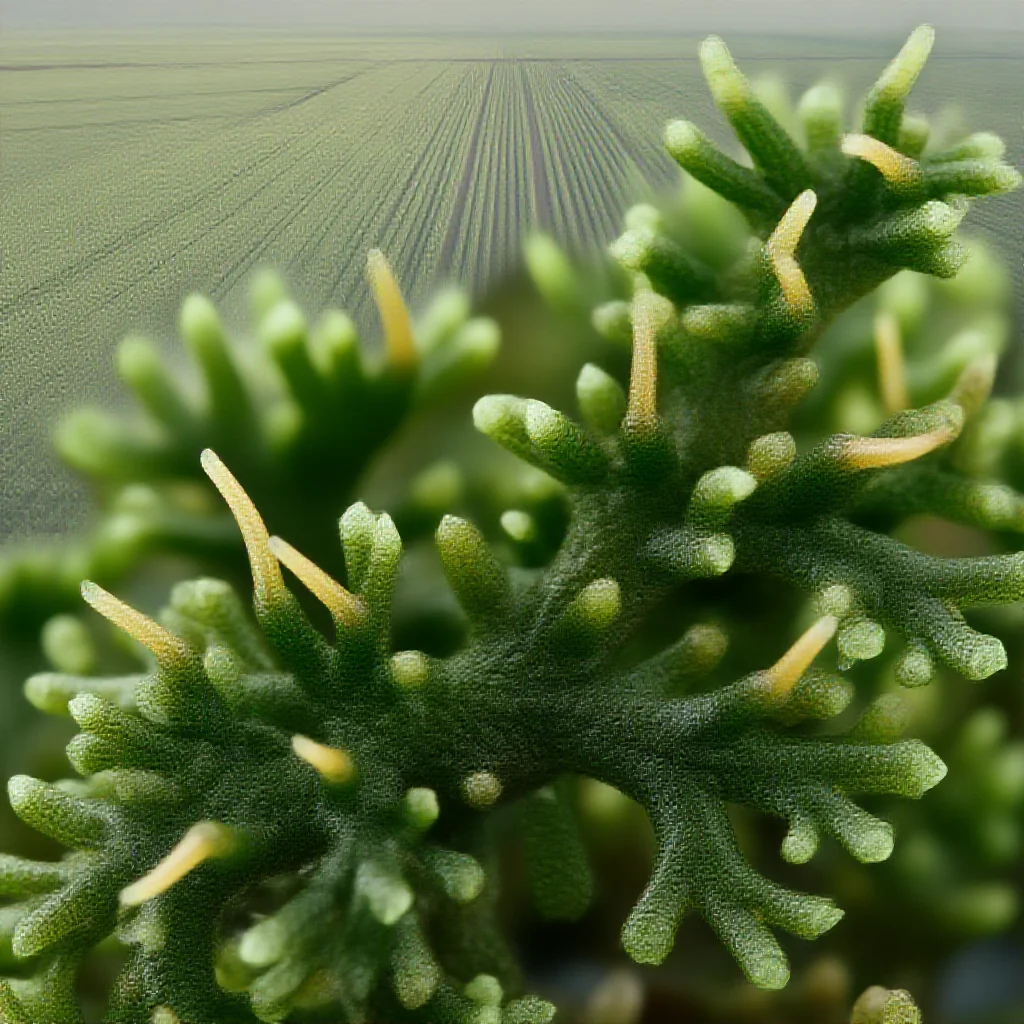
Hornwort's Ancient Blueprint: How a 400-Million-Year-Old Plant Could Revolutionize Sustainable Agriculture
The Silent Crisis: Agriculture's Unsustainable Fertilizer Addiction
The global agricultural system is structurally dependent on synthetic nitrogen fertilizer. Its production, primarily via the century-old Haber-Bosch process, consumes approximately 1-2% of the world's annual energy supply and is responsible for a significant portion of the food system's carbon footprint. Beyond the environmental cost, the economic burden is substantial, with farmers' operational viability often tethered to volatile fertilizer prices. This dependency represents a systemic risk to food security and economic stability. The search for biological alternatives to break this cycle is a primary focus of agricultural science. Research into the hornwort, a 400-million-year-old land plant, is not a niche botanical inquiry but a targeted investigation into a pre-evolved solution to this modern industrial challenge.
Decoding a 400-Million-Year-Old Survival Kit
Hornworts (Anthoceros) diverged from other land plants over 400 million years ago. Their evolutionary history has endowed them with a minimal genome and a unique genetic toolkit developed for survival in primordial, nutrient-poor environments. The cornerstone of their resilience is a symbiotic relationship with Nostoc cyanobacteria. This partnership involves the hornwort producing chemical signals to attract free-living cyanobacteria, which then colonize specialized cavities within the plant. The cyanobacteria convert atmospheric nitrogen into ammonia, a usable form, which is exchanged for fixed carbon from the hornwort. This system functions as a self-contained, energy-efficient nitrogen-fixing factory. Concurrently, hornworts possess inherent genetic pathways for drought tolerance, a trait developed during early colonization of land. This combination of natural nitrogen acquisition and pre-adapted stress resilience constitutes a comprehensive survival blueprint encoded within one of Earth's simplest terrestrial plants.
Beyond the Lab: The Supply Chain and Geopolitical Ripple Effect
The successful translation of hornwort's capabilities into major staple crops would trigger a multi-dimensional disruption. The most direct impact would be on the synthetic fertilizer industry, a multi-billion-dollar global market encompassing manufacturing, shipping, storage, and application logistics. A significant reduction in demand would alter input economics at the farm level, decreasing operational costs and insulating farmers from commodity price shocks driven by natural gas markets. On a geopolitical scale, it could recalibrate dependencies, diminishing the strategic leverage of major fertilizer-exporting nations and regions. Furthermore, by decoupling crop productivity from the fossil-fuel-intensive Haber-Bosch process, agriculture's carbon emissions profile would be fundamentally altered. The ripple effects would extend through financial markets, commodity trading, and energy demand forecasts.
The Engineering Challenge: From Hornwort to Breadbasket
The scientific pathway from hornwort biology to engineered crops is complex. The primary hurdle is not merely identifying relevant genes but transferring a functional symbiotic system. The interaction between hornwort and Nostoc involves a precise, multi-step dialogue of chemical recognition, infection, and regulated nutrient exchange. Reproducing this in a non-host plant like wheat or corn is a significant bioengineering challenge. Alternative research avenues exist, such as engineering cereal crops to form associations with nitrogen-fixing soil bacteria or directly inserting nitrogen-fixation genes into plant organelles. The work led by scientists at the Boyce Thompson Institute and Cornell University represents a specific, credible pathway focused on decoding and transferring the hornwort's genetic instructions for managing cyanobacterial symbiosis. Their research provides the foundational knowledge required to attempt this transfer.
The convergence of advanced genomics, synthetic biology, and pressing agricultural necessity is bringing hornwort from the margins of botany to the forefront of sustainability science. The objective is clear: to audit an ancient, efficient biological system and, through rigorous engineering, integrate its key functionalities into modern agriculture. The outcome, while uncertain and distant, points toward a potential future where crop resilience and nutrient autonomy are encoded traits, reducing the systemic burdens of the current fertilizer-dependent paradigm.