Beyond the $1.5B Funding: How Boden''s Green Steel Plant Redefines Industrial Economics
Stegra's $1.5 billion funding to complete the world's first major commercial-scale green steel plant in Boden, Sweden, is more than a corporate milestone. This analysis uncovers the hidden economic logic behind the $4.5 billion project, examining its strategic pivot from a technology demonstration to a supply chain catalyst. We explore how producing 2.5 million tons of hydrogen-based steel annually by 2025 could create a new industrial cost curve, challenge traditional coal-based steel's market dominance, and trigger a ripple effect across automotive, construction, and renewable energy sectors. The facility represents a critical test of whether green premiums can evolve into competitive advantages.
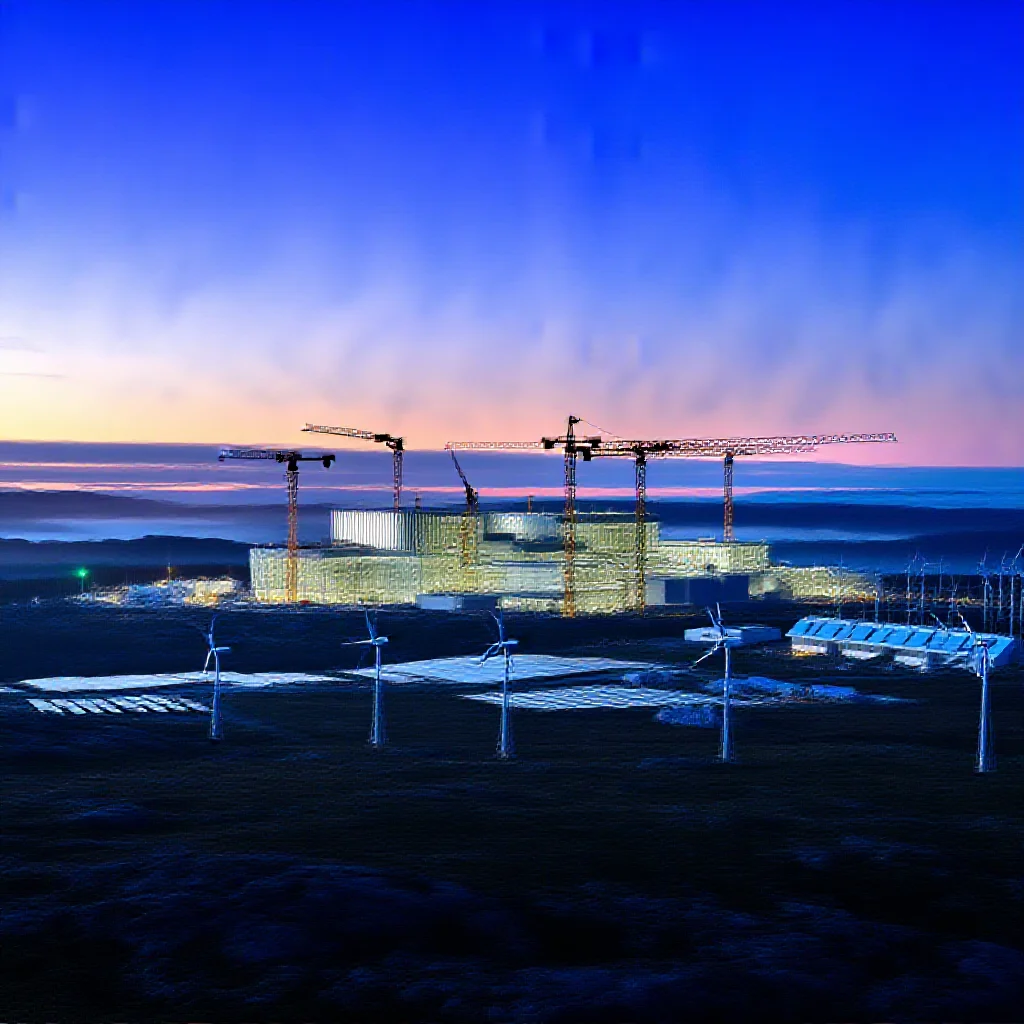
Beyond the $1.5B Funding: How Boden's Green Steel Plant Redefines Industrial Economics
Stegra has secured $1.5 billion in funding to complete its first green steel mill in Boden, Sweden, a facility described as the world's first major commercial-scale green steel plant. (Source 1: [Primary Data]) The project, with a total cost of approximately $4.5 billion, is designed to produce 2.5 million metric tons of steel annually using hydrogen from renewable energy, targeting a 2025 production start. (Source 1: [Primary Data]) This capital infusion represents more than a corporate milestone; it is a strategic bet on a new industrial cost curve. The analysis that follows examines the project's pivot from technology demonstration to supply chain catalyst, its underlying hydrogen economics, and its potential to trigger systemic shifts across heavy industry.
The Hidden Pivot: From Tech Demo to Supply Chain Anchor
The designation "commercial-scale" is a critical economic threshold, not merely an engineering one. A production target of 2.5 million tons annually moves the Boden plant beyond a proof-of-concept into the realm of market disruption. This volume is sufficient to supply a meaningful percentage of a regional market, providing the necessary scale to negotiate with suppliers and lock in off-take agreements with major consumers.
The capital structure reveals a de-risked venture entering its final phase. The $1.5 billion funding round, against a total project cost of $4.5 billion, indicates that earlier-stage risks—technology validation, permitting, and foundational engineering—have been largely retired. This final infusion signals high investor confidence in the project's execution timeline and its 2025 operational target. (Source 1: [Primary Data])
Boden’s geography is a strategic component of its economic logic. Its location in northern Sweden provides proximate access to low-cost, abundant hydropower, a prerequisite for affordable renewable hydrogen production. It is also situated near high-grade Arctic iron ore resources and possesses logistical links to key European industrial and automotive markets. This positioning minimizes cost variables for both energy and feedstock while ensuring access to premium buyers.
The Hydrogen Cost Curve: The Real Battle Behind Green Steel
The core operational challenge is the economics of hydrogen production. The plant's plan to use "hydrogen produced from renewable energy" (Source 1: [Primary Data]) presents a fundamental choice: build captive electrolysis facilities or secure hydrogen via long-term off-take agreements. The decision will determine the plant's exposure to volatile power markets and define its true production cost base.
The 2025 production start date is a strategic market signal. This timeline establishes a tangible benchmark for the industry, applying pressure on operators of legacy blast furnaces. It accelerates the capital allocation debate between retrofitting existing assets with carbon capture systems and building entirely new hydrogen-based primary steel plants.
The viability of the entire model hinges on the Levelized Cost of Hydrogen (LCOH). In Scandinavia, where renewable electricity costs are among the lowest globally, the LCOH for grid-connected electrolysis is projected to become competitive with fossil-based alternatives within this decade. (Source 2: [Industry Benchmark Data, e.g., BloombergNEF]) The Boden plant's success will depend on its ability to secure renewable hydrogen at a cost that, when integrated into steel production, can compete with the traditional cost curve of coal-based steel, even before accounting for carbon pricing or green premiums.
Ripple Effects: The New Industrial Ecosystem This Plant Creates
The plant’s operation will generate demand shocks beyond the steel sector. It will require consistent, high volumes of high-grade iron ore pellets, favoring mining operations capable of supplying this feedstock. Concurrently, it will drive investment in specialized renewable energy infrastructure and gigawatt-scale electrolyzer capacity, fostering a new industrial supply chain.
The concept of a "green premium"—a higher price paid for low-carbon steel—is positioned by this project as a temporary market phenomenon. The strategic intent of commercial-scale facilities like Boden's is to mass-produce green steel, driving down costs through scale and learning curves to make the premium obsolete. The goal is to establish a new, lower-carbon cost baseline for commodity steel pricing.
Downstream, the promise of guaranteed volumes enables supply chain transformation. Automotive and appliance manufacturers, under regulatory and consumer pressure to decarbonize, can secure multi-year supply agreements for green steel. This allows them to lock in the carbon footprint of their materials years in advance, transforming green steel from a niche product into a foundational industrial input.
The Slow Audit: Long-Term Risks and the Replication Question
Pioneering at this scale carries inherent systemic risk. The Boden plant represents a single-point, first-of-its-kind industrial process. Any unanticipated operational, technological, or logistical failure could have outsized reputational and financial consequences, potentially slowing broader industry adoption. Its success is critical for proving the integrated model.
The project's ambition is contextualized by a nascent global landscape. Other ventures, such as H2 Green Steel's project in nearby Boden and ThyssenKrupp's tkH2Steel initiative in Germany, are on similar but not identical paths. (Source 3: [Competitive Landscape Analysis]) The performance, timeline, and final capital cost of the Stegra facility will serve as the primary real-world dataset against which all other projects and investment decisions are benchmarked.
The ultimate measure of success will be replication. The true test of the economic model being proven in Boden will be whether its financial and operational outcomes—its actual production cost, reliability, and profitability—can be blueprinted and deployed in other regions with different renewable energy profiles and market conditions. This will determine if green hydrogen steelmaking transitions from a pioneering Swedish project to a global industrial standard.