Beyond the Boom: Decoding the Strategic Depth of China''s Cleantech Export Dominance
While headlines focus on China's massive cleantech export volumes and rising global demand, a deeper analysis reveals a strategic, multi-layered play. This article moves beyond surface-level trade data to examine the underlying industrial policy, supply chain control, and long-term geopolitical implications of China's clean energy technology dominance. We explore how this export surge is not merely a market response but a calculated effort to shape global energy infrastructure, set technological standards, and secure critical mineral supply chains. The analysis considers the potential for both collaboration and friction as the world's decarbonization goals become increasingly dependent on Chinese manufacturing prowess.
Beyond the Boom: Decoding the Strategic Depth of China's Cleantech Export Dominance
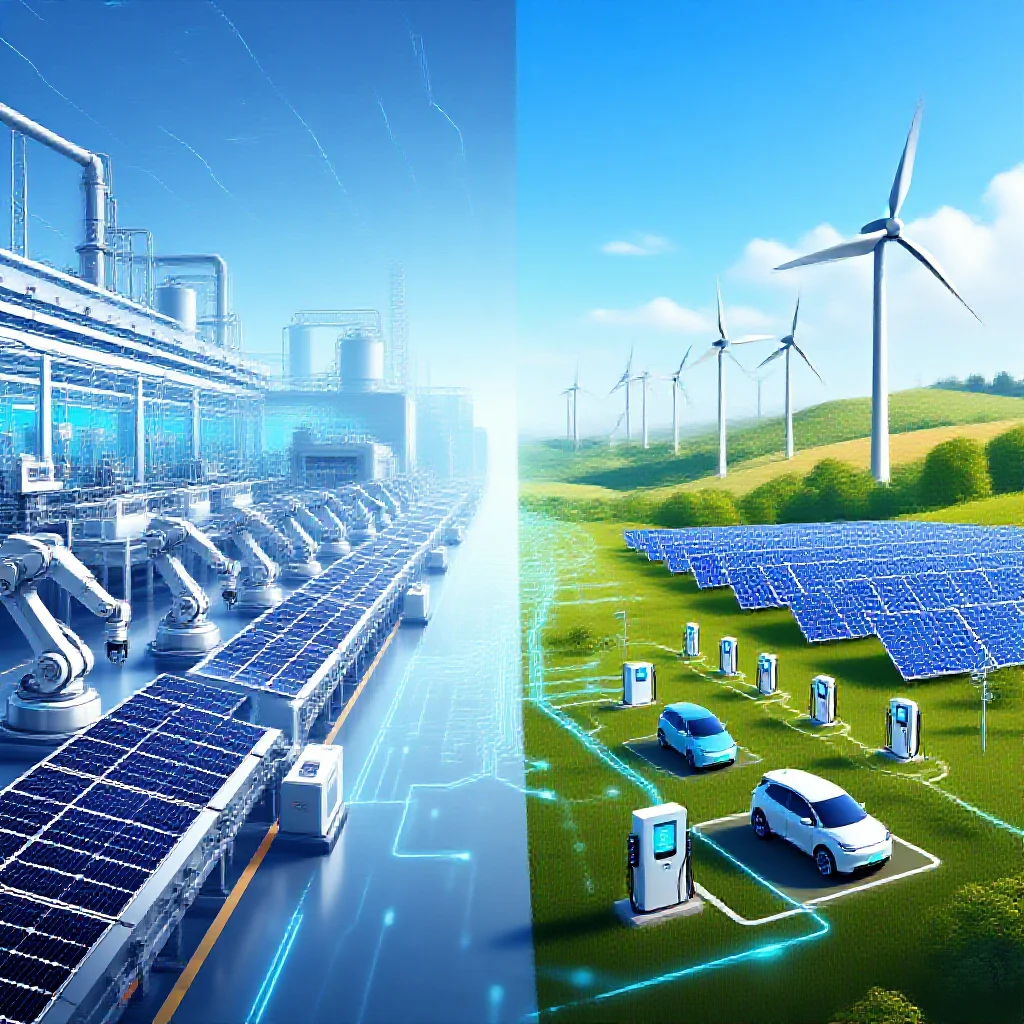
The narrative of China's dominance in clean technology exports is often framed by staggering volumes and apparent market logic. In 2023, China accounted for approximately 80% of global solar photovoltaic module production capacity and over 60% of global electric vehicle battery production (Source 1: IEA, *Clean Energy Manufacturing*). Concurrently, global demand for these technologies is accelerating, driven by binding net-zero pledges, energy security imperatives following geopolitical conflicts, and the continued decline in levelized costs of renewable energy. The surface analysis is straightforward: immense scale, vertically integrated supply chains, and state-backed financing create a cost and volume advantage that meets a booming global market. However, a deeper audit reveals this export surge is not a passive market phenomenon but a multi-decade, strategic play with profound implications for global energy infrastructure, technological standards, and geopolitical influence.
The Hidden Architecture: Industrial Policy as a Strategic Weapon
The competitive edge in cleantech is not a product of spontaneous market forces. It is the outcome of a deliberate and sustained industrial policy architecture. For over two decades, sequential five-year plans have systematically prioritized clean energy sectors, deploying a toolkit of targeted R&D funding, large-scale domestic deployment mandates, and local content requirements. Initiatives like the "Golden Sun" demonstration program and later feed-in tariffs created a guaranteed domestic market, allowing manufacturers to achieve scale and iterate technology rapidly. This state-sponsored ecosystem provided a risk-insulated environment for companies to grow.
The strategic depth is evident in the value chain ascent. The analysis moves beyond final assembly to control over upstream, high-value components and materials. In solar, China now dominates the production of high-purity polysilicon, wafers, and cells, not just modules. In batteries, the control extends from mined and processed critical minerals like lithium, cobalt, and graphite to the production of cathodes, anodes, and electrolytes. BloombergNEF data indicates China refines nearly 90% of the world's rare earth elements, 70% of its cobalt, and processes over 60% of its lithium (Source 2: BloombergNEF, *Battery Supply Chain Report*). This vertical integration insulates Chinese manufacturers from supply shocks and captures the majority of the economic value, transforming the export profile from low-margin hardware to high-value, technology-intensive materials and components.
The Unseen Battleground: Standards, Infrastructure, and Lock-in Effects
Exporting hardware establishes trade flows; exporting standards establishes long-term architectural influence. The strategic objective extends beyond selling products to shaping the foundational protocols of the future energy system. Chinese companies are actively promoting their standards for grid connection, electric vehicle charging interfaces, and battery swapping technologies internationally. The widespread adoption of a particular charging standard or grid management software creates a path dependency for importing nations.
This leads to a critical, long-term impact on the underlying supply chain: technological lock-in. Nations adopting Chinese cleantech infrastructure may become dependent on the originating ecosystem for spare parts, software updates, system integration, and next-generation upgrades. This dependency shapes global energy infrastructure for decades, similar to how previous eras were defined by dependence on specific fossil fuel logistics or power generation technologies. The geopolitical dimension shifts from a reliance on hydrocarbon geopolitics to a new landscape where influence is exercised through control over the technology and mineral supply chains essential for decarbonization. Cleantech becomes a potent tool of soft power and strategic leverage.
The Global Response: Friction, Emulation, and the Search for Resilience
The strategic nature of China's cleantech dominance has triggered a substantive and timely policy response from other major economies, serving as a verification of its disruptive impact. These responses can be categorized as defensive and emulative.
Defensive measures aim to protect domestic industries and counteract perceived market distortions. The European Union's Carbon Border Adjustment Mechanism (CBAM) and its anti-subsidy investigations into Chinese electric vehicles are examples. The United States' Inflation Reduction Act (IRA) employs massive subsidies and local content requirements to onshore clean energy manufacturing. India's Production Linked Incentive (PLI) schemes for solar modules and advanced chemistry cell batteries follow a similar logic.
The emulative response involves attempts to replicate elements of China's strategic playbook, particularly in securing critical mineral supply chains. Initiatives like the U.S.-led Minerals Security Partnership aim to build alternative, friend-shored supply networks. This global response indicates a recognition that cleantech leadership is inseparable from energy security and industrial policy in the 21st century.
Neutral Market and Industry Predictions
The trajectory points toward a bifurcated or multi-polar cleantech landscape. In the near to medium term, Chinese manufacturing dominance in key components is structurally entrenched due to its scale, cost advantages, and control of processing capacity. Global decarbonization goals will remain materially dependent on Chinese exports.
However, the market will not remain static. Policy-driven efforts in the U.S., EU, and India will likely succeed in building significant alternative manufacturing capacity for *final assembly* (e.g., EV batteries, solar module assembly) within their respective blocs by 2030. The deeper, more strategic competition will concentrate on the upstream segments: mining, refining, and production of advanced materials and core components. This arena will see intense investment, geopolitical maneuvering, and potential for supply chain volatility.
Collaboration and friction will coexist. While geopolitical tensions may segment some markets, the sheer scale of the global energy transition necessitates a degree of pragmatic engagement with the established Chinese supply chain. The future will be defined not by a single hegemon but by complex interdependence, strategic competition in key nodes of the value chain, and a persistent global reliance on the industrial ecosystem China has built over the past three decades. The cleantech transition is, therefore, both an environmental imperative and a fundamental reconfiguration of global industrial and strategic power.