EU''s Fossil Fuel Flip: How the SFDR Proposal Redefines ''Sustainable'' Finance
A controversial proposal from EU member states seeks to remove explicit fossil fuel exclusions from the criteria for 'sustainable investments' under the Sustainable Finance Disclosure Regulation (SFDR). This move, detailed in a February 2024 Council document, would allow funds with fossil fuel holdings to qualify as Article 8 or 9 'sustainable' products under certain conditions. The plan, part of a broader consultation on SFDR implementation, signals a potential major shift in Europe's green finance taxonomy. This article analyzes the hidden market logic behind the proposal, its implications for investor trust and capital flows, and the long-term redefinition of sustainability it may trigger.
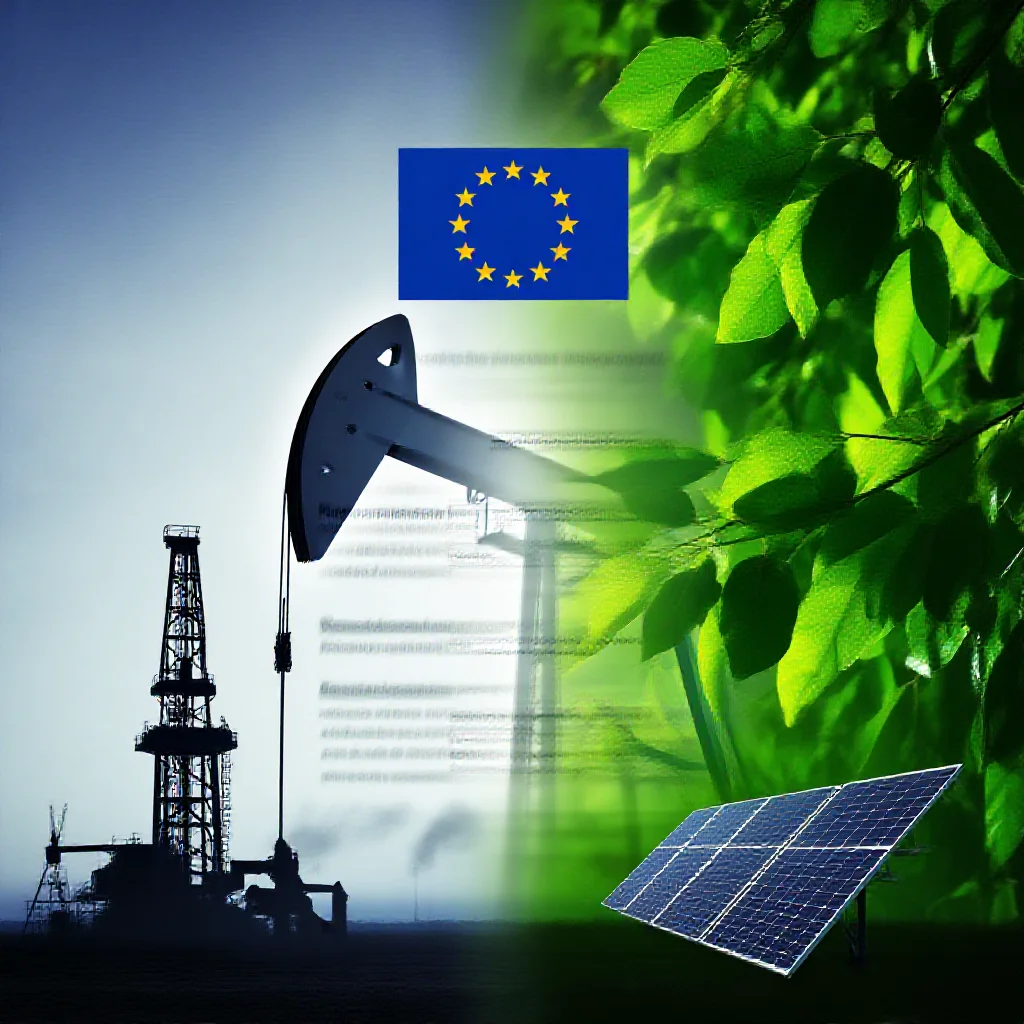
EU's Fossil Fuel Flip: How the SFDR Proposal Redefines 'Sustainable' Finance
The Regulatory Pivot: Decoding the EU's SFDR Proposal
A technical document circulated among European Union member states proposes a significant alteration to the bloc’s flagship sustainable finance rulebook. The proposal seeks to delete the explicit exclusion of "activities related to fossil fuels" from the criteria defining a "sustainable investment" under the Sustainable Finance Disclosure Regulation (SFDR) (Source 1: [Primary Data]). This change is contained within a February 2024 document from the Council of the EU’s preparatory bodies, forming part of a wider consultation on the implementation of the SFDR’s Regulatory Technical Standards (RTS).
The SFDR, operational since 2021, mandates financial market participants to disclose sustainability-related information. Its Article 8 covers funds promoting environmental or social characteristics, while Article 9 covers funds with sustainable investment as their objective. The current draft RTS provides criteria for these classifications, including the contested fossil fuel exclusion. The proposed deletion would, in principle, allow funds with holdings in fossil fuel companies to qualify as Article 8 or 9 products, provided they meet other environmental or social safeguards.
Beyond the Headlines: The Hidden Economic and Political Logic
The proposal is not an isolated policy shift but a manifestation of underlying tensions within the EU's green transition framework. It represents a pivot from a model of ideological purity toward one of conditional market realism.
The primary axis of tension is between establishing a clear, exclusion-based green taxonomy and acknowledging the complex, transitional role of fossil fuels within existing energy systems. The proposal can be interpreted as a pragmatic response to post-2022 energy security imperatives and sustained lobbying from financial and industrial sectors seeking continued capital access for transitional activities. It moves the regulatory goalposts from defining sustainability by what it excludes to defining it by what it conditionally includes.
This initiates a "conditional sustainability" paradigm. The ordinary narrative focuses on the removal of a prohibition. The deeper structural shift is the creation of a framework where fossil fuel-related activities could be deemed "sustainable" if they align with other environmental objectives or meet specific transitional benchmarks. This fundamentally blurs the bright line the SFDR was initially intended to draw, transforming it from a filter into a graduated scale.
Ripple Effects: Investor Trust, Greenwashing, and Capital Flows
The immediate effect of such a change would be the erosion of a clear regulatory signal. The current exclusion provides a straightforward due diligence checkpoint for investors seeking to avoid fossil fuel exposure. Its removal complicates the landscape, forcing investors to conduct more granular analyses of a fund’s underlying "sustainable" criteria, potentially increasing due diligence costs and creating comparability challenges.
This complexity directly amplifies greenwashing risks. The proposal creates a larger regulatory aperture for funds to maintain significant fossil fuel exposures while utilizing an Article 8 or 9 classification. The credibility of these labels, which have become critical marketing tools, risks dilution if investors perceive them as encompassing a vastly broader and contradictory range of activities.
The long-term impact on capital allocation could be profound. If the proposal is adopted, capital may continue to flow to fossil fuel projects or companies labeled as "transitionally sustainable" under the SFDR framework. This has the potential to slow the reallocation of financing toward renewable energy and deep decarbonization technologies by providing a sustainability-branded alternative for institutional capital. The redefinition at the regulatory level could recalibrate investment flows for years, embedding fossil fuels deeper into the architecture of what is officially considered "sustainable finance."
Conclusion: A Neutral Assessment of Future Trajectories
The technical proposal to remove the fossil fuel exclusion from the SFDR RTS is a strategic inflection point. Its adoption would mark a formal recognition by EU regulators of a more gradual, conditional transition pathway, aligning legal definitions with current geopolitical and economic realities.
Market predictions based on this development are twofold. First, the differentiation between Article 8 and Article 9 funds is likely to become even more critical, with market pressure potentially forcing Article 9 funds to adopt stricter, self-imposed exclusions to maintain credibility. Second, the role of the complementary EU Taxonomy, which defines environmentally sustainable activities, will be elevated. Investors may increasingly rely on Taxonomy alignment percentages rather than SFDR classifications alone to assess sustainability, as the Taxonomy maintains specific technical screening criteria, including for certain gas and nuclear activities under strict conditions.
The final outcome of the consultation remains uncertain. However, the proposal itself signals a durable shift in regulatory philosophy, moving European sustainable finance from a phase of simple exclusions to one of complex, conditional integrations, with significant implications for capital markets and the pace of the energy transition.