Ohio County''s Green Energy Ban Faces Voter Revolt: A Microcosm of America''s Rural Energy Dilemma
A rural Ohio county's ban on large-scale renewable energy projects is headed to a public referendum, transforming a local zoning dispute into a pivotal case study on democracy, energy sovereignty, and economic transition. This article analyzes the underlying tensions between local control and state/national clean energy goals, examining the petition drive's success as a symptom of broader rural discontent. We explore the hidden economic logic behind such bans—often tied to property rights, agricultural identity, and perceived threats to the rural economic base—and why this local vote could signal shifting political winds for renewable development in heartland America. The outcome may set a precedent for how communities negotiate the tangible impacts of the energy transition.
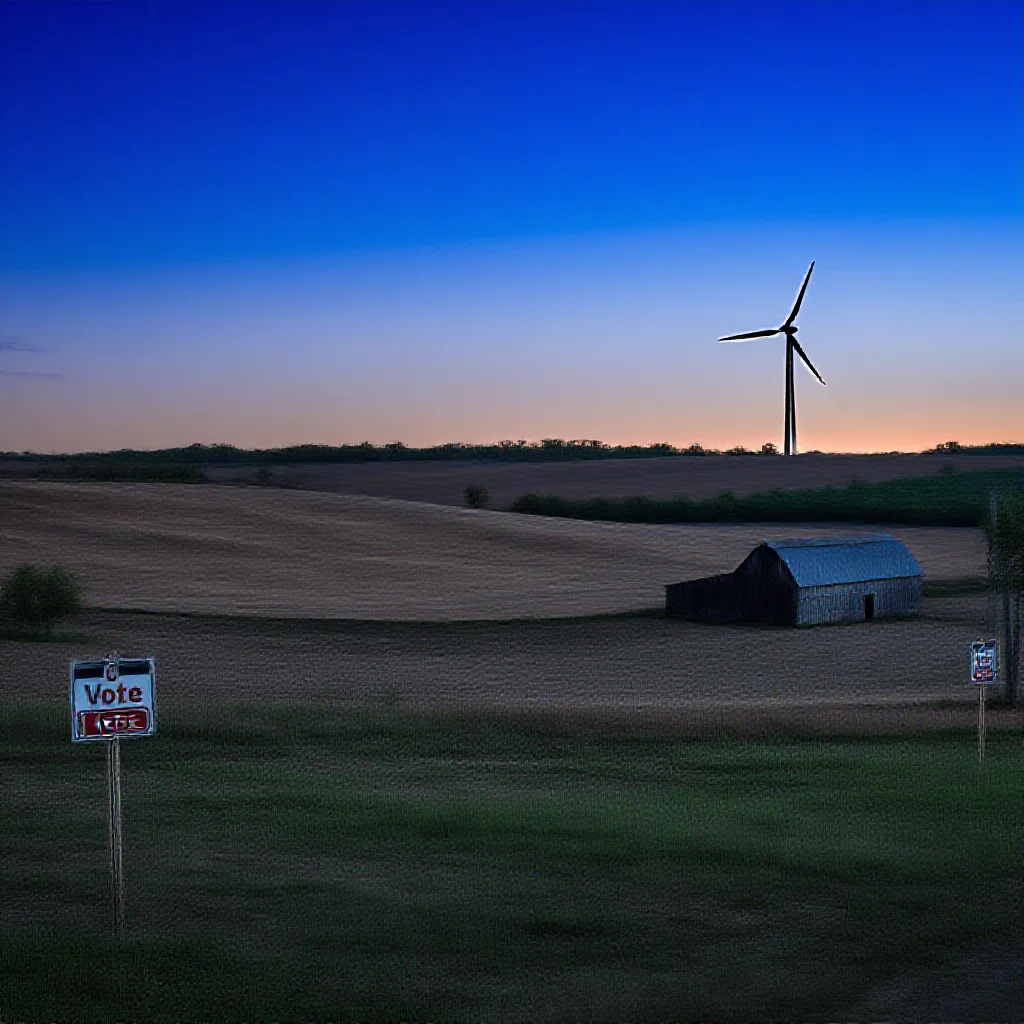
Ohio County's Green Energy Ban Faces Voter Revolt: A Microcosm of America's Rural Energy Dilemma
The Local Ban with National Implications: Unpacking Ohio's Energy Standoff
A county in Ohio enacted a ban on large-scale wind and solar energy projects (Source 1: [Primary Data]). This legislative action is not an isolated event but part of a broader trend of local ordinances restricting utility-scale renewable development across the U.S. Midwest. The stated justifications for such bans frequently cite visual impact, noise, and potential interference with agricultural operations. The unstated rationales, however, often involve deeper concerns over fundamental land-use change, shifts in the local tax base, and the perceived threat to a community's agricultural identity.
The policy dynamic shifted when a petition drive gathered a sufficient number of signatures to challenge the ban, meeting the requirement to place the issue on a public ballot (Source 1: [Primary Data]). This referendum mechanism functions as a rare democratic corrective, directly challenging a policy decision made by the county's governing board. The event transforms a local zoning dispute into a procedural case study on the mechanisms of local governance during periods of significant economic transition.
Petition Power: The Grassroots Mechanics of Challenging Energy Policy
The successful petition drive represents a measurable market signal within the political process. Its organization and the coalition required to gather the necessary signatures indicate latent economic demand that counters a uniform narrative of local opposition. This coalition likely included landowners seeking potential lease revenue, local businesses anticipating construction or maintenance jobs, and entities aligned with broader energy development goals.
Analysis of similar rural contexts reveals a consistent economic logic. Public opinion polling and landowner surveys in other Midwestern regions demonstrate that support for renewable projects increases significantly when tied to direct, tangible economic benefits for residents and the municipal budget. The petition, therefore, serves as an instrument revealing a divergence between perceived public sentiment and economically motivated stakeholder interests. It quantifies a constituency for whom the ban represents a constraint on asset valuation and capital inflow.
The Hidden Economic Logic: Property, Power, and the Rural Economy in Transition
The core conflict is fundamentally an economic negotiation over value capture during an energy transition. A ban on utility-scale renewable development functions to protect existing economic structures and land-use patterns. It maintains the status quo of the agricultural land asset supply chain. Conversely, repealing the ban opens the county to new capital flows, transforming land into a dual-purpose asset for both crop production and energy generation.
The long-term impact of such restrictions extends beyond county lines. A proliferation of local bans constrains the regional development pipeline for renewable energy. This constraint has downstream effects on equipment manufacturers, engineering and construction firms, and institutional investors whose projects require geographic aggregation to achieve scale. The local decision, therefore, interfaces with state and national energy infrastructure goals. The debate transcends a simplistic "green versus conservative" framework. It is a negotiation over whether rural areas will function primarily as exporters of energy with limited local economic retention, or as active stakeholders building more diversified and resilient economic bases.
Referendum as Bellwether: What the Vote Will Really Decide
The upcoming election moves the issue beyond theoretical policy analysis into a measurable outcome. The campaign rhetoric will frame the choice for voters along several axes: individual property rights versus community aesthetic control, a vision of static pastoral identity versus one of adaptive economic opportunity, and definitions of local energy independence.
Post-election analysis will require examination of key demographic voting patterns. The alignment of votes with landownership status, proximity to proposed project areas, and occupation will provide data on how economic interests translated into political action. The outcome will also be scrutinized for its influence on adjacent jurisdictions considering similar ordinances. A vote to uphold the ban would signal to other county boards that such restrictions have durable public support. A vote to repeal would demonstrate that perceived economic opportunity can mobilize a sufficient coalition to overcome established policy, potentially encouraging similar petition efforts elsewhere.
The result will set a procedural and political precedent for how American communities negotiate the tangible impacts of energy transition. It will provide a data point on the balance between centralized policy goals and the mechanics of local consent, a dynamic that will define the pace and geography of renewable energy deployment in the coming decade.