The Perovskite Paradox: Why the ''Breakthrough'' Solar Tech Remains Stuck in the Lab While the Market Waits
Solar perovskites, alongside small modular nuclear reactors and solid-state batteries, represent a class of highly publicized clean energy technologies trapped in a 'promise gap'—a chasm between theoretical potential and commercial scale. Published in 2026, this analysis moves beyond the hype to examine the systemic barriers preventing perovskite solar panels from market arrival. We explore the hidden economic logic of 'perpetual prototyping,' the risk-averse investment patterns in energy infrastructure, and the critical supply chain bottlenecks that must be solved not just in the lab, but in global manufacturing ecosystems. This is not just a story of technical hurdles, but of the market's failure to bridge the valley of death for foundational energy technologies.
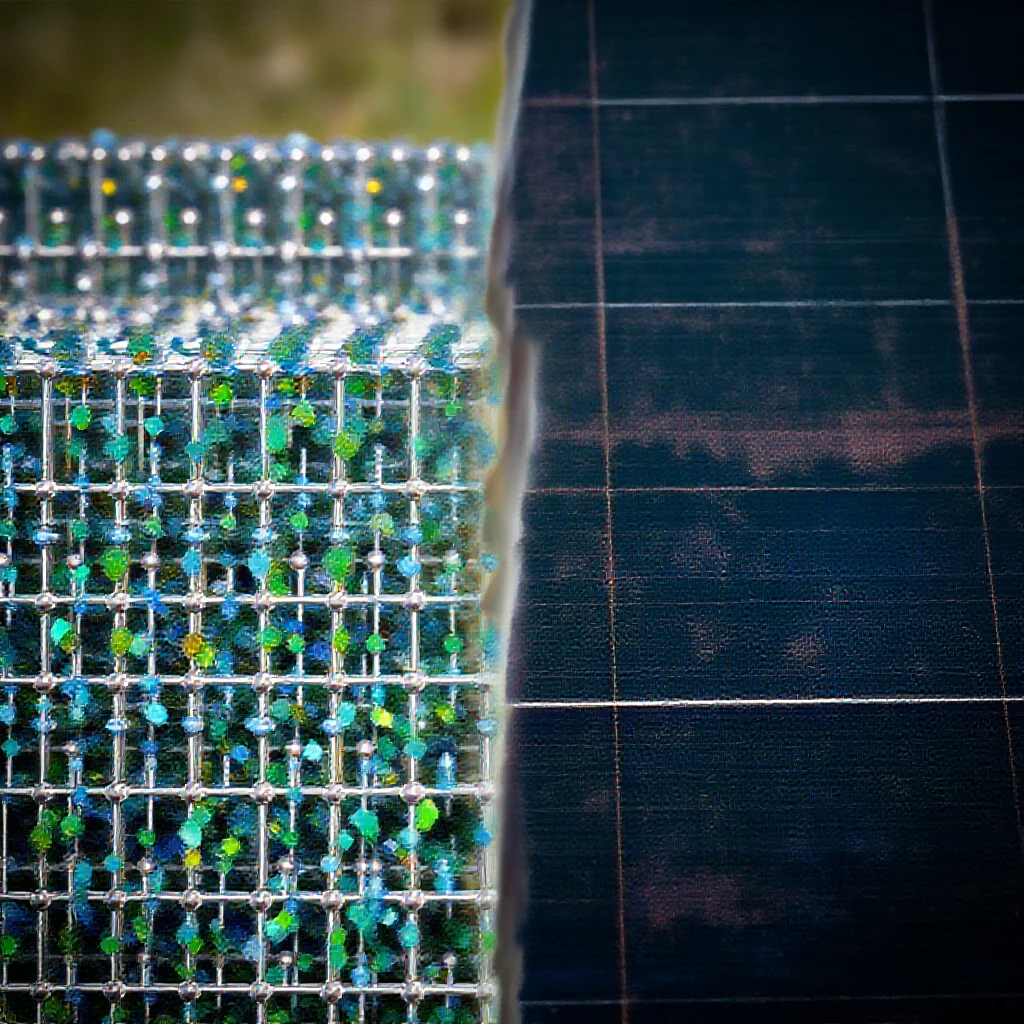
The Perovskite Paradox: Why the 'Breakthrough' Solar Tech Remains Stuck in the Lab While the Market Waits
**Publication Date:** April 20, 2026

**Introduction: The 'Promised but Not Arrived' Club of Clean Energy**
As of the 2026 publication checkpoint, a cohort of clean energy technologies first heralded in the 2010s and early 2020s remains conspicuously absent from the market at meaningful scale. Solar perovskites, small modular nuclear reactors (SMRs), and solid-state batteries form a distinct group characterized by a persistent "promise gap." These technologies share a profile of high theoretical performance, significant media and research attention, and a protracted delay in commercial deployment. The central analytical question is whether this delay is a function of unresolved technical challenges alone, or if deeper systemic market and economic logics are the primary barriers. This analysis examines the latter, using perovskite photovoltaics as a case study in the structural difficulties of transitioning from laboratory breakthrough to foundational energy infrastructure.

**The Core Axis: The Economic Logic of 'Perpetual Prototyping' vs. Infrastructure Risk**
The development trajectory of perovskite solar cells reveals a fundamental misalignment between innovation funding models and the demands of energy hardware manufacturing. Venture capital and public research grants flow readily into early-stage, lab-scale innovation, where rapid iteration on efficiency records generates high-impact publications and increases startup valuation. This phase operates on a software-like model, rewarding novelty and potential.
The transition to pilot-plant and gigawatt-scale manufacturing, however, requires a different capital profile. It is characterized by high upfront costs, long asset lifetimes, and margins dependent on relentless yield optimization and quality control—factors that offer less narrative appeal. The market, as currently structured, demonstrably rewards the *story* of potential more reliably than it funds the high-risk, capital-intensive engineering required for scale. This creates an economic logic of "perpetual prototyping," where the technology remains in a state of promising development, but the financing to cross the "valley of death" to commoditization is systematically scarce. The risk profile for infrastructure investors remains prohibitively high compared to incremental improvements in established, bankable silicon photovoltaic technology.

**Deep Audit: Unpacking the Perovskite Supply Chain Bottleneck**
Technical discussions often focus on champion cell efficiency and stability lifetimes. A supply chain audit reveals more foundational bottlenecks. The production of perovskite solar modules at scale is not constrained by a single factor but by a network of underdeveloped industrial processes.
First, the requirement for high-purity, consistent precursor chemicals (e.g., lead iodide, formamidinium salts) lacks a mature, low-cost supply chain equivalent to that of polysilicon. Second, the scalable deposition techniques necessary for high-throughput manufacturing—such as slot-die coating or vapor-phase deposition—are not yet standardized or supported by a broad ecosystem of equipment manufacturers. There is no equivalent to the semiconductor industry's "Applied Materials" for perovskite production lines. Third, critical ancillary materials, including stable and transparent electrode layers and durable encapsulation materials, are themselves subjects of research, not commoditized components. The dependency on materials with fragile or volatile supply chains contrasts sharply with the mature, diversified global supply network for silicon photovoltaics.

**The Credibility Layer: Sourcing and Timeline Verification**
The analysis is anchored in the observable market status as of 2026. While perovskite cells have achieved certified laboratory efficiencies exceeding 26%, no company has established a multi-gigawatt annual production capacity. The dominant market share of solar installations remains overwhelmingly held by crystalline silicon technology. Forecasts from the early 2020s that projected significant perovskite market penetration by 2025 have been revised. This verification underscores that the promise gap is an empirical reality, not a theoretical concern. The timeline of development has consistently extended, indicating that scaling challenges are more complex and interdependent than initially modeled.
**Conclusion: Neutral Market and Industry Predictions**
The pathway for perovskite solar technology to transition from a laboratory phenomenon to a market commodity requires the convergence of three factors. First, the emergence of one or more vertically integrated manufacturers willing to make multi-billion-dollar bets on full-scale production facilities, accepting the associated technological and financial risk. Second, the parallel development of a robust, tiered supply chain for precursors, equipment, and components, likely requiring strategic public-sector investment in pilot manufacturing lines. Third, the establishment of new bankability and warranty standards that can convince conservative project financiers to adopt the technology.
The most probable forecast is one of continued gradual progress in niche applications, such as building-integrated photovoltaics or specialized lightweight panels, where a premium price can be tolerated. A disruptive, mass-market challenge to silicon dominance is unlikely before the 2030s, contingent upon the resolution of the supply chain and financing barriers detailed in this audit. The perovskite paradox, therefore, stands as a defining case study in the 21st-century challenge of translating scientific potential into infrastructural reality.