Beyond Public Markets: The Data Chasm and Valuation Crisis in Private Asset Climate Risk
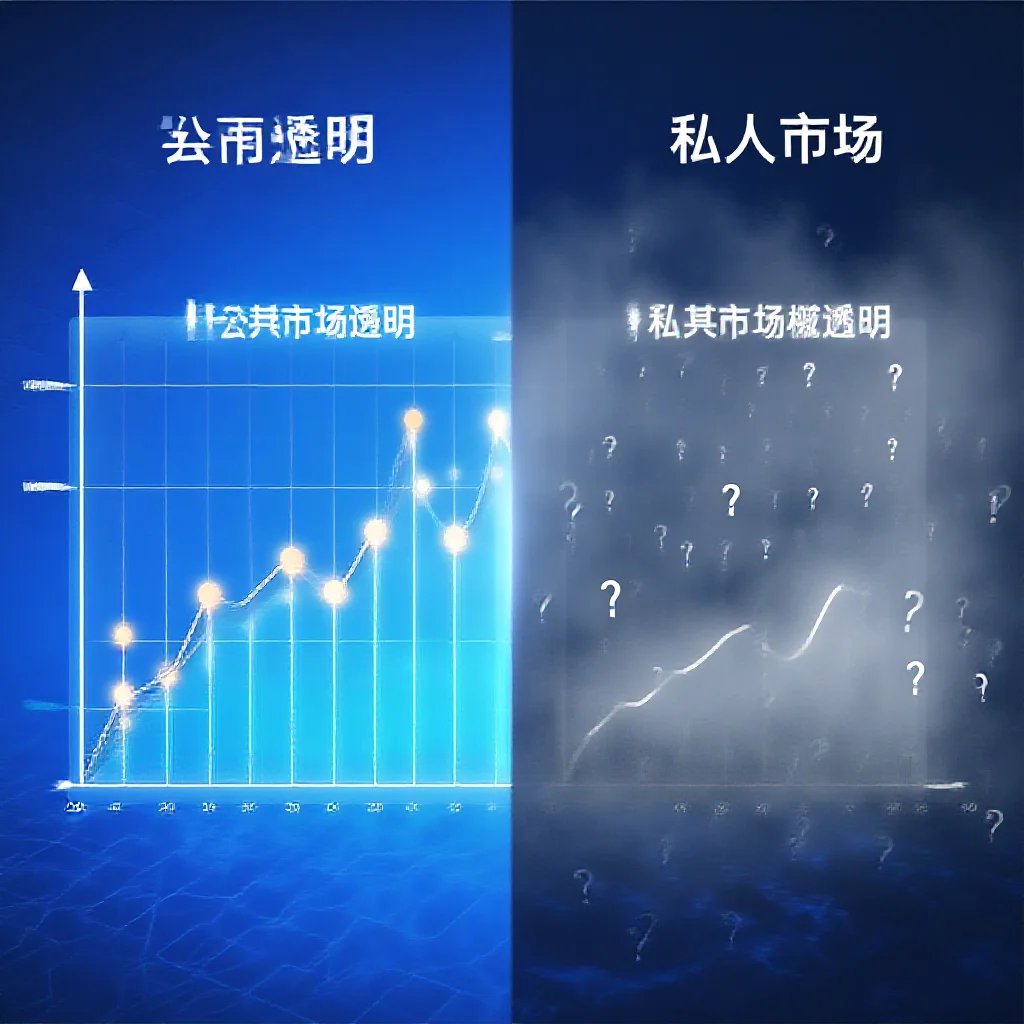
The push for standardized climate risk assessment is exposing a fundamental divergence between public and private markets. While public equities face growing disclosure mandates, private assets—from venture capital to infrastructure—are mired in a data scarcity and valuation crisis. This article argues that the debate over a single framework is secondary to a deeper economic reality: the lack of transparent, frequent pricing in private markets creates an ''information asymmetry shield'' that delays capital reallocation. We explore how this data chasm not only impedes accurate risk pricing but also distorts the flow of ''green'' capital, potentially creating systemic blind spots as climate physical and transition risks intensify.
Beyond Public Markets: The Data Chasm and Valuation Crisis in Private Asset Climate Risk
The accelerating push for standardized climate risk assessment is exposing a fundamental divergence in financial market mechanics. While frameworks like the TCFD gain traction, their application reveals a deep fissure between public and private asset universes. Public equities and bonds, subject to daily pricing and increasing disclosure mandates, are being forcibly revalued under climate scrutiny. In contrast, private markets—spanning private equity, venture capital, real estate, and infrastructure—are mired in a structural crisis of data scarcity and opaque valuation. The central debate is not merely about framework suitability, but about how the inherent illiquidity and opacity of private markets create an information asymmetry shield. This shield delays the capital reallocation essential for climate adaptation, potentially compounding systemic financial risk.
The Illusion of a Universal Framework: Why One Size Doesn't Fit All
The discourse often centers on creating or selecting a single, dominant climate risk assessment methodology. This pursuit overlooks a foundational economic truth: the core mechanics of price discovery differ categorically between public and private assets. Public securities benefit from continuous, liquid markets where new information—including climate risk perceptions—is rapidly incorporated into asset prices through trading activity. This is a mark-to-market reality.
Private assets, however, are valued through periodic appraisals, discounted cash flow models, and negotiated transactions that occur infrequently. Climate risk, whether a physical threat to a property's long-term viability or a transition risk undermining a business model, is inherently forward-looking and probabilistic. Its integration into valuation models for illiquid assets is more subjective, reliant on proprietary data and long-term assumptions that are not stress-tested by daily market sentiment. The structural lack of transparent, frequent pricing makes climate risk quantification an exercise in financial modeling rather than observable market pricing.
*Infographic Suggestion: A two-column comparison titled "Mechanics of Price Discovery." Public Markets column lists: Daily Trading, High Liquidity, Regulatory Filings, Analyst Coverage. Private Markets column lists: Quarterly/Annual Appraisals, Low Liquidity, Limited Disclosure, Proprietary Models.*
The Data Chasm: More Than Just a Collection Problem
The issue for private markets extends beyond simple "data availability." It is a systemic data chasm rooted in the absence of mandatory reporting, the proprietary nature of holdings, and the vast heterogeneity of assets. A publicly traded utility must disclose operational details, asset locations, and emission profiles to regulators and investors. A privately held portfolio of industrial facilities or a late-stage agri-tech startup has no such universal obligation.
This leads to a valuation crisis. In public markets, a new climate regulation or a major physical weather event can trigger immediate repricing. In private markets, the same risk may remain dormant in valuation models until the next appraisal cycle or a transaction occurs. This creates a significant lagging indicator effect. The valuation of a privately held port facility exposed to sea-level rise may not reflect the increasing insurance premiums or engineering cost forecasts for years, unlike its publicly traded counterpart. The chasm is not merely a gap in data points, but a fundamental disconnect in the mechanism and timeliness of risk incorporation.
*Infographic Suggestion: A deep canyon visually separates two landscapes. The "Public Market" side has flowing rivers labeled "Price Data," "SEC Filings," and "Research." The "Private Market" side is arid, with scattered, isolated oases labeled "Appraisal Reports," "Limited ESG Data," and "Infrequent Transactions."*
The Hidden Economic Logic: Information Asymmetry as a (Temporary) Shield
This opacity serves a specific, though ultimately perilous, economic function. For private asset owners—limited partners, general partners, and direct holders—the lack of transparent and frequent pricing acts as a buffer against the short-term volatility of climate risk repricing. It provides a shield from the immediate mark-to-market losses that public market investors must absorb when climate risks are reassessed. This can be perceived as a benefit, offering stability and allowing for longer-term execution of climate adaptation strategies without quarterly performance pressure.
The systemic peril of this shield is its inhibition of efficient capital reallocation. Financial markets are signal-processing mechanisms. Opaque prices send weak or delayed signals. Capital is therefore slower to exit assets vulnerable to climate transition or physical threats and slower to flow into assets with demonstrable climate resilience. Furthermore, the data chasm distorts the flow of "green" capital. It becomes inherently more difficult for a private sustainable infrastructure fund to prove its superior risk-adjusted returns due to climate resilience, as the counterfactual—the declining value of vulnerable assets—remains hidden in the shadows of private ledgers. The asymmetry thus potentially stifles investment in the very assets needed for the transition.
*Infographic Suggestion: A chessboard where pieces on one half are clearly visible (Public), while pieces on the other half (Private) are shrouded in mist, making their positions and threats ambiguous.*
Regulatory Pressure vs. Market Reality: Navigating the Convergence
Regulatory momentum is undeniable but currently asymmetrical. Initiatives like the EU's Sustainable Finance Disclosure Regulation (SFDR) and the SEC's proposed climate disclosure rules primarily target public companies and large financial market participants. Their indirect effect on private markets is through the value chain—requiring, for instance, disclosures from a large asset manager about the sustainability risks in its private fund offerings. This creates a trickle-down pressure for data collection from underlying private holdings.
The market reality is that convergence will be driven by two forces: liability and transaction diligence. As lenders, insurers, and litigation focus on climate due diligence, the cost of opacity will rise. Simultaneously, transaction processes will increasingly demand climate risk assessments as a standard component of valuation. The likely outcome is not a single framework, but a tiered ecosystem of methodologies. Standardized, high-level metrics may be applied for disclosure, while asset-specific, deep-dive models will govern investment and valuation decisions. Third-party data providers and specialized appraisal firms will emerge to fill the chasm, creating a new layer of financial infrastructure focused on private market climate analytics.
Conclusion: The Impending Transparency Threshold
The trajectory points toward an inevitable, if gradual, erosion of the private market information shield. The drivers are regulatory, commercial, and physical. As climate physical and transition risks materialize with greater frequency and financial impact, the assumption that private assets are insulated from repricing will be tested. The systemic blind spot created by the data chasm poses a stability risk, as significant portions of the global financial system may be mispricing a material, non-diversifiable risk factor.
The market will not wait for perfect frameworks. The imperative is the development of pragmatic, scalable approaches to climate data collection and risk modeling for private assets. The entities that bridge the chasm—whether through technology, standardized reporting protocols, or innovative valuation techniques—will not only mitigate systemic risk but also capture the opportunity inherent in redirecting capital flows. The final analysis indicates that transparency, not just methodology, is the prerequisite for pricing the climate century.