Beyond the Drill: How Vermont''s First Neighborhood Geothermal Project Redefines Affordable Housing Economics
Vermont's pioneering neighborhood-scale geothermal project, set to break ground in Summer 2026, is more than a green energy initiative; it's a strategic economic model for decarbonization. By integrating geothermal directly into an affordable housing development, the project tackles the critical upfront cost barrier that has limited widespread adoption. This analysis explores how this model could shift geothermal from a premium retrofit to a foundational utility for new construction, creating a replicable blueprint that aligns climate goals with housing affordability and long-term energy cost stability. The project's success could redefine the financial calculus for developers and municipalities nationwide.
Beyond the Drill: How Vermont's First Neighborhood Geothermal Project Redefines Affordable Housing Economics

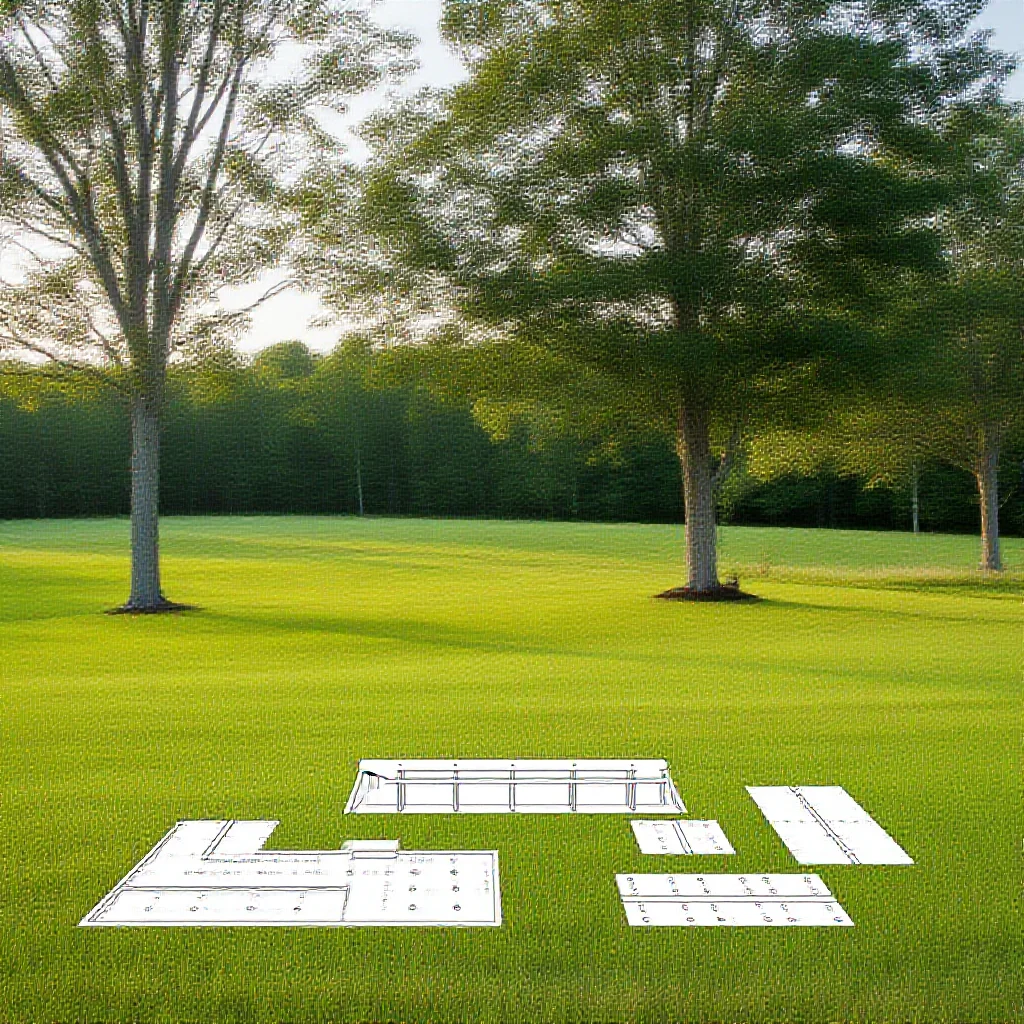
*Image: A conceptual site plan for the integrated geothermal and housing development.*
Introduction: A Groundbreaking Blueprint, Not Just a Groundbreaking
Vermont’s first neighborhood-scale geothermal project is scheduled to break ground in Summer 2026. (Source 1: [Primary Data]) The project is integrated into an affordable housing development, with an explicit goal of serving as a blueprint for cost-effective, all-electric new construction. (Source 2: [Primary Data]) The technical achievement of installing geothermal borefields is not novel. The project's significance, however, lies in its integrated economic and development model. By pairing a capital-intensive decarbonization technology with affordable housing, the initiative presents a replicable template designed to solve a persistent market failure: the high first-cost barrier that has prevented geothermal energy from scaling beyond premium, single-family retrofits. The central analytical question is whether this model can successfully decouple deep decarbonization from permanent cost premiums.

*Image: A comparison of distributed vs. shared thermal infrastructure.*
The Hidden Economic Logic: Decoupling Premium from Green
The project’s stated aim of "cost-effective, all-electric new construction" represents a direct challenge to prevailing assumptions in real estate development. The economic logic operates on three distinct tiers.
First, the neighborhood-scale approach fundamentally alters the capital expenditure profile. Shared infrastructure—including drilling rig mobilization, borefield installation, and primary piping loops—allows for significant economies of scale. The per-unit cost of geothermal capacity drops when amortized across multiple dwellings, a financial efficiency impossible to achieve in piecemeal retrofits. This transforms geothermal from a custom-added feature into a pre-planned municipal-style utility.
Second, the integration with affordable housing is a strategic maneuver to capture long-term value. The high initial capital outlay is offset by the elimination of fossil fuel infrastructure—no gas lines, boilers, or chimneys—and the future-proofing of buildings against volatile hydrocarbon price shocks. The financial benefit is locked in for the lifetime of the asset: residents gain predictable, low thermal energy costs, which directly enhances housing affordability over a 30-50 year horizon. This repositions geothermal from a "green premium" to a core financial instrument for stabilizing occupant expenses.
Third, the model internalizes systemic risk mitigation. For developers and housing authorities, the project provides a hedge against future carbon taxes, escalating fuel costs, and potential regulatory mandates for building electrification. The upfront investment secures long-term operational cost certainty.

*Image: Lifetime cost analysis of competing heating systems.*
Dual-Track Analysis: A 'Slow Analysis' Case Study in Systemic Change
This project is a quintessential subject for "slow analysis." Its ultimate impact will not be measured upon groundbreaking or even completion, but over years of operation as a proof-of-concept for policy, financing, and construction codes. The immediate news cycle is irrelevant to its true test.
The key metrics for a long-term audit are quantifiable and specific: 1. **Post-Construction Energy Performance:** Measured kilowatt-hour consumption for space heating and domestic hot water against modeled projections. 2. **Resident Utility Savings:** Direct comparison of average monthly energy bills for occupants versus comparable homes served by propane or fuel oil in the same climate zone. 3. **System Maintenance & Reliability Costs:** Longitudinal data on the operational expenditures and durability of the shared geothermal loop and individual heat pumps. 4. **Developer & Owner Return on Investment:** Analysis of total development cost premium (if any) versus conventional construction, weighed against achieved rental stability, asset valuation uplift, and avoided capital replacements.
The project functions as a live pilot, generating hard data for risk-averse stakeholders. Convincing municipal planners, public housing finance agencies, and private developers requires evidence that moves beyond theoretical modeling. Success would provide a validated playbook: specific financing structures, drilling density parameters, and contractual frameworks for managing shared infrastructure.

*Image: Stakeholder collaboration is critical for replicable model development.*
Neutral Market and Industry Predictions
The replicability of Vermont's model depends on the convergence of several independent factors. Prediction of widespread adoption is conditional, not assured.
The most probable initial adopters will be mission-driven developers, such as community land trusts, cooperative housing corporations, and municipal housing authorities. These entities have longer investment horizons and a mandate to prioritize lifetime affordability, making them more amenable to capital-intensive strategies with long-term paybacks.
Scaling will require the emergence of specialized financing vehicles. Mechanisms like Property Assessed Clean Energy (PACE) financing, tailored for multi-family and neighborhood-scale thermal networks, could bridge the first-cost gap. Furthermore, the model may catalyze a shift in appraisal practices, compelling the real estate finance industry to formally recognize and value "energy cost certainty" in property valuations.
The primary barrier to replication remains site-specific geology and development density. The model is most economically viable for new construction on contiguous parcels of land, limiting its immediate applicability to dense urban infill or severely constrained sites. However, for suburban and rural affordable housing developments—a common typology in many regions—this blueprint presents a technically and financially viable path to full electrification.
The Vermont project will not, by itself, decarbonize the building sector. Its function is to act as a demonstrator, providing the empirical data and procedural template needed to transform geothermal heating and cooling from a niche technology into a standard utility for community-scale development. The final audit of its success will be the number of similar projects it inspires.