The Depleted Arsenal: How America''s Shrinking Strategic Petroleum Reserve Redefines Energy Security
The U.S. faces a fundamental shift in its ability to manage oil market volatility. With the Strategic Petroleum Reserve at its lowest level since the 1980s following a massive 2022 release, and diplomatic efforts to sway OPEC+ producers like Saudi Arabia proving ineffective, America's traditional policy toolkit is depleted. This article analyzes how the convergence of a diminished emergency stockpile, slowing domestic shale growth, and a recalcitrant OPEC+ alliance has created a new paradigm of vulnerability. We explore the long-term implications for U.S. economic leverage, energy security strategy, and the potential need for a post-SPR policy framework in an era of constrained supply-side options.
The Depleted Arsenal: How America's Shrinking Strategic Petroleum Reserve Redefines Energy Security
Introduction: The New Calculus of Energy Insecurity
In 2022, the United States executed the largest single drawdown in the history of its Strategic Petroleum Reserve (SPR), releasing 180 million barrels in response to the price shock following Russia’s invasion of Ukraine. This action represented the peak application of a decades-old policy tool. The consequence is a fundamental recalibration of U.S. energy security. The nation has transitioned from a position of holding significant strategic and market leverage to one of heightened vulnerability. This shift is driven by a triple constraint: a severely depleted emergency stockpile, diplomatic outreach to major producers that has yielded limited results, and a deceleration in the growth rate of domestic shale production. Together, these factors redefine the traditional toolkit available for managing oil market volatility.
The Empty Vault: Strategic Implications of a Depleted SPR
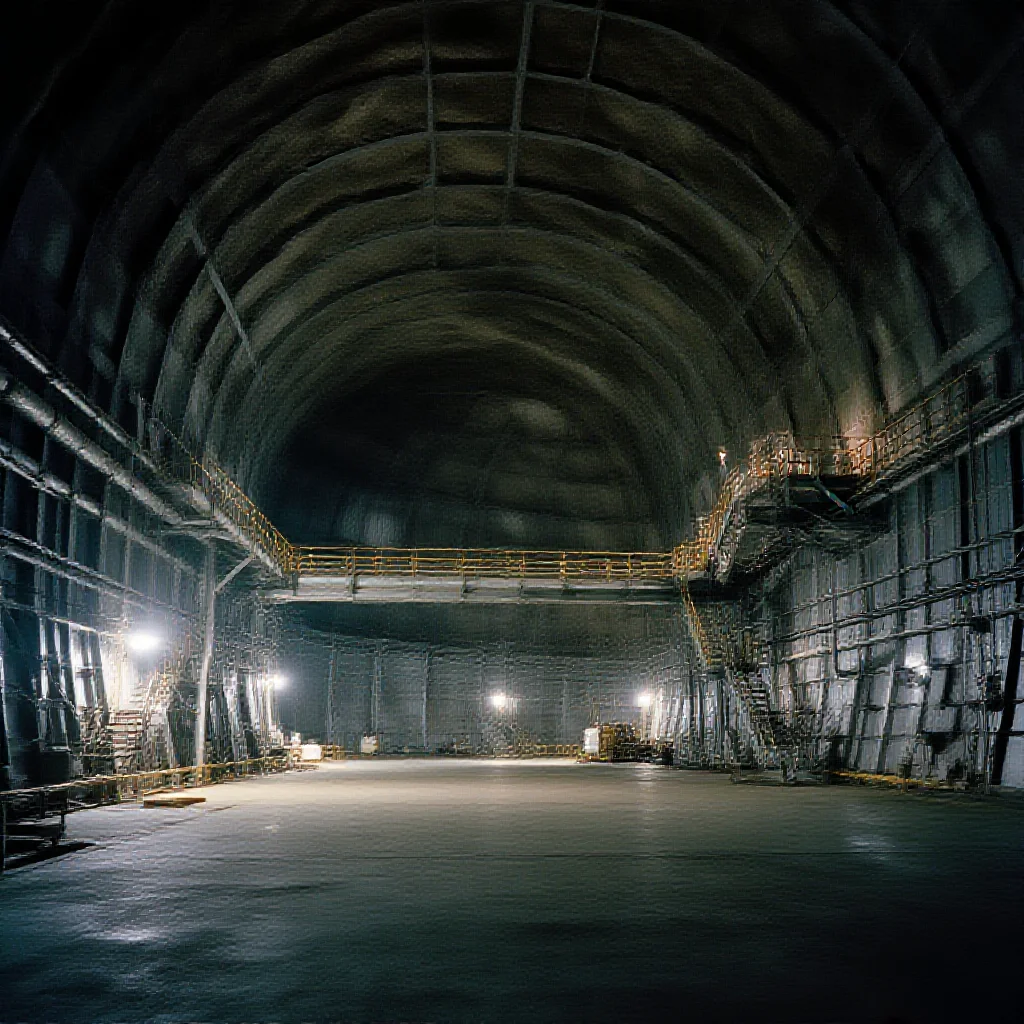
The Strategic Petroleum Reserve, a network of underground salt caverns primarily along the Gulf Coast, was conceived as a buffer against severe supply disruptions. Its historical role in mitigating the impacts of events like the Gulf War and Hurricane Katrina relied on the psychological and physical assurance of substantial volumes held in reserve. As of late March 2024, the SPR held approximately 364 million barrels (Source 1: U.S. Department of Energy SPR inventory data). This level represents the nation's smallest strategic crude inventory since the 1980s.
The 364-million-barrel figure is not merely a numerical low but a breach of a strategic threshold. The 2022 release, while effective in temporarily stabilizing markets, was a non-replicable event in the near term. Replenishing the reserve is a slow and costly process, constrained by fiscal considerations and physical infrastructure limits. The current inventory diminishes the U.S. government's capacity to respond to a new, major supply shock, transferring greater influence over price stability to the market and to other producing nations. The reserve's depleted state reduces its potency as a deterrent against geopolitical price manipulation.
Diplomacy's Diminishing Returns: The OPEC+ Wall
Concurrent with the SPR drawdown, the Biden administration engaged in diplomatic efforts in 2022 to persuade major producers, notably Saudi Arabia and the United Arab Emirates, to increase oil production to calm global markets. The outcome of these efforts was clear: OPEC+ maintained its production cuts. This outcome underscores a structural shift in the U.S.-Saudi energy relationship, moving from one characterized by alliance-based leverage to a more transactional and often adversarial dynamic.
The limited success of this diplomacy is rooted in the economic priorities of the OPEC+ alliance. For member states, fiscal stability—achieved through managing supply to support a target price floor—now consistently outweighs requests for political accommodation from Washington. The group's cohesion in maintaining production discipline, even amid U.S. pressure, demonstrates its prioritization of internal revenue requirements over external diplomatic appeals. This reality establishes a hardened constraint on U.S. policy, closing off what was once a more reliable channel for supply-side intervention.
The Shale Slowdown: Closing the Domestic Safety Valve
The third pillar of the new constraint is the evolving nature of the U.S. shale industry. For over a decade, the rapid growth of shale oil production positioned the United States as a de facto "swing producer," capable of responding to higher prices with increased output, thereby imposing a market-based ceiling on global prices. That dynamic is changing. U.S. shale oil production growth is slowing.
This deceleration is driven less by geological limits and more by capital discipline. Investor pressure for returns over relentless growth has led producers to prioritize free cash flow and shareholder distributions over aggressive capital expenditure. The industry's operational focus has shifted from volume expansion to efficiency and profitability within a defined output range. The consequence is that shale is transforming from a rapid-response tool into a more conventional, slower-growth industry. This removes the most potent market-based mechanism the U.S. possessed for organically counteracting supply shortages and price spikes orchestrated by other producers.
Synthesis: A Paradigm Shift in U.S. Oil Market Power
The convergence of a depleted SPR, recalcitrant OPEC+ policy, and a maturing shale sector creates a paradigm shift in U.S. oil market power. The nation faces a "triple constraint" that significantly narrows its supply-side policy options. The traditional toolkit—deploying strategic stocks, persuading allies to open taps, and relying on domestic producers to rapidly scale up—is now depleted, diplomatically constrained, and slowed, respectively.
This new paradigm redefines energy security from a state of holding ample reserves and influence to one of managing heightened exposure. The U.S. government's ability to act as a market moderator in a crisis is diminished. Economic leverage derived from energy exports remains substantial, but the capacity to unilaterally shield the domestic economy from external oil price shocks is reduced.
Conclusion: Navigating a Constrained Future
The current landscape suggests a period of structural vulnerability. Future U.S. administrations will likely operate within a narrower band of effective supply-side interventions. Policy will necessarily shift toward managing demand, accelerating energy diversification, and formulating a coherent long-term strategy for the SPR's role, which may evolve from a shock absorber to a more narrowly defined emergency asset. Replenishment of the reserve will be a protracted, economically sensitive undertaking.
Market dynamics will reflect this new reality. With the U.S. response capacity curtailed, OPEC+ will experience fewer constraints on its supply management decisions, potentially leading to a market structure with higher and more volatile price floors. The era of American policy acting as a predominant, readily available counterweight to global supply disruptions has concluded, inaugurating a more complex and constrained chapter in global energy security.