Beyond the Headlines: The Economic and Systemic Vulnerabilities Behind England''s 1.2 Million Undefended Buildings
While the Environment Agency's figure of 1.2 million undefended buildings at flood risk in England is stark, it reveals deeper systemic issues. This analysis moves beyond the headline number to explore the hidden economic logic of under-investment in flood resilience, the market patterns in property valuation and insurance that perpetuate risk, and the long-term implications for supply chains, local economies, and social equity. We examine why this data points not just to an environmental challenge, but to a critical infrastructure and economic audit, questioning the cost-benefit models that leave vast swathes of the built environment vulnerable.
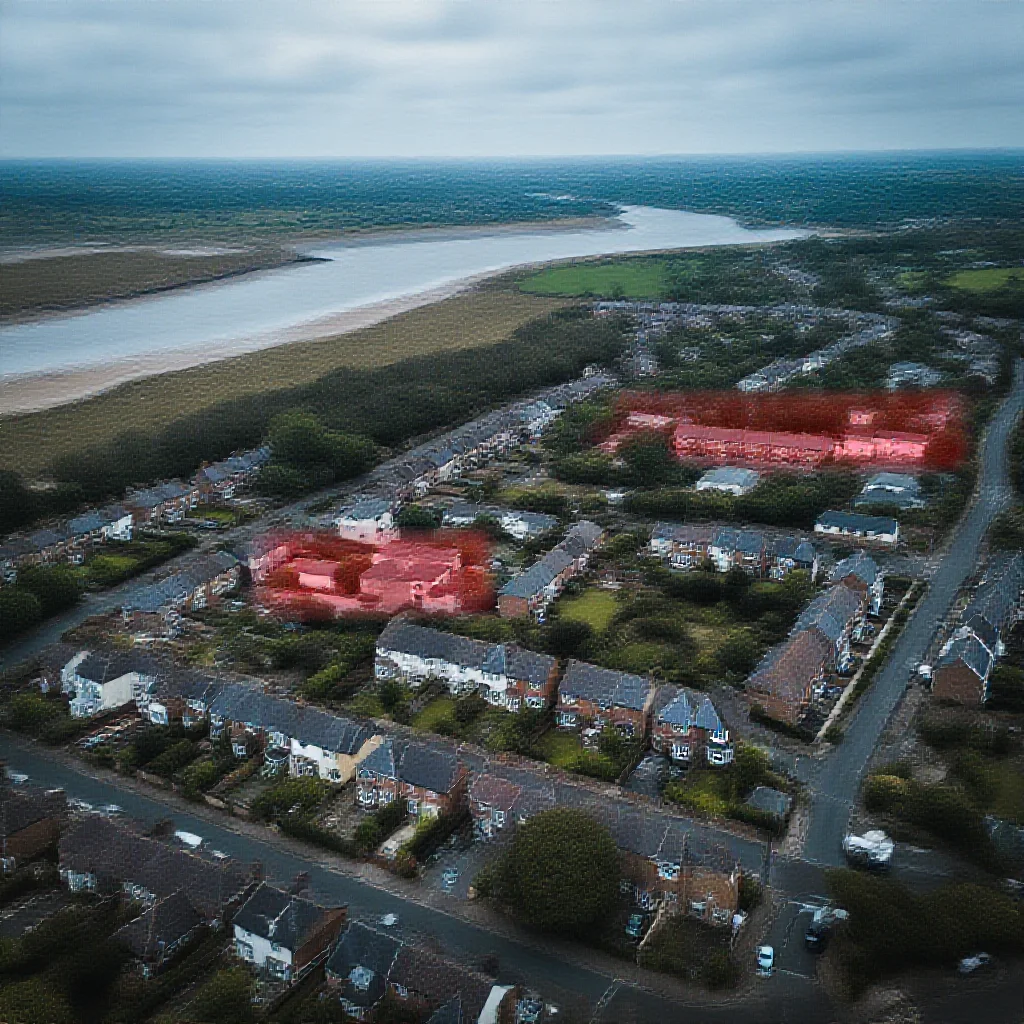
Beyond the Headlines: The Economic and Systemic Vulnerabilities Behind England's 1.2 Million Undefended Buildings
The Stark Baseline: Decoding the Environment Agency's 1.2 Million Figure
The Environment Agency's assessment that 1.2 million buildings in England are at risk of flooding without existing defenses provides a quantitative foundation for national risk analysis (Source 1: [Primary Data]). This figure, derived from national flood risk mapping and asset registers, establishes a verifiable baseline of exposure. The term "undefended" specifies structures located within documented flood plains but outside the protective perimeter of formal engineered defenses, such as barriers, embankments, or major drainage systems.
For property owners and communities, this status signifies direct exposure to fluvial, coastal, or surface water flood events. The data does not imply an absence of any mitigation but indicates a primary reliance on broader catchment management and emergency response, rather than dedicated structural protection. This delineation between defended and undefended zones forms the initial parameter for all subsequent public investment models and private risk assessments.
The Hidden Economic Logic: Why Are So Many Buildings Left Undefended?
The persistence of 1.2 million undefended structures is not an oversight but an output of established economic and governmental calculus. Official cost-benefit analyses for flood defense investment, such as those underpinning government spending, require projected economic benefits to exceed capital and maintenance costs. These models often apply standard discount rates to future damages, which can systematically undervalue long-term, high-probability climate impacts and non-market social costs. Consequently, protections for lower-density or lower-property-value areas frequently fail to meet the investment threshold.
This creates a "defense gap" economy, characterized by political and budgetary cycles that favor reactive disaster relief expenditure, which is politically visible and immediately necessary, over proactive resilience spending, whose benefits are deferred and whose failures are invisible until a catastrophe occurs. A structural disconnect exists between risk ownership and infrastructure management: the long-term financial risk resides with property owners, insurers, and mortgage lenders, while the responsibility for large-scale defensive infrastructure lies with public agencies operating under constrained, competitively allocated budgets.
Market Patterns & The Resilience Divide
Market mechanisms are beginning to internalize this systemic risk, revealing a growing resilience divide. The insurance sector acts as a leading indicator; rising premiums, increased excesses, and refusals to cover properties in high-risk areas signal a market correction. This transition towards risk-reflective pricing exposes the previously hidden economic cost of being undefended, potentially rendering some assets financially unsustainable.
Concurrently, mainstream property valuation models demonstrate a significant blind spot. Transactions often fail to adequately price in the cumulative, lifetime flood risk due to information asymmetry, short-term market horizons, and the lack of a mandatory, standardized flood risk disclosure framework. This discrepancy can create localized asset bubbles, where properties are traded at values that do not reflect their long-term vulnerability. Over time, this pattern risks fostering "climate ghettos"—areas where risk concentration depresses investment, erodes the tax base, and exacerbates regional inequality, as capital flows to more resilient locations.
Deep Audit: Ripple Effects on Supply Chains and Community Fabric
The vulnerability of 1.2 million buildings extends far beyond immediate property damage. The flooding of residential areas disrupts local labor markets, as displaced workers cannot commute, and affects essential service workers living in at-risk zones. Commercial and industrial flooding creates nodal failures in supply chains. Small business clusters, logistics hubs, and specialist manufacturers not classified as Critical National Infrastructure can be paralyzed, causing cascading delays and shortages that propagate through regional economies.
The erosion of social capital represents a less quantified but critical long-term impact. Repeated flood events inflict chronic trauma, undermining mental health and community cohesion. The cyclical process of damage, claim, and repair consumes community energy and resources that could be directed towards development, gradually degrading the social fabric that underpins economic resilience. This creates a negative feedback loop where physical vulnerability amplifies socio-economic fragility.
From Slow Analysis to Action: Reframing the Investment Paradigm
Addressing the scale of vulnerability requires a fundamental reframing of resilience from a cost center to a value driver. The economic case must evolve to capture the full value of avoided disruption, maintained social stability, and protected long-term asset values. This involves integrating advanced climate projections into investment appraisals and considering wider economic and social benefits.
Operational models must move beyond binary choices between large-scale defenses and passive acceptance. An integrated adaptation strategy combines targeted property-level resilience measures—such as flood barriers, resilient materials, and electrical system elevation—with catchment-wide, nature-based solutions like wetland restoration and sustainable urban drainage. This layered approach distributes risk management across multiple scales and stakeholders.
Market and industry trajectories point towards increased granularity in risk pricing. The financial and insurance sectors will likely demand more sophisticated flood risk data, accelerating the development of real-time, property-level risk analytics. This may catalyze a market for resilience retrofits and influence lending criteria. The central challenge for policy is to ensure this market evolution does not simply abandon the most vulnerable but incentivizes and enables widespread adaptation, transforming the 1.2 million figure from a static metric of exposure into a dynamic register of resilience progress.