The Great American Clean Energy Rush: How Looming Tax Credit Expiration is Reshaping the Grid
As key federal tax incentives near their sunset in 2026, a frantic wave of clean energy project development is sweeping across the United States, with states like California leading the charge. This article analyzes the hidden economic logic behind this acceleration, moving beyond the surface-level ''race against the clock'' narrative. We explore how this pre-expiration surge is creating a ''boom-and-bust'' cycle in the domestic supply chain, distorting regional energy planning, and forcing a critical examination of long-term policy stability versus short-term stimulus. The rush reveals a fundamental tension in the energy transition: can sustainable growth be built on temporary incentives?
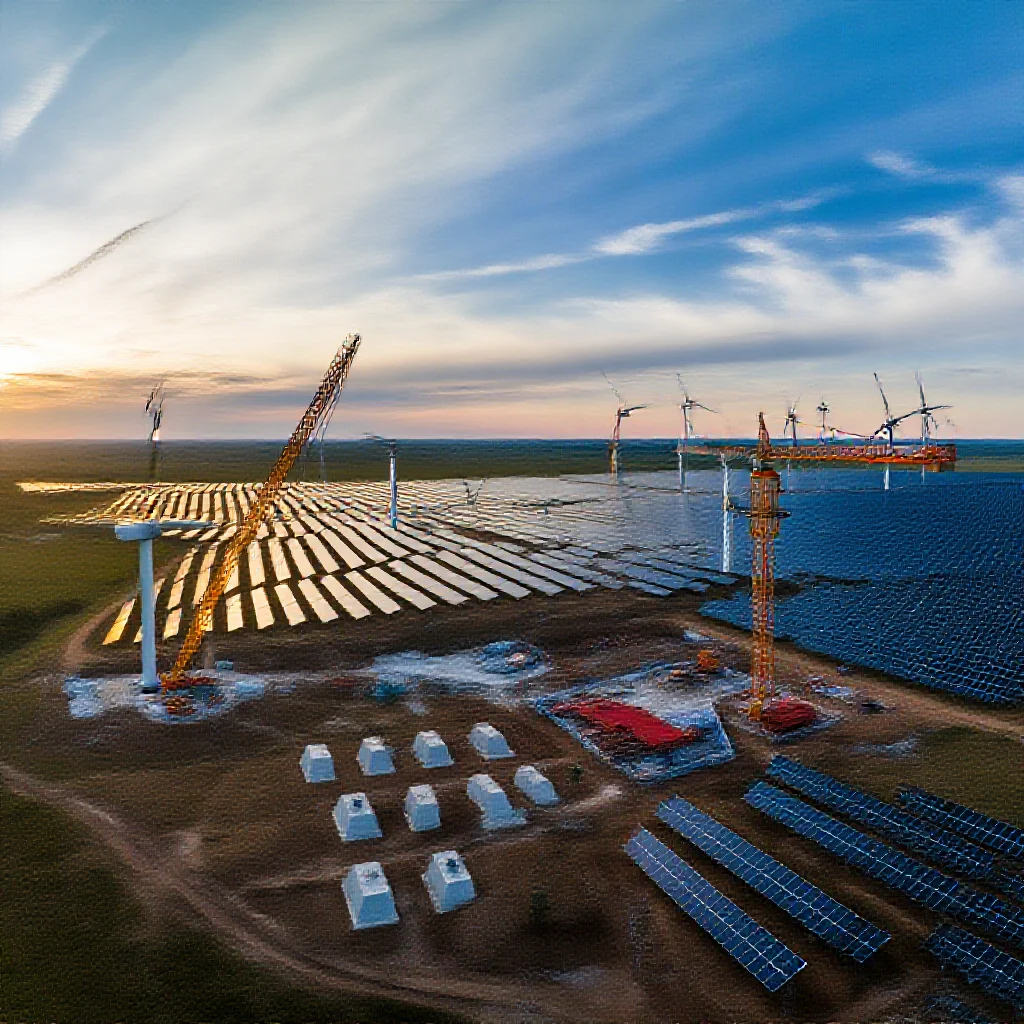
The Great American Clean Energy Rush: How Looming Tax Credit Expiration is Reshaping the Grid
Introduction: The 2026 Cliff Edge and the State-Led Sprint
The United States is experiencing an unprecedented surge in the construction of utility-scale solar, wind, and energy storage projects. This acceleration is not a coincidental market trend but a direct, calculable response to the scheduled sunset of foundational federal tax incentives at the close of 2025. The Investment Tax Credit (ITC) and Production Tax Credit (PTC), long-term pillars of renewable energy economics, are set to revert to minimal levels or expire entirely for projects not meeting strict "commence construction" deadlines by year's end. This has created a definitive financial cliff edge in April 2026.
This scenario presents a core infrastructural paradox: temporary tax policy is compelling permanent, capital-intensive decisions about the nation's energy grid. The rush to secure these incentives before their value diminishes is rational for individual project developers, yet it imposes systemic distortions on supply chains, labor markets, and regional energy planning. California, with its legislatively mandated 100% clean electricity target by 2045 (SB 100), serves as the archetypal case study. The convergence of aggressive state policy with a finite federal subsidy window has positioned the state at the epicenter of a national phenomenon, forcing a critical examination of whether sustainable industry growth can be built upon transient fiscal mechanisms.

The Hidden Economic Logic: More Than Just a Deadline
The project acceleration observed across the nation is frequently characterized as a panic-driven race. A more accurate analysis reveals it as a rational, optimized capital deployment strategy. For developers and their financial backers, the expiring credits represent a quantifiable reduction in future project internal rates of return. Securing the full-value ITC or PTC can improve a project's economics by 20-30%, a margin that often defines bankability.
This has triggered a "use-it-or-lose-it" mentality among tax equity investors—a specialized financial sector comprising large banks and corporations that monetize tax credits. The volume of capital seeking to deploy into eligible projects before the deadline has surged, creating a temporary liquidity boom for shovel-ready developments. This capital is not evenly distributed; it floods into regions with favorable regulatory environments, established interconnection queues, and strong offtake demand, primarily the West Coast and parts of the Midwest and Texas.
The secondary market dynamics for tax equity intensify as the expiration nears. The scarcity of remaining high-value opportunities can compress yields for investors while increasing financing costs for last-minute projects, creating a final-hour premium. This financial calculus, not mere regulatory compliance, is the primary engine driving the current construction wave.

Supply Chain Distortion: The Pre-Expiration Boom and the Looming Bust
The demand surge exerts acute pressure on the domestic clean energy supply chain. Manufacturers of solar modules, wind turbine blades, nacelles, and critically, electrical transformers and switchgear, are operating at capacity. This has led to extended lead times, component shortages, and inflationary pressure on equipment costs, partially offsetting the benefit of the tax credits themselves. The skilled labor market for construction, electrical work, and grid integration is similarly strained, reporting shortages and wage inflation in key regions.
This pre-2026 boom carries a significant risk of a severe post-2026 contraction. Suppliers who have scaled production capacity, and workforces trained for specific trades, face a potential demand cliff once the primary financial driver recedes. Industry forecasts already indicate a projected slowdown in new project announcements for the 2027-2028 period (Source 1: American Clean Power Association Market Report Q4 2025). This cycle questions the resilience of the "American-made" clean energy supply chain, which requires steady, predictable demand to justify long-term capital investment in factories and workforce development. The current policy framework incentivizes volatility over stability.

The California Catalyst and the National Ripple Effect
California's role in this cycle is catalytic. The state's legislative mandate for a carbon-free grid by 2045 creates a non-negotiable demand signal. The impending federal credit expiration has effectively front-loaded a significant portion of this build-out into the 2024-2026 window. Data from the California Energy Commission (CEC) project queue shows a pronounced spike in applications seeking certification, with a majority targeting commercial operation before the credit phase-down (Source 2: CEC Renewable Energy Projects Under Review, March 2026).
This concentration of activity creates a national ripple effect. First, it strains regional labor and equipment pools, drawing resources from neighboring states and increasing costs for projects in Arizona, Nevada, and the Pacific Northwest. Second, California's aggressive procurement influences energy market dynamics across the Western Electricity Coordinating Council (WECC), affecting power prices and transmission congestion patterns. Third, the sheer volume of California projects entering interconnection queues forces grid operators to prioritize and sequence studies, potentially delaying viable projects in other states. The rush in one state distorts the development timeline for an entire region.

Conclusion: Beyond the Cliff—Stability Versus Stimulus
The pre-2026 construction surge demonstrates the potent efficacy of tax incentives in mobilizing private capital for public policy goals. It is simultaneously revealing their fundamental limitation as a long-term foundation for an energy transition. The cycle of boom, driven by subsidy expiration, and potential bust, driven by its aftermath, undermines the strategic planning required for a reliable, affordable, and resilient grid.
The current period will deliver a significant near-term increase in clean generation capacity. The critical question for policymakers and market participants is what follows. The industry's trajectory after 2026 will hinge on whether state-level mandates and evolving market structures—such as long-duration storage procurement and regional transmission planning—can provide sufficient revenue certainty to replace federal fiscal stimulus. The transition from a policy-driven to a market-sustained clean energy build-out will be the next, and more complex, phase of grid modernization. The race against the 2026 clock is a sprint; building a sustainable system requires a marathon strategy based on predictable rules and stable signals.