Beyond $56 Billion: How U.S. LNG Deals with Japan and Korea Reshape Global Energy Security
The recent $56 billion in long-term U.S. LNG supply deals with Japanese and South Korean companies is more than a simple trade agreement. This analysis explores the strategic pivot behind these contracts, moving beyond their immediate value to examine their role as a geopolitical and economic stabilizer. We investigate how these deals, signed amid Gulf supply disruptions, represent a fundamental shift in Asian energy procurement strategy—from spot-market reliance to secure, long-term partnerships. The article delves into the long-term implications for global LNG market dynamics, the recalibration of U.S. export infrastructure planning, and the emerging 'Atlantic-Pacific' energy corridor that challenges traditional supply routes.
Beyond $56 Billion: How U.S. LNG Deals with Japan and Korea Reshape Global Energy Security
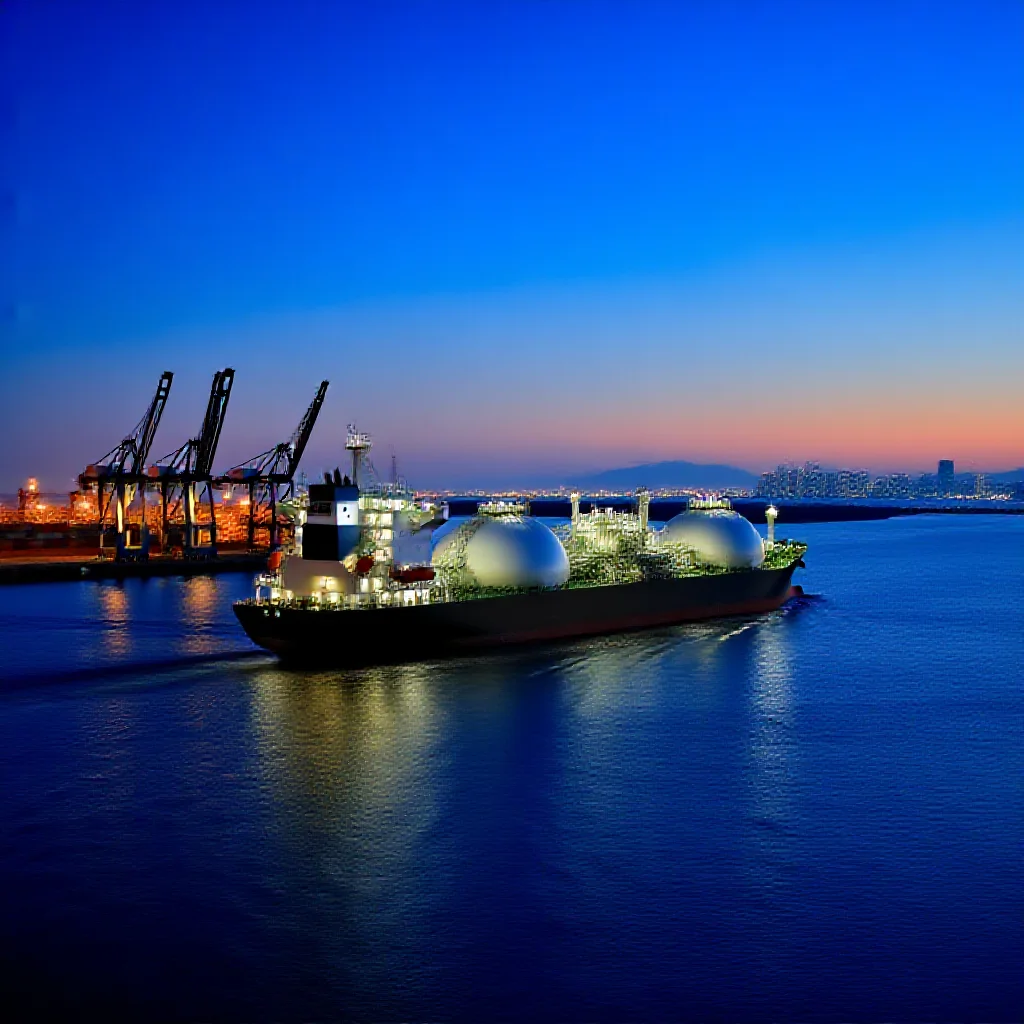
Recent long-term liquefied natural gas (LNG) supply agreements between U.S. exporters and major Asian utilities represent a structural realignment in global energy trade. Valued at approximately $56 billion, these contracts with Japanese and South Korean companies were finalized amid supply disruptions in the Gulf region (Source 1: [Primary Data]). The scale and timing of these agreements indicate a strategic pivot in procurement philosophy, moving Asian economies from volatile spot-market dependence toward secure, long-term partnerships anchored in the Western Hemisphere.
The $56 Billion Anchor: More Than a Transaction
The disclosed value of approximately $56 billion provides a quantitative anchor for the transaction (Source 1: [Primary Data]). This figure, while significant, must be contextualized within the annual LNG import budgets of Japan and South Korea, which consistently rank as the world’s top importers. The strategic weight of these deals lies less in their absolute monetary value and more in their contractual nature as long-term supply agreements. This shift from short-term, price-sensitive spot purchases to multi-decade commitments signifies a fundamental recalculation of risk management. The core thesis emerging from this data is that the transaction represents a structural shift in energy security strategy, prioritizing supply certainty over marginal cost optimization.
Geopolitical Calculus: The Gulf Disruption as a Catalyst
The finalization of these agreements amid supply disruptions in the Gulf region is a critical variable for analysis (Source 1: [Primary Data]). These disruptions, encompassing both geopolitical volatility and operational incidents in key transit chokepoints like the Strait of Hormuz, acted as a tangible catalyst. They exposed the vulnerability inherent in over-reliance on traditional supply corridors from the Middle East. The logical deduction is that Japanese and South Korean companies are executing a deliberate diversification strategy, reducing concentration risk by adding a major Atlantic basin supplier. The United States is consequently being positioned as a "security of supply" guarantor, a role underpinned by its stable domestic production profile and geopolitical alignment with East Asian allies. This establishes an "Atlantic-Pacific" energy corridor as a competitive alternative to traditional routes.
The Slow Analysis: Long-Term Ripples in Global Markets
The long-term implications of these contracts will unfold across several dimensions of the global LNG market. A primary effect will be on pricing models. A substantial volume of U.S. LNG, typically linked to the Henry Hub benchmark, will now flow into Asia under long-term agreements. This exerts structural pressure on the prevailing oil-indexed contract model that has dominated Asian LNG trade, potentially leading to greater price benchmark diversification.
Secondly, these deals provide critical demand certainty required for financing multi-billion-dollar U.S. LNG export infrastructure. The commitments will directly influence final investment decisions for new liquefaction trains and may accelerate the expansion of existing facilities on the U.S. Gulf Coast. The reaction from other major suppliers, such as Qatar and Australia, will involve competitive adjustments in contract flexibility and pricing to retain market share. Similarly, other major buyers, including China and European Union nations, will observe this reconfiguration of trade flows as they formulate their own long-term energy security strategies.
The Unseen Supply Chain: Infrastructure and Environmental Reckoning
Fulfilling decades of new supply commitments necessitates a parallel expansion of the unseen domestic supply chain. A potential bottleneck exists not in U.S. natural gas reserves but in the midstream infrastructure: pipeline capacity to transport gas to the coast and the complex liquefaction trains required to super-cool it for shipment. The scale of investment required here is a direct, secondary consequence of the signed agreements.
Concurrently, these long-term fossil fuel commitments introduce a complex variable for Asian buyers with legislated net-zero pledges. The logical market response will be an increased contractual focus on mechanisms to reconcile these positions. The future trend suggests carbon-neutral LNG transactions, involving verified carbon offsets or methane emissions tracking, will transition from niche to mainstream contract stipulations. Furthermore, the establishment of a robust U.S.-Asia LNG trade corridor will have tertiary effects on global shipping, increasing demand for vessel capacity and underscoring the strategic importance of maritime transit points like the Panama Canal.
Verification and Context: The New Energy Security Architecture
The available data points—deal value, counterparties, contract duration, and geopolitical context—converge to validate the observation of a strategic shift. The agreements with companies in Japan and South Korea are not isolated commercial events but interconnected components of a broader architectural change (Source 1: [Primary Data]). This architecture is defined by the prioritization of supplier diversification and contract stability. The cause, identified as supply vulnerability in traditional regions, has effected a re-routing of long-term energy flows.
Neutral market prediction indicates this trend will continue, inviting similar agreements from other U.S. allies seeking to de-risk energy imports. The global LNG market is consequently fragmenting into more defined, politicized trade blocs, with long-term contracts serving as the foundational treaties. The ultimate industry outcome will be a more diversified but also more rigid global supply network, where energy security is increasingly codified in decades-long commercial contracts rather than secured through competitive spot markets.