Beyond Politics: The US Military''s Strategic Pivot to Climate-Resilient Bases
While political debates on climate policy continue, the US military is quietly executing a strategic, long-term adaptation plan for its global network of bases. This analysis moves beyond the surface-level reporting to uncover the core drivers: protecting trillions in defense assets, ensuring operational readiness against climate-induced disruptions, and future-proofing national security infrastructure. The Pentagon''s actions, documented as of 2026, reveal a pragmatic risk-management approach that treats climate change as a non-partisan threat multiplier. This article explores the hidden economic logic of these investments, the emerging ''climate-resilient base'' as a new strategic asset class, and the long-term implications for defense contracting, supply chains, and global force posture.
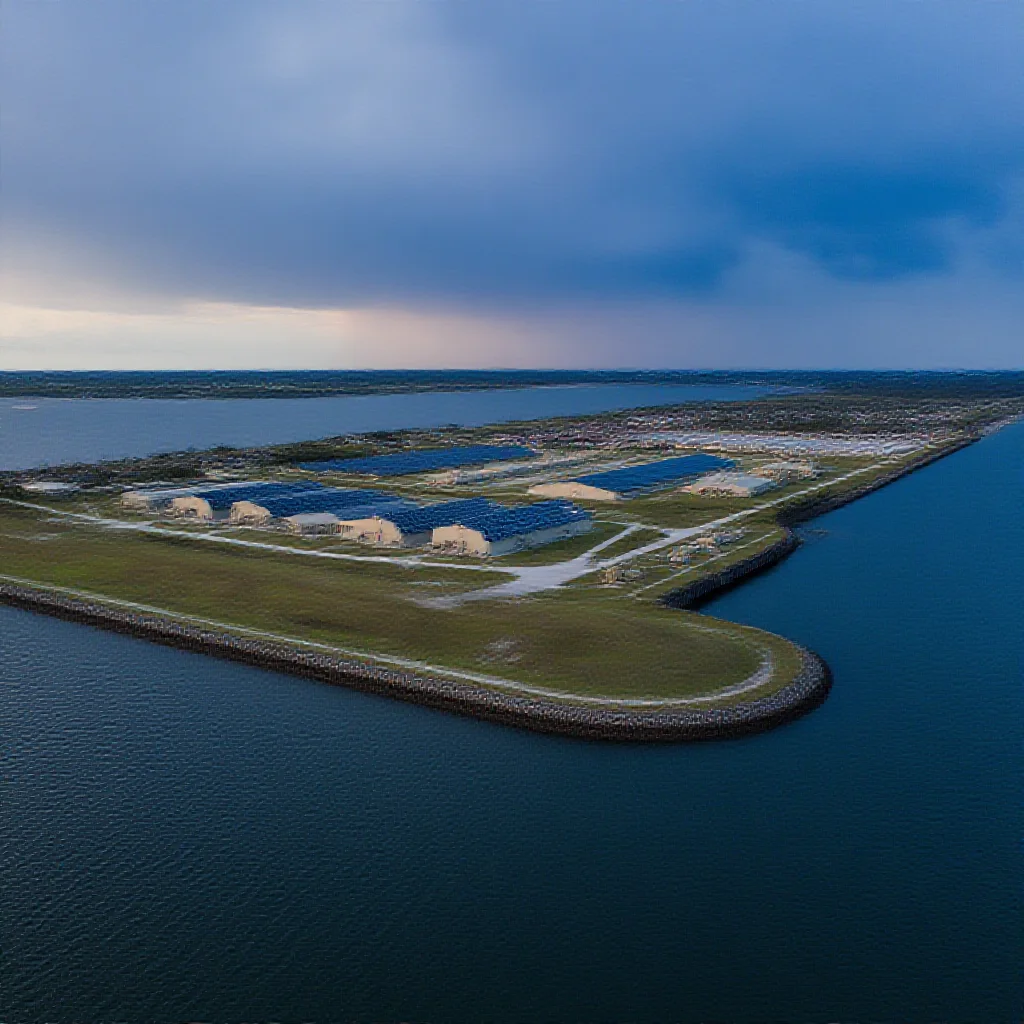
Beyond Politics: The US Military's Strategic Pivot to Climate-Resilient Bases
**Summary:** While political debates on climate policy continue, the US military is executing a strategic, long-term adaptation plan for its global network of bases. This analysis moves beyond surface-level reporting to uncover the core drivers: protecting trillions in defense assets, ensuring operational readiness against climate-induced disruptions, and future-proofing national security infrastructure. The Pentagon's actions, documented as of 2026, reveal a pragmatic risk-management approach that treats climate change as a non-partisan threat multiplier. This article explores the hidden economic logic of these investments, the emerging 'climate-resilient base' as a new strategic asset class, and the long-term implications for defense contracting, supply chains, and global force posture.
The Unspoken Mandate: Risk Management Trumps Political Rhetoric
The Department of Defense's adaptation initiatives constitute a pure risk calculus, decoupled from political discourse. The primary variables in this equation are the protection of physical assets, personnel security, and mission continuity. The economic logic is foundational: the cost of proactive adaptation is systematically weighed against the projected expense of reactive disaster recovery for installations valued in the tens or hundreds of billions of dollars.
This is evidenced in formal planning documents and budget allocations. The Department of Defense Climate Adaptation Plan, along with subsequent service-specific directives, mandates the integration of climate vulnerability assessments into installation master plans and investment criteria. Budget line items for resilience projects—such as elevating electrical substations, fortifying drainage systems, and hardening communication infrastructure—are justified through cost-benefit analyses that model future climate scenarios. The underlying data point is the ongoing preparation of US military bases for climate change effects (Source 1: [Primary Data, 2026-04-17]). These actions represent a sustained financial commitment to mitigate quantified risks to the defense asset portfolio.
Decoding the 'Climate-Resilient Base': A New Strategic Asset Class
The modern adaptation strategy extends far beyond constructing floodwalls. It involves the systemic integration of energy independence, water security, and advanced materials to create a new class of strategic asset: the climate-resilient base. This transformation turns adaptation into a force multiplier.
Microgrids powered by on-site solar, wind, or geothermal sources ensure continuous operations during broader grid failures. Water capture, recycling, and desalination systems address drought vulnerability. The use of heat-resistant building materials and passive cooling architectures maintains functionality during extreme heat waves. This comprehensive approach is reshaping defense contracting and research and development priorities, generating a specialized market for resilience technology. The long-term impact extends deep into the supply chain, favoring industries involved in advanced composite materials, smart grid technology, renewable energy systems, and water purification. These sectors are positioned for sustained growth as resilience becomes a non-negotiable specification in defense infrastructure projects.
The Readiness Equation: Climate as the Ultimate Threat Multiplier
Climate variables directly degrade military readiness by disrupting the foundational elements of training, maintenance, and deployment. Rising sea levels threaten the operational integrity of critical naval stations. Extreme heat imposes strict limits on outdoor training, damages electronics, and reduces aircraft lift capacity. Wildfires compromise air quality and force evacuations, while thawing permafrost destabilizes infrastructure in Arctic regions.
Historical precedents validate these concerns. Hurricane Michael's near-total destruction of Tyndall Air Force Base in 2018 and recurrent flooding at installations like Camp Lejeune demonstrated acute vulnerabilities and resulted in billions in reconstruction costs and massive operational delays. These events provided empirical data for future-oriented preparations. A forward-looking analysis must consider the vulnerability of key strategic hubs, linking their physical adaptation to broader global force posture decisions. The protection of these nodes is a prerequisite for power projection, making climate resilience a core component of strategic readiness.
The Institutional Duality: Policy Paralysis vs. Operational Pragmatism
A dual-track reality exists within the national security apparatus. Public and political debates on climate policy may exhibit paralysis or sharp divergence. Concurrently, quiet, sustained action is undertaken by installation commanders, civil engineers, and long-term strategic planners across all service branches. Their mandate is operational continuity and asset preservation, irrespective of the political cycle.
This story is one of slow, systemic change. It reveals a decades-long shift in military engineering standards, real estate management, and strategic facility planning. The driving forces are internal advocates—often logisticians, engineers, and strategic planners—who frame the issue through the lenses of fiscal stewardship, risk mitigation, and mission assurance. Their work proceeds based on observed environmental trends and intelligence community assessments of climate as a threat multiplier, ensuring that foundational defense infrastructure evolves to meet the physical demands of the coming decades.
Market and Strategic Implications
The strategic pivot to climate-resilient infrastructure will have measurable downstream effects. Defense contracting will increasingly prioritize firms with proven expertise in resilient design and construction. Insurance and financing models for large-scale defense projects will incorporate climate risk premiums, making adaptation measures a financial imperative. Supply chains for construction will shift toward suppliers of durable, climate-adaptive materials.
From a force posture perspective, the cost of maintaining installations in highly vulnerable locations may prompt reassessments of their long-term value, potentially influencing basing decisions. Conversely, bases that achieve high levels of energy and water independence become more strategically valuable, capable of sustaining operations in degraded or contested environments. The cumulative effect is the gradual redefinition of military strength to include inherent infrastructural resilience as a critical component of national security.