The Used EV Price Crash: How Bargain Hunters Are Fueling America''s Electric Transition
The US electric vehicle market is undergoing a pivotal shift, driven not by premium new models but by a dramatic plunge in used EV prices. With average prices falling over 30% in a year, a new wave of cost-conscious buyers is entering the market, accelerating adoption from the bottom up. This article explores the hidden economic logic behind this trend, analyzing how it creates a self-sustaining cycle of affordability, impacts the long-term value proposition of EVs, and reshapes the competitive landscape for automakers and dealers. We examine whether this signals a healthy market maturation or poses risks to residual values and new car demand.
The Used EV Price Crash: How Bargain Hunters Are Fueling America's Electric Transition
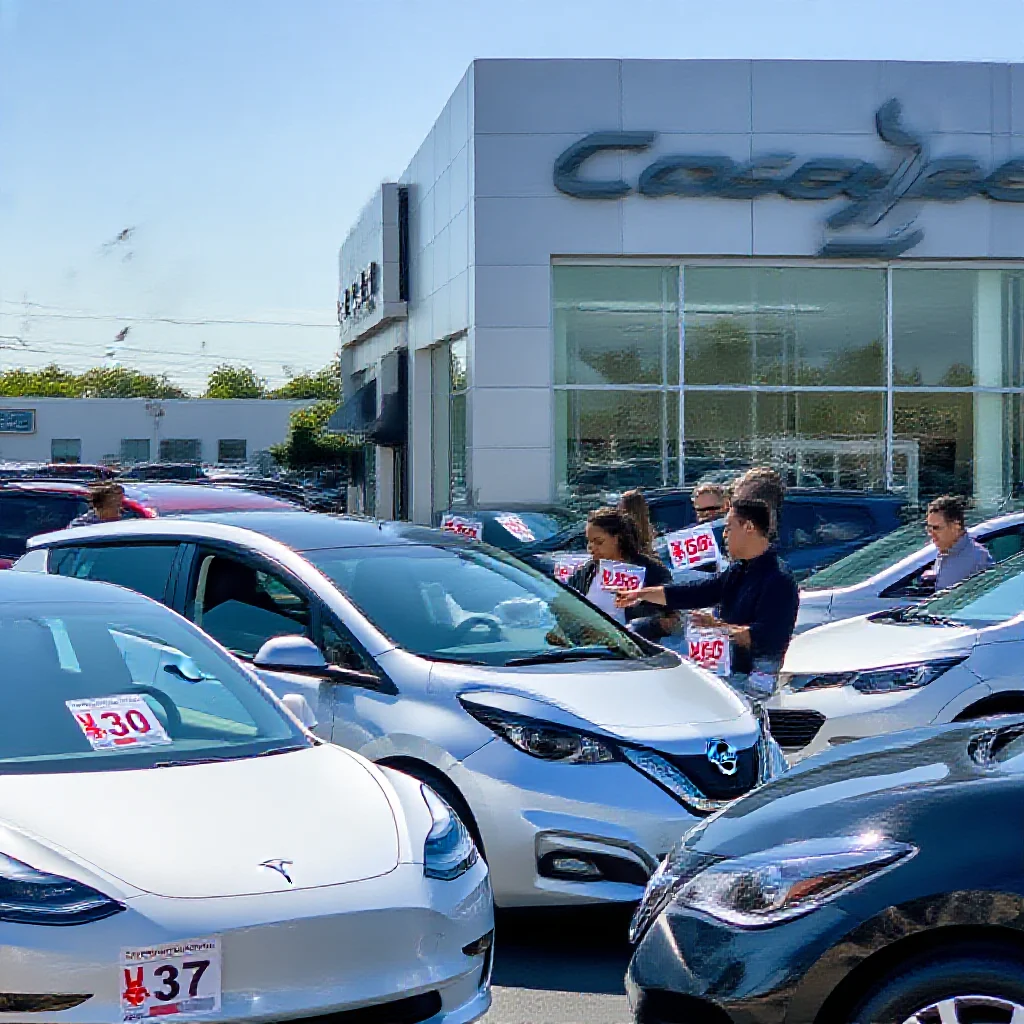
Introduction: The Silent Revolution in the Used Car Lot The dominant narrative of electric vehicle adoption has centered on premium showrooms and six-figure price tags. The current market reality, however, is increasingly found on the lots of used car dealerships, where electric models are now frequently listed for under $20,000. This shift is underpinned by a significant price correction. Over the past twelve months, the average price of a used electric vehicle in the United States has declined by more than 30% (Source 1: [Primary Data]). Concurrently, sales growth for used EVs is now outpacing that of new electric vehicles (Source 2: [Primary Data]). This price collapse does not signal a failure of the EV proposition. Instead, it represents a critical, market-driven phase that is unlocking mass adoption through a new demographic: the value-driven buyer.
Deconstructing the 30% Drop: Supply, Psychology, and Policy The precipitous decline in used EV values is the result of converging market forces.
**The Supply Floodgate:** The primary driver is a substantial increase in inventory. A wave of off-lease vehicles and first-generation mass-market EVs—including early Tesla Model 3s, Chevrolet Bolts, and Nissan Leafs—are now reaching the 3-to-5-year age bracket in volume. This influx has fundamentally altered the supply-demand balance in the secondary market.
**Battery Anxiety & Technology Turnover:** Consumer apprehension regarding battery degradation and the cost of replacement for older models exerts downward pressure on prices. This is compounded by rapid technological turnover; newer models offer improved range, charging speed, and features, rendering previous generations less desirable and accelerating their depreciation.
**The Incentive Cliff Effect:** Historically, the federal tax credit for electric vehicles applied only to new purchases, creating a pricing disparity that contributed to the initial depreciation curve for used models. The recent inclusion of a point-of-sale credit for qualified used EVs under the Inflation Reduction Act is a structural change that may moderate future price declines, but its impact was not a factor during the period of the most severe correction.
Bargain Hunters as the New Growth Engine: A Demographic Shift The new pricing reality has catalyzed a distinct buyer segment, altering the adoption curve.
This emerging used EV buyer profile is cost-conscious and pragmatic. This demographic often includes younger buyers, multi-vehicle households seeking a secondary commuter car, and individuals prioritizing total cost of ownership over possessing the latest technology. The market has reached an affordability tipping point where used EVs priced under $25,000 compete directly with reliable gasoline-powered sedans like the Toyota Corolla or Honda Civic on monthly payment. The operational cost advantage of electricity over gasoline then becomes a decisive financial benefit.
Industry data validates this shift. The Manheim Used EV Index from Cox Automotive has tracked the steep decline in wholesale values, while surveys from firms like Edmunds indicate a rising percentage of buyers citing lower purchase price and cost savings as primary motivations for choosing a used EV over a new one or a comparable internal combustion engine vehicle.
The Ripple Effect: Reshaping the Entire EV Ecosystem The recalibration of the used EV market creates cascading effects throughout the automotive industry.
**Pressure on New Car Sales:** Attractive used prices create a formidable competitor for new entry-level EVs. Automakers are compelled to adjust pricing, introduce more affordable new models, or enhance lease subsidies to maintain value propositions for new vehicles. This competition exerts a deflationary force across the entire EV market.
**The Long-Term Value Proposition Challenge:** A paradox emerges. Falling prices accelerate adoption by expanding the addressable market, but they also compress residual values. This poses a challenge for automakers' leasing strategies and for financial institutions that underwrite loans, potentially affecting the cost of financing for all EVs. The market is testing the long-term depreciation curve of electric vehicles, which will ultimately define their lifecycle cost competitiveness.
**Dealer and Service Model Evolution:** The influx of used EVs necessitates a rapid upskilling of the traditional used car network. Dealers must develop competency in assessing battery health, a new key metric of used car valuation. The service model also shifts from routine mechanical maintenance to specialized high-voltage system diagnostics, altering dealer service revenue streams.
Conclusion: Maturation, Not Meltdown The dramatic decline in used EV prices is a hallmark of a maturing market, not a failing one. It represents the transition from early-adopter scarcity to mass-market volume. The entry of the value-focused buyer, motivated by total cost economics rather than technological novelty, is a necessary step for sustainable, broad-based adoption.
The immediate future will be defined by how the ecosystem adapts. Automakers must navigate the tension between stimulating new demand and protecting asset values. The used market will develop more sophisticated battery health certification standards to build buyer confidence. Policy incentives for used purchases may gain further traction to sustain momentum. The data indicates that the electric vehicle transition is no longer solely a top-down phenomenon driven by new product launches; it is increasingly a bottom-up movement fueled by affordability and pragmatic economics. This phase may ultimately prove to be the most significant in building a durable EV marketplace.