Beyond the Bailout: How the Wallenbergs'' Bet on Stegra AB Signals a Strategic Shift in European Green Steel
The Wallenberg family''s funding commitment to Swedish startup Stegra AB is more than a corporate rescue; it''s a strategic pivot in European industrial policy. This analysis explores how this move reflects a deeper logic: the race to secure sovereign green steel capacity, the high-stakes gamble on hydrogen-based direct reduction technology, and the creation of a new industrial cluster in Northern Sweden. We examine the implications for global supply chains, the potential for a ''green steel cartel,'' and why a traditional financial dynasty is betting on a frontier technology that could redefine heavy industry.
Beyond the Bailout: How the Wallenbergs' Bet on Stegra AB Signals a Strategic Shift in European Green Steel

The Rescue Package: Surface Facts and Immediate Context
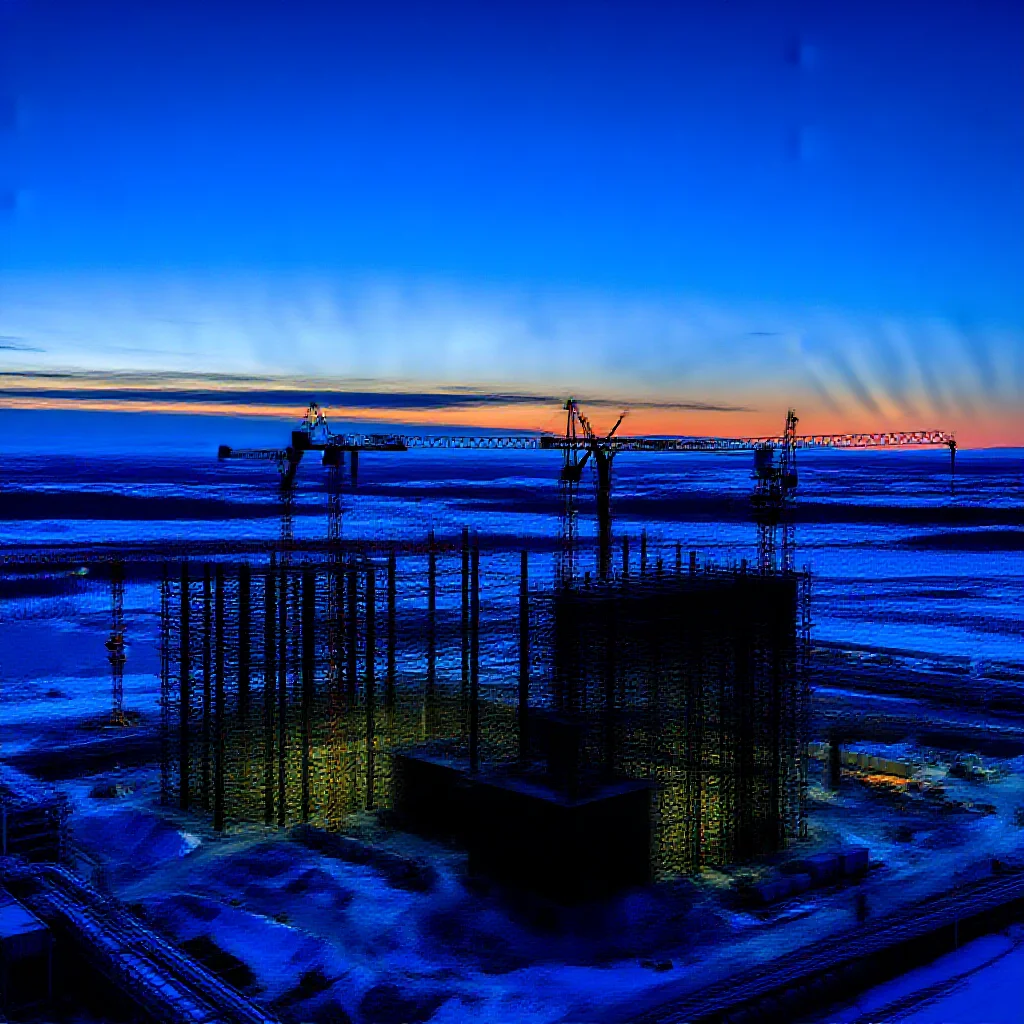
In April 2026, Swedish business daily *Dagens Industri* reported that Stegra AB had secured critical funding commitments from the Wallenberg family (Source 1: [Primary Data]). The capital injection functions as a rescue package for the startup, which is constructing what it describes as the world's largest green-steel plant in Boden, Sweden (Source 2: [Primary Data]). The immediate narrative is one of corporate solvency: the funding is intended to ensure the company remains operational and can complete the construction of its flagship facility. This development follows visible progress at the Boden construction site, which was documented in 2025 (Source 3: [Primary Data]).

The Hidden Economic Logic: Why the Wallenbergs Are Not Just Investing, But Insuring
The transaction extends beyond a conventional financial rescue. Analysis indicates the Wallenberg family's commitment functions as strategic risk mitigation for Sweden's foundational industrial base. The investment is not solely a pursuit of financial return but an allocation of capital to secure sovereign green industrial capacity. In an economic environment characterized by trade policy uncertainty and the implementation of mechanisms like the European Union's Carbon Border Adjustment Mechanism (CBAM), the ability to produce steel without embedded carbon emissions transitions from a competitive advantage to a component of economic sovereignty.
The funding constitutes an investment in the integrated industrial ecosystem of Northern Sweden's Norrbotten region, not merely a single corporate entity. The viability of Stegra AB's plant is contingent upon and simultaneously catalyzes adjacent industries: cost-competitive renewable energy generation, large-scale green hydrogen production, and associated logistics infrastructure. The capital commitment, therefore, underwrites the development of an entire post-carbon industrial cluster.

The Technology Gambit: Betting on Hydrogen DRI at Scale
The core technological risk and potential reward reside in the plant's intended process: hydrogen-based direct reduction of iron ore (H2-DRI). This pathway aims to eliminate metallurgical coal from the primary steelmaking process by using hydrogen as the reducing agent, with water as the primary by-product instead of carbon dioxide. While the chemical principles are proven, the operational challenge lies in deploying the technology at the unprecedented scale planned for Boden.
The strategic move represents a high-stakes gamble on scaling frontier technology. Contrasted with smaller pilot projects globally, Stegra AB's integrated plant model presents significant technological and operational risks related to efficiency, reliability, and cost. The long-term payoff for successful scale-up is not limited to steel production. It encompasses the accumulation of proprietary process knowledge, engineering data, and operational expertise that could position Swedish industry as a leading exporter of green steelmaking technology and methodology.

The Unreported Entry Point: Creating a New 'Green Steel Cartel' and Supply Chain Sovereignty
This funding commitment accelerates the structural formation of a premium green materials bloc within Europe. A successful, large-scale green steel producer in Sweden establishes a foundational node for a supply chain characterized by verified low embedded carbon. The logical endpoint is a bifurcated global steel market: a premium track of certified green steel and a conventional track subject to escalating carbon costs.
Downstream industries—particularly automotive, construction, and appliance manufacturing—face tightening regulatory and consumer pressure to decarbonize. For these sectors, access to verifiable green steel will transition from a voluntary environmental, social, and governance (ESG) goal to a compliance and market-access requirement. Entities controlling the supply of such material will wield significant influence over these critical value chains. The investment can be interpreted as a move to position Swedish industrial capital at the origin point of this future premium supply network.
Conclusion: Strategic Positioning for a Post-Carbon Industrial Order
The Wallenberg family's funding of Stegra AB is a multi-layered strategic operation. It addresses immediate corporate liquidity needs while simultaneously serving as a hedge for national industrial relevance. The move constitutes a calculated risk on the rapid commercialization of hydrogen-based steelmaking, with the intent of capturing first-mover advantages in technology and market positioning.
The broader implication is the active shaping of a new industrial geography. Northern Sweden is being developed as a primary source of a critical, decarbonized industrial commodity. If the technological and economic assumptions prove correct, this will grant the involved entities—corporate and national—a durable structural advantage in the emerging post-carbon global economy. The commitment signals a recognition that future industrial leadership will be defined not only by financial capital but by control over the foundational materials of a decarbonized world.