Adaptation Tech Then and Now: Lessons from the UNFCCC''s 2006 Guide for Today''s Climate Technology Trends
The UNFCCC''s 2006 publication ''Technologies for Adaptation to Climate Change'' remains a surprisingly relevant treasure trove of low-tech, community-based adaptation solutions—from floating agriculture in Bangladesh to coral reef restoration with biorock. As climate tech trends race toward AI, drones, and carbon capture, this article argues that the most effective adaptation strategies often blend traditional knowledge with modern innovation. By analyzing nine real-world case studies, we uncover the hidden economic logic: simple, scalable technologies that reduce risk and build resilience at low cost. We also explore why many of these technologies have not been widely adopted, and what today''s climate tech entrepreneurs can learn from them. This deep audit reveals a critical gap: the need to invest in ''no-regret'' adaptation that works for the most vulnerable.
Adaptation Tech Then and Now: Lessons from the UNFCCC's 2006 Guide for Today's Climate Technology Trends
In 2006, the United Nations Framework Convention on Climate Change (UNFCCC) published a 40-page guide titled *Technologies for Adaptation to Climate Change*. The document, weighing approximately 746 KB and containing nine detailed case studies, 30 outlined items, and nine figures, was created at a time when adaptation was still a secondary concern relative to mitigation. Eighteen years later, the core thesis of that document—that low-cost, participatory, and low-technology solutions can deliver outsized resilience benefits—has not only held up but has become a critical lens through which to evaluate the current climate technology investment landscape. (Source: UNFCCC, 2006, PDF metadata)
The Nine Boxes: A Global Survey of Adaptation Innovation
The document’s case studies, referred to as "Boxes," span Bangladesh, Burkina Faso, Mexico, and the United States, covering technologies ranging from floating agriculture to urban governance networks. Each box demonstrates a distinct pattern: low capital intensity, reliance on social networks, and a design that prioritizes risk reduction for the most vulnerable populations.
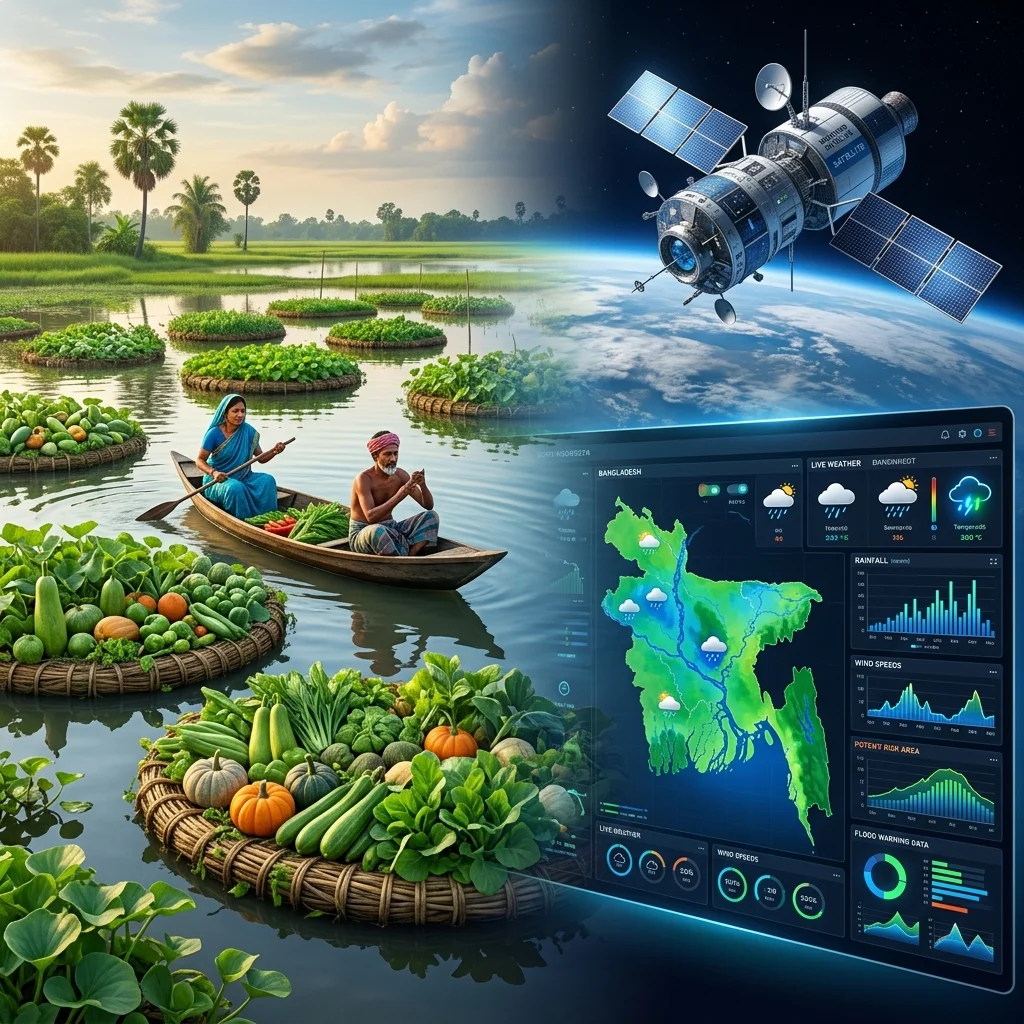
**Early warning systems (Box 1 and Box 7)** in Bangladesh and for heat events illustrate how community-based networks can function without expensive satellite infrastructure. The Bangladesh system, built on volunteer observation and local radio, reduced cyclone fatalities by orders of magnitude compared to the 1970 Bhola cyclone. **Floating agriculture (Box 5)** in Bangladesh involves constructing rafts from water hyacinth and bamboo, enabling vegetable production during monsoon floods—a practice that predates written records but was formalized by the UNFCCC as a scalable adaptation technology. **Biorock coral restoration (Box 2)** uses low-voltage electrical currents to accelerate coral calcification, a method that has since gained traction in marine conservation circles but remains niche due to energy requirements. **Seasonal forecasting in Burkina Faso (Box 4)** combined indigenous knowledge of local phenology with meteorological data from national agencies, creating a hybrid model that improved crop planning. **Soil and water management networks (Box 3)** and **irrigation training for Mexican farmers (Box 6)** relied entirely on peer-to-peer learning, not hardware. **Local Agenda 21s (Box 8)** and **Smart Growth planning networks (Box 9)** applied governance tools to urban resilience, focusing on zoning, green space, and community participation.
The common thread is that none of these technologies required venture capital, patent protection, or proprietary software. They were designed for dissemination by public agencies, NGOs, and farmer cooperatives.
The Hidden Economic Logic: Low-Tech vs. High-Tech Adaptation
The current climate technology market has overwhelmingly favored mitigation over adaptation, and within adaptation, it has favored high-capital, high-engineering solutions: desalination plants, sea walls, and large-scale aquaculture. These solutions are measurable, investable, and often backed by sovereign wealth funds. Yet the UNFCCC document highlights a different economic calculus.
Floating agriculture, for example, costs approximately $100–$150 per raft (in 2006 terms) and provides three growing seasons per year in flood-prone areas. The same land under conventional farming would yield zero crops during a monsoon flood. The return on investment is not just avoided loss—it is productive gain. Biorock reefs, while requiring an energy input of about 1 watt per square meter, avoid the capital expenditure of concrete breakwaters. The 2006 guide explicitly frames these technologies as "no-regret" measures: even in the absence of climate change, improved soil management increases yields, and early warning systems save lives from routine storms.
Figure 2 of the document (iterative steps in planned adaptation) presents a stakeholder-integration framework that contemporary climate entrepreneurs often overlook: the first step is not technology selection but vulnerability assessment and community engagement. This omission has contributed to the failure of many high-tech adaptation projects, such as desalination plants that sit idle due to high energy costs or coastal barriers that disrupt local ecosystems. (Source: UNFCCC, 2006, Figure 2)
The Adoption Gap: Why 2006's Solutions Never Scaled
Despite their documented effectiveness, most of the technologies in the UNFCCC guide have not achieved widespread adoption. The reasons are structural rather than technical.
First, the financial mechanisms for adaptation have historically been dominated by multilateral funds (Green Climate Fund, Adaptation Fund) that prioritize projects with large capital outlays and measurable outputs. A community-led floating agriculture project in a single district does not meet the threshold for program-level funding. Second, the intellectual property frameworks that drive climate tech innovation do not apply to traditional knowledge—there is no patent for a water-hyacinth raft. Consequently, these technologies lack the commercial champions that scale new products. Third, monitoring and evaluation systems are poorly suited to "soft" technologies. How does one measure the economic value of a saved crop when the flood never came? The counterfactual is difficult to prove.
The UNFCCC document itself anticipated this. In its "Action for Adaptation" section, it emphasizes the need for national adaptation programs, capacity building, and technology transfer. These are precisely the areas that remain underfunded. (Source: UNFCCC, 2006, "Action for Adaptation" section)
Lessons for Today's Climate Technology Trends
The climate technology investment landscape in 2024 is dominated by artificial intelligence for disaster prediction, drone-based crop monitoring, and carbon capture utilization and storage. These sectors attracted over $40 billion in venture funding in 2023, according to PitchBook data. Meanwhile, adaptation finance overall remains at roughly 5% of total climate finance, and within that, nature-based and community-led solutions receive a negligible share.
The 2006 UNFCCC guide offers three testable lessons for today's investors and policymakers:
1. **Cost efficiency correlates with vulnerability reduction.** The highest adaptation ROI occurs when interventions target the populations that suffer 90% of climate losses—smallholder farmers, coastal slum dwellers, and indigenous communities. High-tech solutions that bypass these groups produce lower net benefits.
2. **Iterative, participatory design reduces project failure.** Figure 2 of the document shows that adaptation is a cycle, not a linear pipeline. Climate tech entrepreneurs who skip the stakeholder engagement step risk building solutions for a problem that does not exist, or that cannot be maintained.
3. **"No regret" is a financial hedge.** Technologies that deliver co-benefits independent of climate change—improved water management, stronger community networks, healthier soils—should be viewed as infrastructure investments, not charity.
Market Predictions: The Coming Shift
The next five years will likely see a rebalancing. Multilateral development banks are under pressure to increase adaptation finance to 50% of their climate portfolios. The UNFCCC's 2023 Global Stocktake explicitly called for scaling up community-based adaptation. These policy signals will create market opportunities for hybrid models: early warning systems that combine satellite data with local radio networks; floating agriculture platforms that incorporate modern materials like recycled plastics; biorock variants powered by solar microgrids.
The technology itself is not the constraint. The constraint is the investment framework that valorizes patents over participation, and hardware over habits. The 2006 guide, still available on the UNFCCC website as a 746-kilobyte PDF, contains the blueprint. The question is whether the climate technology community will read it, or continue to reinvent the wheel at a much higher price.