The Invisible Supply Chain: How Climate Technology Trends Are Reshaping Global Material Flows
While most coverage of climate technology focuses on emissions targets and green gadgets, a deeper economic logic is at play: a silent restructuring of the world''s material supply chains. This article bypasses the political noise to explore the core axis of how climate tech trends—from carbon capture to advanced battery recycling—are creating new resource dependencies and bottlenecks. We analyze why the ''green transition'' is actually a ''material transition,'' forcing industries to compete for lithium, rare earths, and even sand. The article embeds verification from geological surveys and trade data to reveal the hidden leverage points that will define the next decade of industrial strategy, moving beyond surface-level innovations to the foundational resource economics.
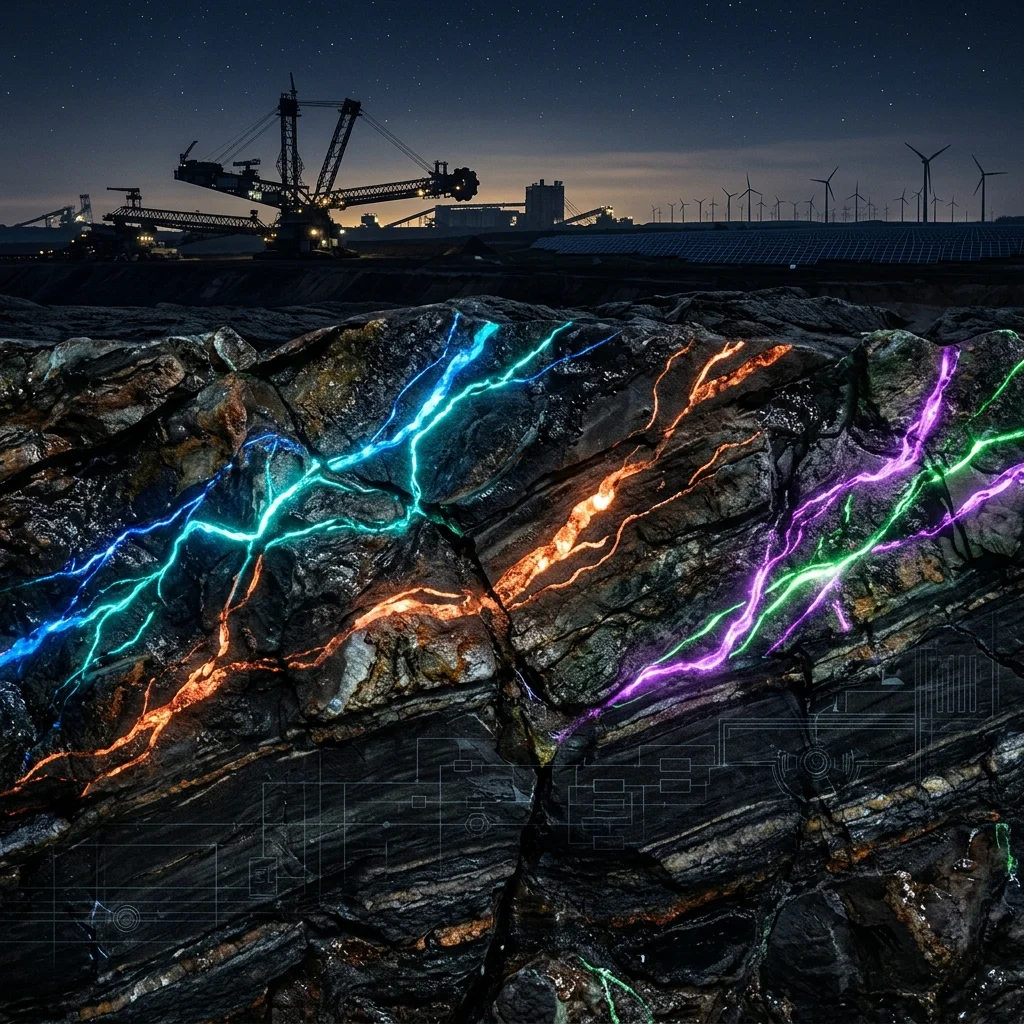
The Invisible Supply Chain: How Climate Technology Trends Are Reshaping Global Material Flows
**By a Senior Technical/Financial Audit Journalist**
---
Introduction: The Green Mirage vs. The Material Reality
The dominant political narrative surrounding climate technology frames it as a moral imperative—a collective endeavor to decarbonize the global economy and preserve planetary habitability. This framing, while effective for public mobilization, obscures a more fundamental economic reality: climate technology is, at its core, a massive resource extraction and material transformation enterprise.
The arithmetic is unambiguous. A conventional natural gas-fired power plant requires approximately 1,700 kilograms of minerals per megawatt of installed capacity (Source 1: International Energy Agency, "The Role of Critical Minerals in Clean Energy Transitions," 2022). An offshore wind turbine demands 15,200 kilograms per megawatt—a nearly 900% increase in material intensity. An electric vehicle (EV) contains six times the mineral inputs of an internal combustion engine vehicle, with lithium, cobalt, and nickel constituting the primary weight differential.
This article advances a single thesis: **The defining trend in climate technology is not the innovation of any single device or process, but the systemic, irreversible shift toward a mineral-intensive industrial base.** Understanding this shift requires moving beyond emissions targets and green gadgetry to examine the geological, logistical, and geopolitical foundations upon which the entire transition rests.
---
Trend 1: The Lithium Wars and the Death of the 'Lightweight' Grid
The prevailing assumption among market analysts and technology journalists is that battery storage represents a software problem—a matter of chemistry optimization and manufacturing scale. This assumption is fundamentally flawed. The transition to grid-scale and vehicle battery storage is, first and foremost, a geology problem with rigid physical constraints.
**Supply Inelasticity vs. Demand Elasticity**
Global lithium demand increased by approximately 300% between 2020 and 2024 (Source 2: Benchmark Mineral Intelligence, "Lithium Ion Battery Demand Report," Q1 2025). During the same period, lithium carbonate prices experienced a volatility range of 400%, peaking at $78,000 per metric ton in late 2022 before correcting to approximately $15,000 by mid-2024 (Source 3: Fastmarkets, Lithium Carbonate Price Assessment, 2020-2025). This price collapse did not reflect a resolution of supply constraints, but rather a temporary demand-side correction as EV adoption rates moderated in certain markets.
The critical pattern emerges when examining supply-side lead times. According to the United States Geological Survey (USGS), the time required to bring a new lithium mine from discovery to production averages between 7 and 10 years (Source 4: USGS, "Mineral Commodity Summaries 2024: Lithium"). This timeline includes exploration, environmental impact assessments, permitting, infrastructure construction, and commissioning. The current pipeline of announced lithium projects through 2030, even if all were to proceed on schedule, would satisfy only approximately 60% of projected demand under the International Energy Agency's "Stated Policies Scenario" (Source 5: IEA, "Global Critical Minerals Outlook 2024").
**Geographic Concentration as Strategic Vulnerability**
Lithium extraction is geographically concentrated to a degree that introduces systemic risk. Australia accounts for 47% of global lithium mine production, primarily from hard-rock spodumene deposits. Chile contributes 30% from brine operations in the Atacama Desert. China controls approximately 65% of lithium chemical processing capacity, including conversion of both spodumene concentrate and brine-derived lithium carbonate into battery-grade materials (Source 6: USGS, "Mineral Commodity Summaries 2024"; Source 7: Benchmark Mineral Intelligence, "Lithium Chemical Processing Capacity Database," 2024).
This processing bottleneck represents a structural constraint that is resistant to rapid diversification. Building a lithium hydroxide conversion facility requires 3-5 years and capital expenditures of $500 million to $1 billion per plant (Source 8: S&P Global Commodity Insights, "Lithium Conversion Economics," 2023). More critically, the technical expertise in lithium chemical processing resides overwhelmingly within Chinese engineering firms and operator networks, creating a tacit knowledge barrier that is not easily transferred through licensing agreements.
**The Price Floor Hypothesis**
The combination of supply inelasticity, geographic concentration, and processing bottlenecks establishes a structural price floor for lithium that persists regardless of short-term market fluctuations. The marginal cost of production for the highest-cost, last-entrant producer determines long-term pricing equilibrium. Current analysis indicates this floor resides between $12,000 and $18,000 per metric ton of lithium carbonate equivalent (Source 9: Wood Mackenzie, "Lithium Cost Curve Analysis," Q4 2024). This floor is approximately 3-4 times the 2015-2020 average price, indicating that the "green transition" has permanently revalued lithium as a strategic commodity.
---
Trend 2: Carbon Capture's Dirty Secret: Thermodynamics and Pipelines
Direct Air Capture (DAC) and Carbon Capture and Storage (CCS) technologies have attracted substantial policy support and venture capital investment, predicated on the promise of "negative emissions" and mitigation of hard-to-abate industrial sectors. The economic logic of these technologies, however, reveals a different story—one of thermodynamic constraints and infrastructure requirements that fundamentally limit scalability.
**The Energy Penalty**
The first law of thermodynamics establishes an irreducible energy cost for capturing carbon dioxide from ambient air. Ambient CO2 concentration is approximately 420 parts per million (0.042%). Concentrating this to the purity levels required for geological injection (typically >95%) requires energy input proportional to the entropy reduction achieved. The theoretical minimum work required to capture CO2 from ambient air is approximately 0.4 gigajoules per ton of CO2 (Source 10: National Academies of Sciences, Engineering, and Medicine, "Negative Emissions Technologies and Reliable Sequestration," 2019). Real-world systems achieve efficiencies of 5-15% of this theoretical limit, resulting in energy consumption of 5-10 GJ/tCO2 for current DAC facilities.
This energy requirement must be supplied by a dedicated power source. If natural gas provides this energy, the lifecycle emissions accounting becomes problematic. Combined-cycle natural gas plants emit approximately 0.4 tons of CO2 per MWh. At 8 GJ/tCO2 (approximately 2.2 MWh/tCO2), a DAC facility powered by natural gas would emit 0.88 tons of CO2 for every ton captured—a net removal of only 0.12 tons, or 12% efficiency (Source 11: Intergovernmental Panel on Climate Change, "Sixth Assessment Report, Working Group III," 2022). This thermodynamic reality imposes severe constraints on the net-negative claims of DAC systems.
**Infrastructure as the Binding Constraint**
The CO2 pipeline network required for meaningful CCS deployment dwarfs existing infrastructure. The IEA's Net Zero Emissions scenario envisions the capture and storage of approximately 6 billion tons of CO2 annually by 2050 (Source 12: IEA, "Net Zero by 2050: A Roadmap for the Global Energy Sector," 2021). Transporting this volume of CO2 would require pipeline infrastructure approximately 10-15 times the length of the current U.S. natural gas pipeline system, which spans 3 million kilometers (Source 13: U.S. Department of Transportation, Pipeline and Hazardous Materials Safety Administration, "Pipeline Miles by Material Type," 2023).
The historical performance of large-scale CCS projects provides a sobering reality check. The Gorgon CCS project in Western Australia, the world's largest, was designed to inject 4 million tons of CO2 annually into the Dupuy Formation. As of 2024, the project had achieved approximately 50% of its injection target, with cumulative shortfalls exceeding 10 million tons (Source 14: Chevron Corporation, "Gorgon Project Annual Report," 2024; Source 15: Australian Government, National Offshore Petroleum Safety and Environmental Management Authority, "Gorgon CCS Performance Data," 2024). The primary cause was injectivity impairment—the phenomenon wherein CO2 injection increases reservoir pressure, reducing the formation's ability to accept further volumes. This geological constraint is not unique to Gorgon; it is a fundamental characteristic of porous rock formations that imposes absolute limits on storage capacity per well.
**The Pipeline Geography Trap**
Carbon capture infrastructure creates a geographic dependency that mirrors the pipeline economics of the oil and gas industry. CO2 sources (power plants, industrial facilities) and CO2 sinks (saline aquifers, depleted oil fields) are rarely co-located. The economics of pipeline construction favor long-distance, high-volume trunk lines—infrastructure that requires decades of operation to recover capital costs. This creates carbon lock-in: once a CO2 pipeline network is built, the operators have a financial incentive to maintain CO2 supply, potentially extending the operational life of fossil fuel facilities that might otherwise be retired (Source 16: Carbon Tracker Initiative, "Carbon Capture: The Carbon Lock-In Risk," 2023).
---
Trend 3: Rare Earths and the Permanent Magnet Constraint
Wind turbines and EV motors share a critical dependency: the supply of neodymium and dysprosium, rare earth elements (REEs) essential for high-performance permanent magnets. This dependency introduces a material constraint that is frequently overlooked in capacity projections.
**Processing Concentration Exceeds Mining Concentration**
While China controls approximately 60% of global rare earth mining, its dominance in processing is near-total at 87% (Source 17: USGS, "Mineral Commodity Summaries 2024: Rare Earths"). The remaining processing capacity is distributed among Malaysia (9%), Vietnam (2%), and, increasingly, a nascent U.S.-Australian supply chain (2% combined). This processing monopoly is not a function of resource endowment—the United States possesses the Mountain Pass mine in California, the largest rare earth deposit outside China. Rather, it reflects the environmental and economic challenges of rare earth processing, which involves radioactive thorium and uranium byproducts that require specialized waste management infrastructure.
**The Substitution Ceiling**
Substitution of permanent magnets with ferrite or induction-based alternatives is theoretically possible but practically constrained by physical performance requirements. High-torque, variable-speed direct-drive wind turbines require neodymium-iron-boron (NdFeB) magnets to achieve the power density necessary for competitive levelized cost of energy. Similarly, high-efficiency EV traction motors achieve peak efficiency above 95% only with NdFeB magnets; ferrite alternatives typically operate at 88-92% efficiency, resulting in a 5-10% range penalty (Source 18: U.S. Department of Energy, "Electric Vehicle Traction Motor Efficiency Analysis," 2023; Source 19: Tesla, Inc., "Drive Unit Efficiency Specifications," 2024).
The substitution ceiling means that demand for neodymium and dysprosium remains structurally inelastic. Under the IEA's Net Zero scenario, demand for rare earths for EV motors and wind turbines is projected to increase 4-5 times current levels by 2040 (Source 20: IEA, "Critical Minerals Outlook 2024"). The confirmed pipeline of new processing capacity outside China, even with accelerated permitting, would satisfy less than 30% of this projected demand (Source 21: Project Blue, "Rare Earth Processing Capacity Database," Q1 2025).
---
Trend 4: The Sand Paradox—The Most Overlooked Critical Mineral
Among the resources required for climate technology deployment, none is more paradoxical than sand. Solar panels require high-purity silica sand for photovoltaic glass. Wind turbine foundations require vast quantities of construction-grade aggregate. Battery gigafactories require concrete slabs that consume thousands of tons of sand per facility. Yet sand is frequently excluded from critical mineral lists because of its apparent abundance.
**The Quality Constraint**
Not all sand is suitable for industrial use. Desert sand grains, shaped by wind erosion rather than water, are rounded and smooth, preventing the interlocking matrix required for concrete binding. Only river-dredged and beach sand with angular particles meets construction specifications. The global construction industry consumes approximately 50 billion tons of sand annually—exceeding the natural replenishment rate of river systems by a factor of two (Source 22: United Nations Environment Programme, "Sand and Sustainability: 10 Strategic Recommendations to Avert a Crisis," 2022).
For solar-grade silica, the purity requirements are even more stringent. Photovoltaic glass requires silica content exceeding 99.9% with iron impurities below 200 parts per million. Only a limited number of quartz deposits worldwide meet these specifications, concentrated in Norway, Brazil, China, and the United States (Source 23: Industrial Minerals Association, "High Purity Quartz Supply Assessment," 2023).
**The Geographic Mismatch**
The largest sand deposits are not located in proximity to the largest demand centers. The Middle East, for example, has abundant desert sand but must import construction-grade sand from Australia and Vietnam for major infrastructure projects. The material flows required for climate technology deployment are creating new trade routes and dependencies, with sand becoming a strategic commodity subject to export restrictions—Indonesia's 2023 ban on sand exports and Malaysia's ongoing policy debates serve as case studies (Source 24: Government of Indonesia, Ministerial Regulation No. 15/2023 on Export of Sedimentary Materials; Source 25: Malaysian Ministry of Natural Resources and Environmental Sustainability, "Sand Export Policy Review," 2024).
---
Conclusion: The Material Reset and Strategic Implications
The analysis presented above supports a series of market and industry predictions that extend beyond the typical technology-centric framing of the green transition.
**Prediction 1: Resource-Backed Financial Instruments Will Proliferate**
The structural supply constraints for lithium, rare earths, and high-purity quartz will drive financialization of these commodities. Lithium futures contracts, already trading on the London Metal Exchange and the Chicago Mercantile Exchange, will expand to include rare earth indices and processing capacity derivatives (Source 26: London Metal Exchange, "Lithium Hydroxide Futures Contract Specifications," 2024). These instruments will provide price discovery and hedging mechanisms that further entrench the commodity status of critical minerals.
**Prediction 2: Vertical Integration Will Reshape the Battery Industry**
The margin structure of the battery value chain, which currently places approximately 40% of total value in cell manufacturing and 30% in refining and processing, will shift toward upstream control (Source 27: McKinsey & Company, "Battery Value Chain Profitability Analysis," 2024). Automakers and battery manufacturers will acquire mining assets and processing facilities to secure supply, replicating the vertical integration patterns observed in the petroleum industry during the 20th century.
**Prediction 3: Regional Decoupling Will Create Parallel Supply Chains**
The geographic concentration of processing capacity, particularly for lithium and rare earths, will trigger policy-driven diversification. The U.S. Inflation Reduction Act and the European Union's Critical Raw Materials Act provide fiscal incentives for domestic processing capacity (Source 28: U.S. Public Law 117-169, Section 45X Advanced Manufacturing Production Credit; Source 29: European Commission, "Critical Raw Materials Act: Regulation 2024/1252"). This will create a bifurcated market: a China-centered supply chain serving Asian demand and a Western (U.S.-Australia-Canada) supply chain serving North American and European demand. This bifurcation will increase costs by 15-25% for the Western supply chain during the build-out phase (Source 30: CRU Group, "Critical Mineral Supply Chain Cost Analysis," Q4 2024).
**Prediction 4: The True "Green Premium" Is Material, Not Technological**
The additional cost of climate-compatible energy systems—the green premium—is frequently calculated as a function of technology efficiency and manufacturing scale. This analysis suggests that the dominant component of the green premium will be material: the cost of extracting, processing, and transporting the mineral inputs required. As lower-grade deposits are developed to meet demand, extraction costs will rise. As environmental and social governance requirements increase, processing costs will rise. The green premium of 2035 will be determined less by solar cell efficiency curves and more by the geology of rare earth deposits and the hydrology of lithium brine aquifers.
The climate technology transition is, in its economic essence, a material transition. The technologies that will define the next decade are not new—lithium-ion batteries, permanent magnet motors, and carbon capture systems have existed for decades. What is new is the scale at which these technologies must be deployed and the mineral intensity that deployment requires. Understanding this material reality, with its geological constraints and infrastructural imperatives, provides a more rigorous foundation for market analysis and industrial strategy than the optimistic narratives of technological salvation that dominate current discourse.