Climate Technology Trends Under the Microscope: UNEP-CCC’s Annual Reports from 2022 to 2025
The UNEP-CCC’s Climate Technology Progress Reports offer a rare, structured view of how climate technology development and transfer are evolving globally. Starting with a foundational tracking framework applied to Africa in 2022, the series has matured through Asia-focused insights (2023) and urgent calls for renewable energy tripling and efficiency doubling (2024), culminating in a deep dive into biobased technologies and the bioeconomy ahead of COP30 in Brazil (2025). This article unpacks the hidden economic logic behind these reports—revealing how they shape investment priorities, technology supply chains, and policy alignment for both industrialized and developing nations. By examining the shift from broad tracking to thematic specificity, we uncover the strategic implications for stakeholders in clean energy, agriculture, and materials sectors.
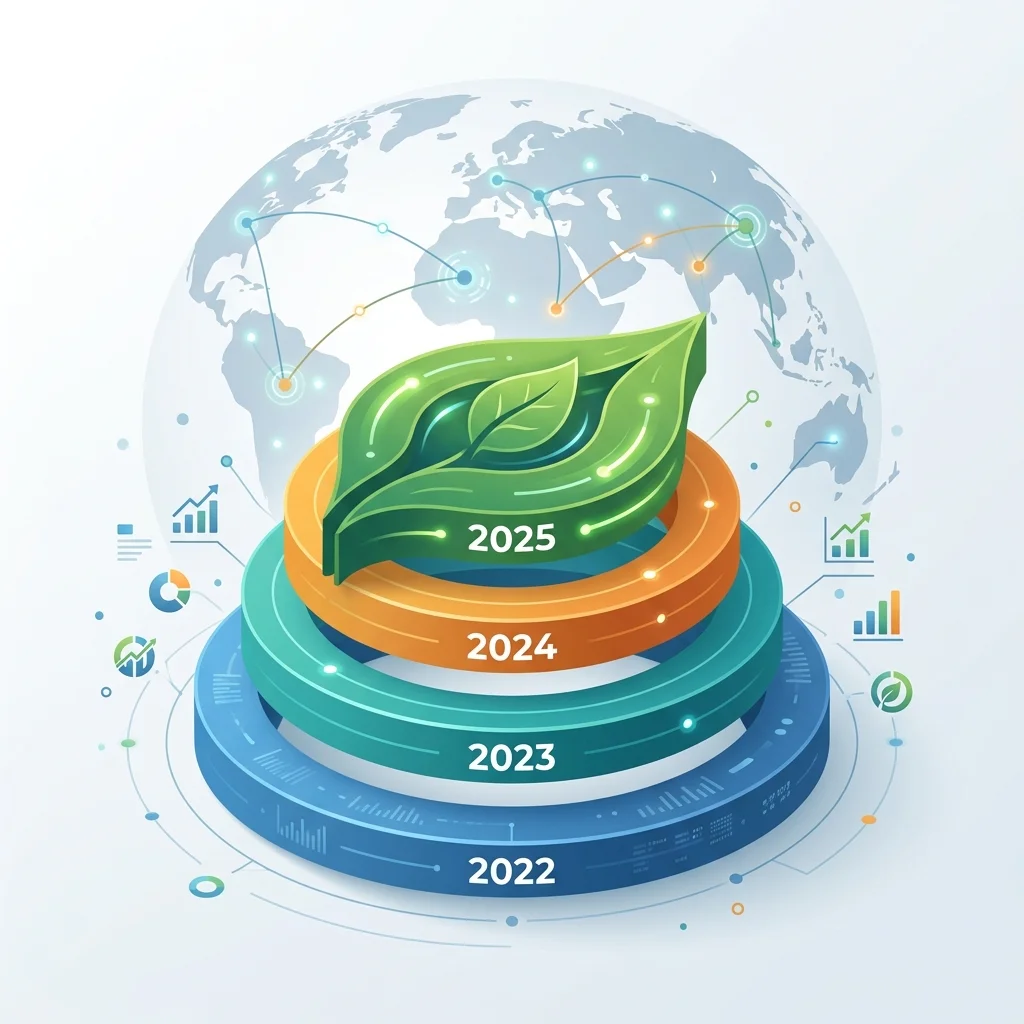
Climate Technology Trends Under the Microscope: UNEP-CCC’s Annual Reports from 2022 to 2025
Tracking the development and transfer of climate technologies is notoriously difficult—data is fragmented, definitions vary across countries, and progress is rarely measured in real time. Since 2022, the UNEP Copenhagen Climate Centre (UNEP-CCC) has sought to change that with its Climate Technology Progress Report series. What began as a regional proof-of-concept in Africa has evolved into a thematic deep dive into biobased technologies and the bioeconomy, timed to inform COP30 in Brazil. Each report does more than catalog advancements; it reveals an underlying economic logic that shapes investment priorities, technology supply chains, and policy alignment for both industrialized and developing nations. This article unpacks that logic, tracing how the series has matured and what its trajectory signals for clean energy, agriculture, and materials sectors.
Introduction: The Evolution of a Reporting Framework
The UNEP-CCC launched the Climate Technology Progress Report series in 2022 to systematically track technology development and transfer under the UNFCCC. Unlike ad-hoc assessments, the series was designed from the start as a replicable, annual benchmarking tool—one that could feed directly into the Global Stocktake and national climate planning. Each report builds on the previous year’s methodology, expanding from a regional proof-of-concept (Africa) to global thematic insights (biobased technologies in 2025).
The progression is not arbitrary. By starting small and concrete, the authors tested their analytical framework, then scaled it to new regions and finally to a theme with clear geopolitical resonance. This article explores the hidden economic logic behind that progression and what it signals for future climate tech investment and policy.
[IMAGE: A simple infographic showing the timeline of reports (2022–2025) with key themes and regions highlighted.]
2022–2023: Laying the Groundwork with Regional Data
The 2022 report established a replicable tracking approach using Africa as a test case. Its primary contribution was not a list of technologies, but a structured methodology for identifying baseline technology transfer gaps. For the first time, stakeholders could see where specific barriers—such as weak regulatory environments, limited technical skills, or underdeveloped infrastructure—were blocking the diffusion of solar PV, energy storage, and climate-smart agriculture technologies.
In 2023, the methodology was applied to Asia, a region with vastly different industrial capabilities, supply chain dynamics, and policy maturity. The report clarified barriers and enablers specific to Asian contexts: for example, the dominance of state-owned enterprises in energy markets, the concentration of manufacturing for solar panels and batteries in a few countries, and the role of regional trade agreements in facilitating knowledge transfer.
These early reports were crucial for informing the Global Stocktake, providing evidence that technology transfer is not a one-size-fits-all process. They also set a precedent for annual, evidence-based assessments that move beyond anecdotal evidence. A key insight emerged: shifting from continent-scale to country-level data reveals where supply chains and policy infrastructures are weakest—and where targeted interventions can have the highest impact.
[IMAGE: Map of Africa and Asia with data nodes showing technology transfer flows.]
2024: The Urgency of Renewable Energy and Efficiency
The 2024 report shifted from regional diagnostics to global imperatives. Its bold call to **triple renewable energy capacity** and **double energy efficiency** by 2030 directly influenced the COP28 negotiations in Dubai. The report did not just state these targets; it provided granular analysis of what they would require in terms of finance, infrastructure, and institutional capacity.
This reflects a clear market signal: capital must flow into solar, wind, and grid modernization at unprecedented speed. For investors, the report essentially quantified the gap between current deployment trajectories and the “tripling” pathway—showing that annual renewable energy additions need to rise from roughly 500 GW in 2023 to over 1,200 GW by 2030. That gap represents trillions of dollars in opportunity.
“The urgent need to accelerate technology deployment is matched only by the scale of investment required,” the report stated, a line that has since been cited by development banks and private equity firms alike.
But the call for tripling renewables and doubling efficiency also has deep implications for underlying supply chains. Critical minerals like lithium, cobalt, and rare earth elements will face unprecedented demand pressure. Manufacturing capacity for wind turbines, electrolyzers, and grid-scale batteries must expand far beyond current plans. And the skilled labor pipeline—from engineers to installation technicians—needs to grow exponentially. The 2024 report did not fully explore these supply chain bottlenecks, but it laid the groundwork for later thematic reports to do so.
[IMAGE: Graph showing current vs. required renewable capacity growth, with a timeline to 2030.]
2025: Biobased Technologies and the Bioeconomy – A Forward-Looking Theme
The upcoming 2025 report represents a notable thematic shift. Instead of focusing on energy supply or efficiency broadly, it homes in on **biobased technologies** in the **bioeconomy**. The choice is strategic: COP30 will be held in Brazil, a country with the world’s largest tropical forest reserves, extensive agricultural land, and a growing bioenergy sector. Brazil is also a major producer of sugarcane ethanol, bioplastics, and forest-based products.
This thematic shift signals that **climate technology trends** are moving beyond the narrow focus on hardware (solar panels, wind turbines, batteries) toward biological and biochemical solutions. The bioeconomy encompasses everything from advanced biofuels and bio-based chemicals to carbon removal technologies like biochar and enhanced weathering using biomass. For developing countries with abundant biomass resources, these technologies offer a pathway to value-added industrialization that does not rely on fossil fuels.
The report is expected to highlight three critical areas:
- **Technology readiness and scalability:** Which biobased technologies are mature enough for rapid deployment, and which still require R&D breakthroughs?
- **Land-use implications:** How can bioeconomy growth avoid competition with food production and deforestation? The report is likely to recommend sustainability criteria.
- **Innovation and intellectual property:** Many biobased technologies are patented by corporations in industrialized nations. The report will examine technology transfer mechanisms that allow developing countries to access and adapt these solutions.
The 2025 report’s economic logic is clear: as carbon constraints tighten and renewable energy becomes cheap, the next frontier of decarbonization lies in replacing fossil-based materials—plastics, chemicals, construction materials—with bio-based alternatives. This is a massive industrial transformation, and its success will depend on aligning innovation policies, trade rules, and agricultural practices.
[IMAGE: Conceptual illustration of bio-based technologies—leaves, microbes, and industrial reactors—overlaid on a map of Brazil with forest and farmland patterns.]
Strategic Implications for Stakeholders
Taken together, the four reports reveal a deliberate progression from broad tracking to thematic specificity. For clean energy investors, the 2024 report’s renewable energy tripling target provides a clear return-on-investment horizon. For agriculture and materials companies, the 2025 report on biobased technologies signals where R&D dollars and partnership opportunities should be directed.
For developing country governments, the series offers a roadmap for prioritizing technology transfer requests under the UNFCCC’s Technology Mechanism. Rather than submitting broad wish lists, countries can now use the reports’ granular data to identify specific technologies that match their resource endowments and industrial capacities.
For industrialized nations, the reports highlight the need to reform intellectual property regimes and expand technical assistance—especially for biobased technologies, where many essential processes remain proprietary. The UNEP-CCC’s work also reinforces a key message: technology transfer is not a charitable gesture but a strategic investment in global supply chain resilience and climate stability.
Conclusion: From Tracking to Action
The UNEP-CCC’s Climate Technology Progress Reports have evolved from a methodological exercise into a strategic tool for shaping climate tech markets. By starting with Africa, moving to Asia, issuing a global wake-up call on renewables, and now focusing on bioeconomy, the series has consistently stayed ahead of the policy curve. As COP30 approaches, the 2025 report on biobased technologies will demand attention from governments, investors, and corporate strategists alike. The question is no longer whether these technologies matter—but how quickly and equitably they can be deployed at scale.
[IMAGE: Timeline graphic showing the four reports (2022–2025) with arrows pointing upward, ending at a 2030 goal marker labeled “Net-Zero Pathway.”]