Beyond 800 Watts: How Germany''s New Plug-In Solar Rule Signals a Shift in Energy Democratization
Germany's recent regulatory update, raising the plug-in solar system limit from 600W to 800W, is more than a simple power bump. This analysis explores the strategic move by the VDE to accelerate consumer energy independence, reduce installation barriers, and reshape the residential solar market. We examine the underlying economic logic favoring decentralized generation, the potential long-term impacts on grid dynamics and product design, and why this change positions Germany at the forefront of a global trend toward simplified, user-installable renewable energy solutions. This shift reflects a calculated policy to empower prosumers and streamline the energy transition.
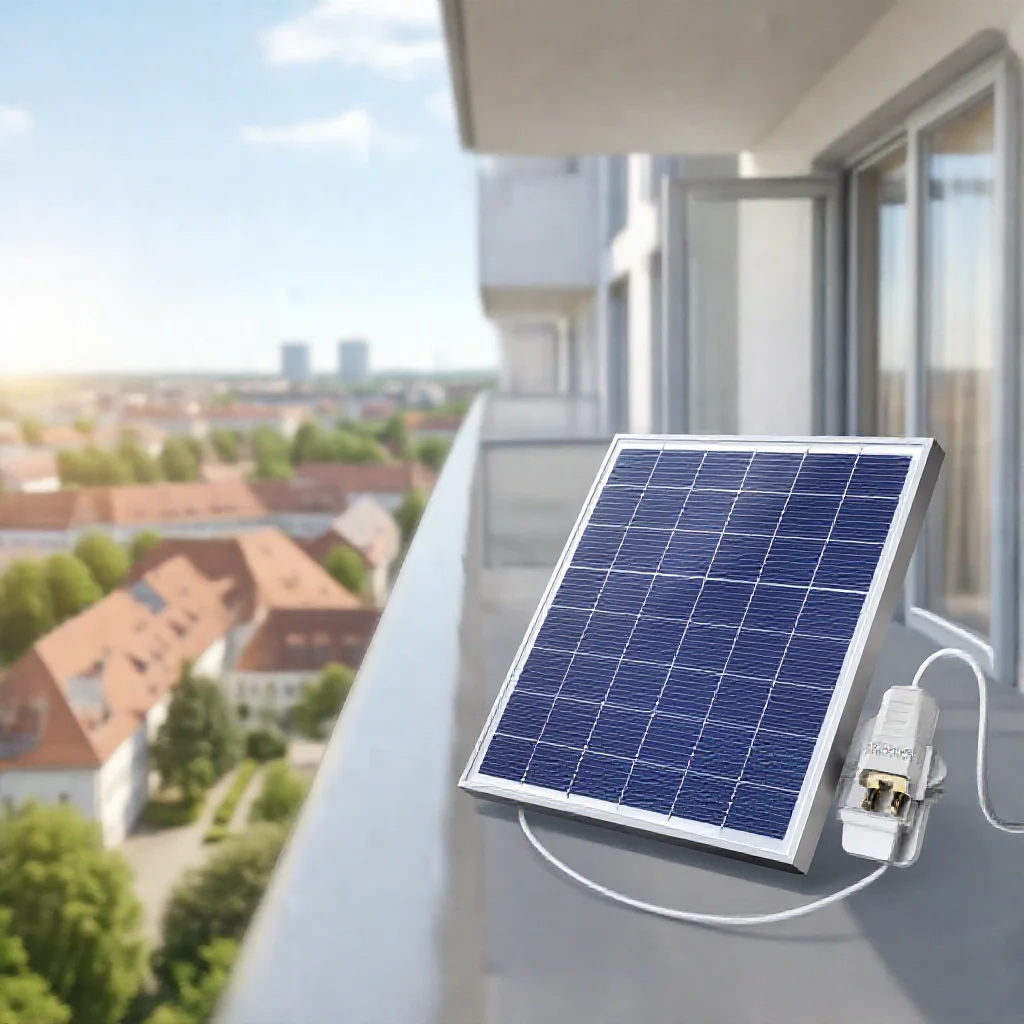
Beyond 800 Watts: How Germany's New Plug-In Solar Rule Signals a Shift in Energy Democratization
Introduction: The 200-Watt Leap – More Than Just a Number
The German Association for Electrical, Electronic & Information Technologies (VDE) has updated its application rule VDE-AR-E 2100-712, raising the permissible power limit for plug-in photovoltaic (PV) systems from 600 watts to 800 watts (Source 1: [Primary Data]). This modification, applicable to systems connected via a standard Schuko plug, represents a calculated regulatory evolution. The adjustment is not merely a technical increment but a strategic instrument designed to lower adoption barriers and accelerate the deployment of decentralized, consumer-owned energy generation. This analysis audits the rationale, economic logic, and potential long-term implications of this regulatory shift, positioning it as a significant marker in energy democratization.
Decoding the Regulation: VDE's Rationale and Technical Safeguards
The VDE-AR-E 2100-712 standard functions as the governing framework for plug-in solar devices, primarily ensuring consumer safety and grid stability. The regulation's core purpose is to define the conditions under which a PV system can be safely connected to a home's electrical circuit without requiring a permanent, electrician-installed connection. The increase to an 800-watt ceiling is a product of engineering analysis, balancing the safe operational limits of common Schuko sockets and household wiring with a meaningful increase in power output (Source 2: [Primary Data]).
The selection of 800 watts is deliberate. It provides a substantial 33% power increase over the previous 600-watt limit, enhancing the economic return for a prosumer, while remaining within the safety parameters of standard residential electrical infrastructure. The VDE, as the publishing body for this standard, anchors the change in technical credibility, ensuring that the simplified installation process does not compromise system integrity.
The Hidden Economic Logic: Democratizing Energy and Shifting Market Dynamics
The primary economic impact of this regulatory update is the reduction of "soft costs," specifically the labor cost associated with a certified electrician's installation. By expanding the power range for plug-and-play systems, the rule directly improves the return on investment for residential adopters by eliminating a significant upfront expense. This economic logic is designed to catalyze adoption among renters, apartment dwellers, and homeowners seeking low-complexity solutions.
This change also reconfigures market dynamics. It incentivizes manufacturers to develop and mass-produce standardized, off-the-shelf solar kits optimized for the 800-watt threshold. The solar retail and DIY market in Germany is poised for expansion, moving from a niche segment toward a mainstream consumer electronics category. This market signal from Germany, a leading renewable energy economy, is likely to influence product development and regulatory discussions in neighboring EU member states.
Deep Dive: Long-Term Implications for the Grid and Product Ecosystem
The long-term implications extend beyond consumer convenience. The proliferation of hundreds of thousands, or millions, of decentralized 800-watt generation units introduces a new dynamic for grid management. In aggregate, these systems form a distributed, virtual power plant, capable of providing significant localized power generation and challenging traditional, centralized grid load and voltage management models.
This shift will catalyze the next wave of product innovation. Demand will increase for smart inverters and home energy management systems specifically designed for the plug-in segment, capable of optimizing self-consumption and providing grid-supportive functions. The supply chain is expected to respond with greater standardization of plug-and-play components, potentially reducing costs further and shifting emphasis from custom engineering to scalable, user-friendly design.
Analysis Type: A 'Slow Analysis' of a Regulatory Tipping Point
This examination constitutes a "slow analysis" of a foundational policy shift, distinct from reporting on breaking news. The update to VDE-AR-E 2100-712 is a regulatory tipping point that merits audit for its systemic implications. Comparatively, Germany's approach is notably progressive. While other markets like the United Kingdom or the United States have varying rules for plug-in solar, often with stricter limits or different certification requirements, Germany's clear standard and raised power limit provide a streamlined pathway for consumer adoption.
The strategic intent is evident: to empower prosumers at scale by simplifying the technical and bureaucratic process. This positions Germany at the forefront of a global trend toward frictionless, decentralized renewable energy integration.
Conclusion: Neutral Market and Industry Predictions
Based on the regulatory change and underlying market forces, several neutral predictions can be made. The German market will experience accelerated growth in the plug-in solar segment, with product offerings rapidly consolidating around the new 800-watt benchmark. Increased competition in this segment will apply downward pressure on kit prices. Energy utilities and grid operators will be compelled to develop new tariffs and grid management strategies to account for the bidirectional flow of power from countless small-scale sources. Finally, the success and operational data from this expansion will serve as a critical case study for other nations considering similar regulatory simplifications to fuel their energy transitions. The 200-watt increase is a small number that signifies a substantial shift in the architecture of energy systems.