Creative Climate Data Visualization: Insights from a Remote Guest Lecture at UT Austin
This article explores a remote guest lecture on creative and effective climate data visualization delivered on April 1, 2026, for the GEO 371T/391 course at the University of Texas at Austin. By analyzing the lecture’s 114-slide SlideShare presentation (first 20 slides examined), we uncover how innovative visualization techniques can bridge the gap between complex climate datasets and diverse audiences. The discussion highlights the lecture’s role in advancing science communication, the shift toward remote academic engagement, and the long-term impact of such educational initiatives on climate literacy and policy-making. Practical takeaways for data scientists, educators, and communicators are included.
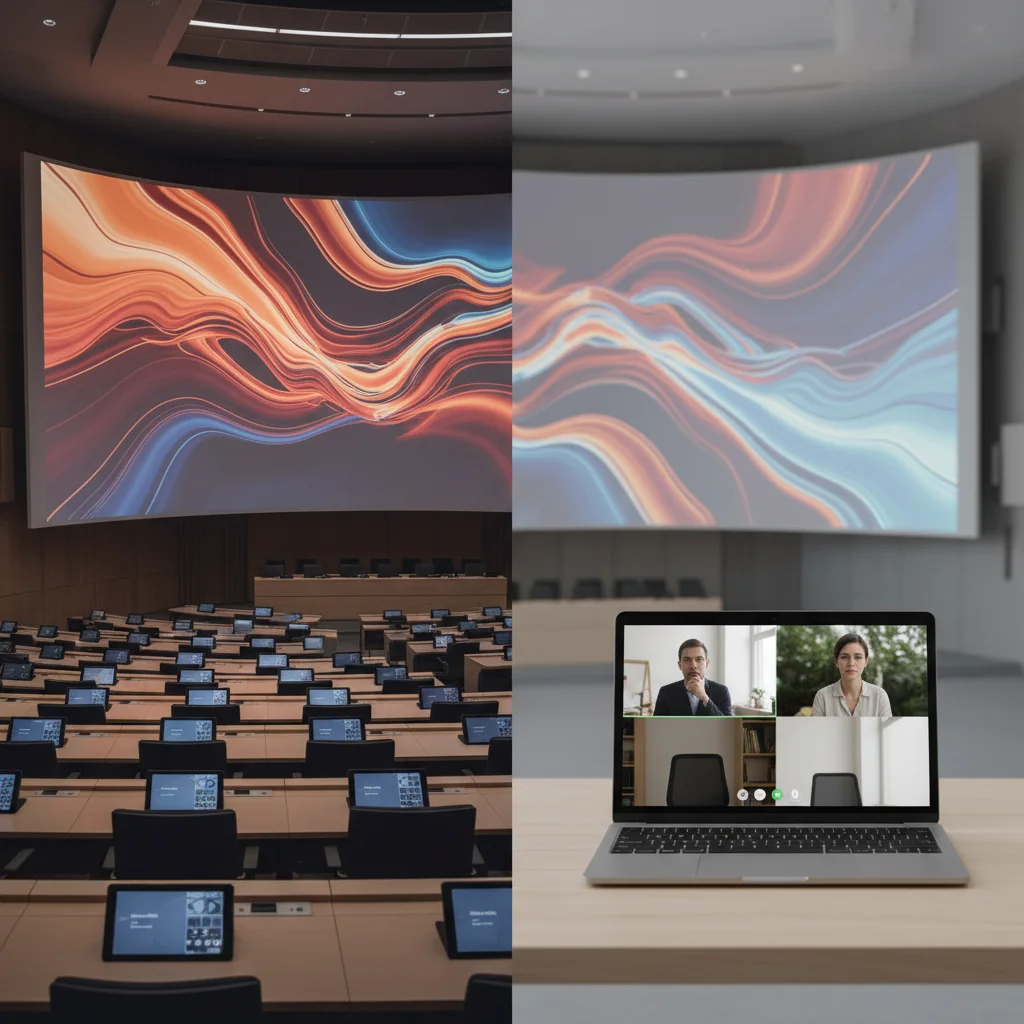
Creative Climate Data Visualization: Insights from a Remote Guest Lecture at UT Austin
Introduction: The Power of Visuals in Climate Science
In an era where global temperature records shatter year after year and extreme weather events dominate headlines, the ability to communicate climate data clearly has never been more urgent. Climate scientists, policymakers, and educators face a common bottleneck: how to translate petabytes of satellite observations, model outputs, and historical records into narratives that resonate with both specialists and the general public. Visualizations serve as the bridge—transforming abstract numbers into shapes, colors, and movements that people can intuitively grasp.
On April 1, 2026, the University of Texas at Austin’s GEO 371T/391 course hosted a remote guest lecture dedicated entirely to this challenge. The lecture, delivered via video conferencing, explored creative and effective methods for turning raw climate data into compelling visual stories. The presenter shared a 114-slide SlideShare presentation, and an analysis of the first 20 slides reveals a thoughtful approach that balances scientific rigor with artistic sensibility. This article unpacks the key insights from that session, examining how innovative visualization techniques can enhance climate communication, the implications of remote academic engagement, and what the future holds for data storytelling in the climate domain.
[IMAGE: A collage of iconic climate visualizations (e.g., warming stripes, CO2 curves) with a subtle 'UT Austin' banner.]
The Challenge: Communicating Complexity in a Data-Rich Era
Climate datasets are notoriously difficult to interpret. They are massive, multi-dimensional, and often abstract—think of global circulation models that span decades, ocean acidity measurements with complex spatial variability, or carbon flux estimates riddled with uncertainty. For non-specialists, a spreadsheet of numbers or a standard line chart can feel impenetrable. Even experts sometimes struggle to extract actionable insights from poorly designed graphics.
The lecture began by diagnosing common pitfalls in climate data visualization: misleading scales that exaggerate trends, cluttered charts that obscure the signal, and a pervasive lack of narrative context. A slide titled “When Numbers Lie” showed a bar chart of global CO₂ concentrations where the y-axis began at 380 ppm instead of zero, making a minor increase appear dramatic. Another example compared a rainbow-colored temperature anomaly map—pretty but illegible for colorblind viewers—with a perceptually uniform colormap that revealed the same data more equitably. These examples underscored a central theme: creativity is not just about aesthetics; it is about cognitive effectiveness. The goal is to reduce cognitive load while preserving scientific honesty.
The lecturer emphasized that the problem is structural. Many scientists are trained to present data in ways that satisfy peer review—standard plots, static figures, and minimal annotation—but these formats fail in public-facing contexts. The challenge is to redesign visualizations so that they tell a story without distorting the underlying evidence. This requires a deliberate shift from “showing data” to “guiding interpretation,” a skill that the lecture aimed to cultivate among the UT Austin students.
[IMAGE: A side-by-side comparison of a poorly designed climate chart and a redesigned, visually engaging version.]
Creative Techniques Unveiled in the Lecture
The heart of the lecture delved into specific techniques that go beyond conventional chart types. Drawing from the first 20 slides, three approaches stood out: animation and interactivity, analogy and metaphor, and thoughtful use of color and uncertainty.
**Animation and Interactivity** – One slide featured an animated temperature anomaly map spanning 1880 to 2025. Instead of a static snapshot, the data played out in time, allowing viewers to see the accelerating warming trend as a wave of red spreading across the globe. The lecturer noted that animation exploits the human brain’s sensitivity to motion—changes become instantly noticeable, and the narrative of “things are getting worse” is conveyed without a single explanatory sentence. For digital platforms, such interactive elements can be embedded in web dashboards, enabling users to explore data at their own pace.
**Analogies and Metaphors** – Another slide visualized carbon emissions as flowing water. A Sankey diagram transformed CO₂ sources (power plants, transportation, industry) into streams whose width corresponded to emission volumes. The metaphor of “carbon rivers” made the scale tangible: the largest stream, from electricity generation, was as wide as the Mississippi. The lecturer argued that metaphor bridges the gap between abstract measurements and lived experience. A person may not grasp gigatons, but they understand a flood.
**Color Accessibility and Emotional Resonance** – The lecture dedicated several slides to color palette selection. Traditional “hot” colormaps (e.g., Jet) were criticized for creating artificial boundaries and excluding colorblind viewers. The recommended approach used perceptually uniform palettes like viridis or cividis, which also allow for grayscale printing. Yet the lecture went further, showing how color can evoke emotion. For example, a deep red for extreme heat and a pale blue for cold, applied to a global map, triggered an immediate visceral response—viewers felt the heat before reading the numbers.
**Uncertainty Visualization** – Perhaps the most technically sophisticated example was a fan plot for future sea-level projections. Instead of a single line, the plot showed a shaded cone that widened toward 2100, with darker shading representing higher probability. This honest portrayal of uncertainty prevented false certainty while still communicating the likely trajectory. The lecturer emphasized that omitting uncertainty is itself a form of misinformation, and creative approaches like fan plots make uncertainty visible and interpretable.
[IMAGE: A close-up of one of the lecture’s slides showing a creative visualization (e.g., a radial chart of greenhouse gas sources).]
Remote Delivery, Lasting Impact: The New Normal for Academic Guest Lectures
The lecture was delivered remotely via video—a format that has become standard in the post-pandemic academic landscape. For UT Austin’s GEO 371T/391 course, hosting a speaker from across the country (or perhaps across the globe) without travel costs or scheduling conflicts was a logistical advantage. But the remote format also brought unique benefits for the content itself.
The presenter shared the entire SlideShare deck of 114 slides, readily available for download and review. This extends the lecture’s reach far beyond the classroom. Students can revisit complex visualizations at their own pace; instructors at other universities can adapt the slides for their own courses; and professionals in climate communication can use them as reference material. The SlideShare platform also tracks views, providing the lecturer with feedback on which slides resonated most. In this sense, the lecture becomes a persistent resource rather than a one-time event.
The implications for pedagogy are significant. Remote guest lectures enable cross-institutional collaboration without the friction of travel. A climate visualization expert based in Europe can address a class in Texas with equal immediacy. The asynchronous availability of materials—slides, recordings, and supplementary data—supports a flipped classroom model where students engage with the content before live discussion. Moreover, the remote format forces presenters to design slides that are self-explanatory and visually strong, since they cannot rely on in-person charisma to carry the narrative. The result is often higher-quality visual materials that benefit a wider audience.
[IMAGE: A screenshot of the SlideShare interface showing the lecture’s first slide with a 'Download' button.]
Why This Lecture Matters for the Future of Climate Data Visualization
The guest lecture at UT Austin is more than a classroom event; it represents a microcosm of a larger movement to improve science communication. Climate action depends on public understanding and political will, both of which are shaped by how data is presented. When visualizations are clear and compelling, they can shift opinions, inform policy debates, and accelerate behavioral change. Conversely, confusing or misleading graphics can breed skepticism and inaction.
This lecture directly addressed that gap by training the next generation of data scientists to prioritize clarity and creativity. Students in GEO 371T/391 likely come from diverse backgrounds—geoscience, data science, journalism—and they leave with a toolkit of techniques that they can apply in their own work. The emphasis on animation, metaphor, and uncertainty visualization equips them to handle the unique challenges of climate data, which is often multidimensional, non-linear, and fraught with risk.
Beyond the classroom, better climate data visualizations have a tangible economic and societal impact. For example, city planners making decisions about coastal defenses can use fan plots to weigh the cost of inaction versus the cost of overbuilding. Insurance companies can use animated maps to communicate regional flood risks. Media outlets can use interactive dashboards to keep the public informed during heatwaves. Each of these applications relies on the same principles that the lecture taught: make it accessible, make it honest, make it memorable.
The lecture also underscores the growing importance of data storytelling as a professional skill. As the volume of climate data continues to explode, the ability to synthesize and humanize that data will become a competitive advantage for researchers, communicators, and policymakers. The SlideShare presentation itself—114 slides, carefully curated and freely available—serves as both a teaching tool and a portfolio piece, demonstrating how to combine scientific rigor with narrative craft.
Conclusion: A Blueprint for Climate Communication
The remote guest lecture for GEO 371T/391 at UT Austin offered a masterclass in creative climate data visualization. By analyzing the first 20 slides, we saw how animation, metaphor, color psychology, and uncertainty representation can transform dry data into compelling stories. The remote delivery model amplified the lecture’s impact, making it a persistent resource accessible to anyone with an internet connection.
For data scientists, educators, and communicators, the lessons are clear: effective climate communication requires more than technical skill—it demands creativity, empathy, and a willingness to break free from conventional chart types. As the climate crisis intensifies, the ability to visualize data in ways that inform and inspire will be not just a professional asset, but a civic responsibility.
[IMAGE: An abstract concept graphic showing a data point evolving into a tree with branching insights, symbolizing the growth from raw data to understanding.]