climate data visualization

Articles tagged “climate data visualization

14 articles found

Teal Tool: Democratizing Climate Data Visualization for a Sustainable Future
Eco Visuals

Teal Tool: Democratizing Climate Data Visualization for a Sustainable Future

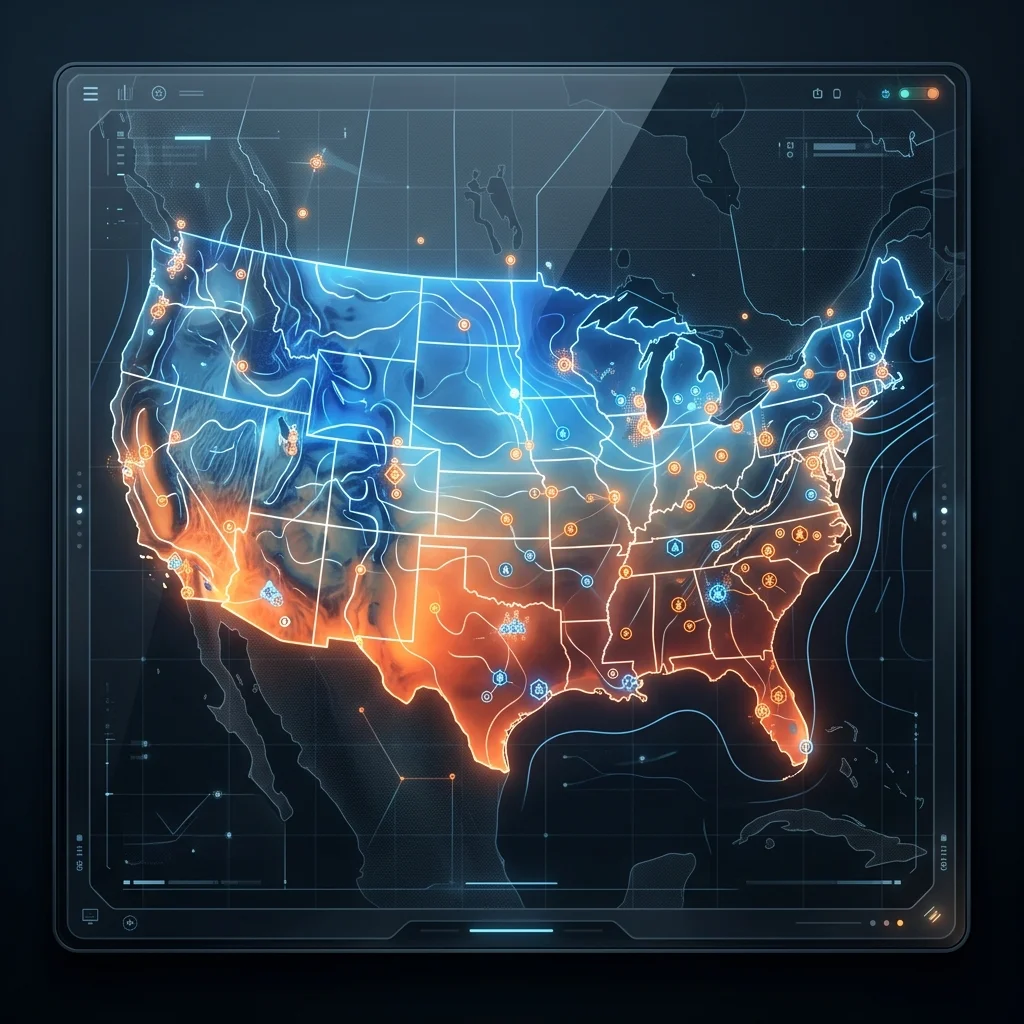
Teal is a free, interactive climate data visualization tool developed by the World Energy and Meteorology Council (WEMC) that pulls authoritative data from the European Union's Copernicus Services. Covering carbon emissions, temperature, precipitation, wind speed, and solar radiation from 1950 to near real time, Teal offers an intuitive globe map, country-specific hover data, and time-series graphs. Designed especially for youth, its simple interface removes barriers to climate intelligence, empowering students, educators, small businesses, and policymakers to make data-driven decisions. This article explores Teal's features, credibility through its Copernicus partnership, and its deeper economic impact—democratizing access to climate data and potentially disrupting traditional consulting markets. We also examine how Teal can inform supply chain risk assessments and foster a climate-literate generation.
Beyond Pretty Charts: A Data Integrity Framework for Climate Visualization
Eco Visuals

Beyond Pretty Charts: A Data Integrity Framework for Climate Visualization

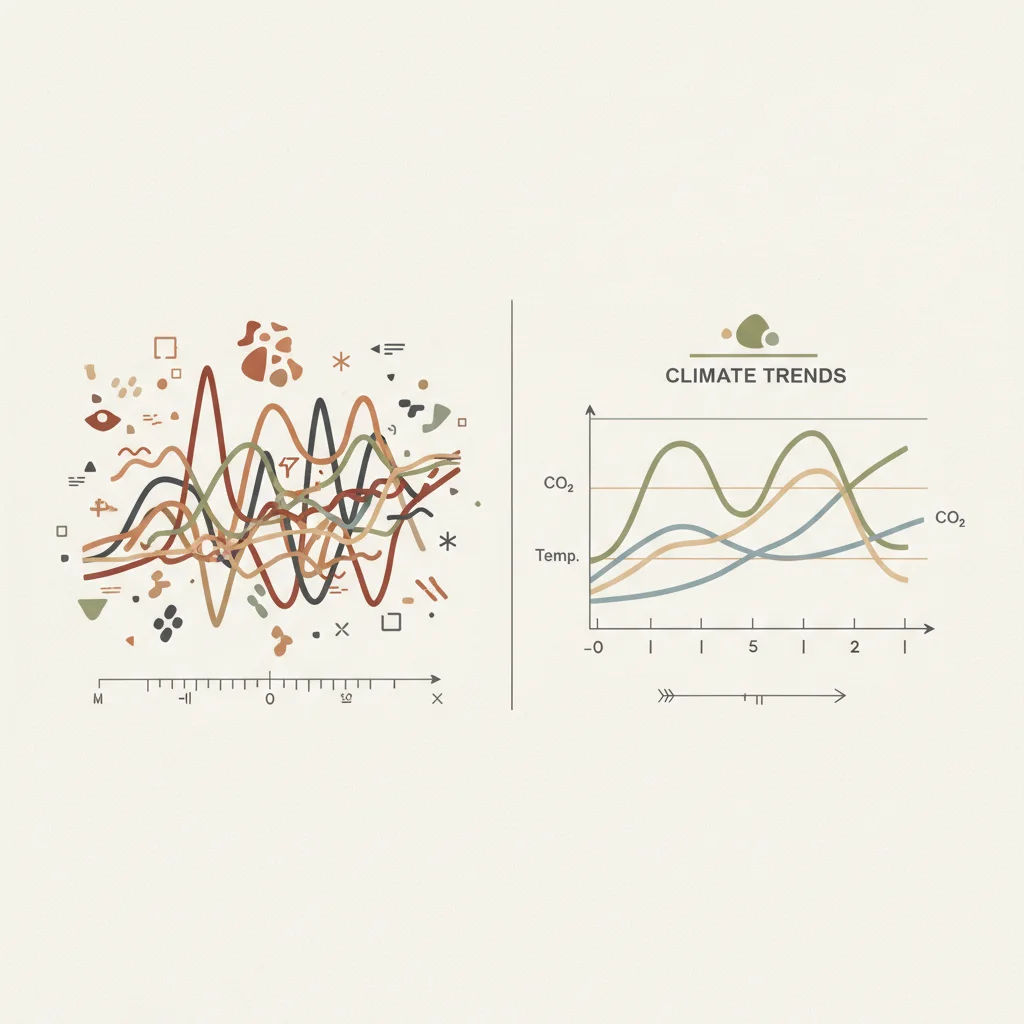
A deep dive into the six essential guidelines for ethical and effective climate data visualization. Drawing on real-world examples from climate reporting, this article reveals how poor graphics can mislead audiences and misdirect resources, while clear, contextual visualizations build trust and drive informed action. We analyze the hidden costs of decorative charts and propose a quality assurance model for climate communicators.

How Highcharts Dashboards Powers Interactive Climate Data Visualization for a Sustainable Future
Eco Visuals

How Highcharts Dashboards Powers Interactive Climate Data Visualization for a Sustainable Future

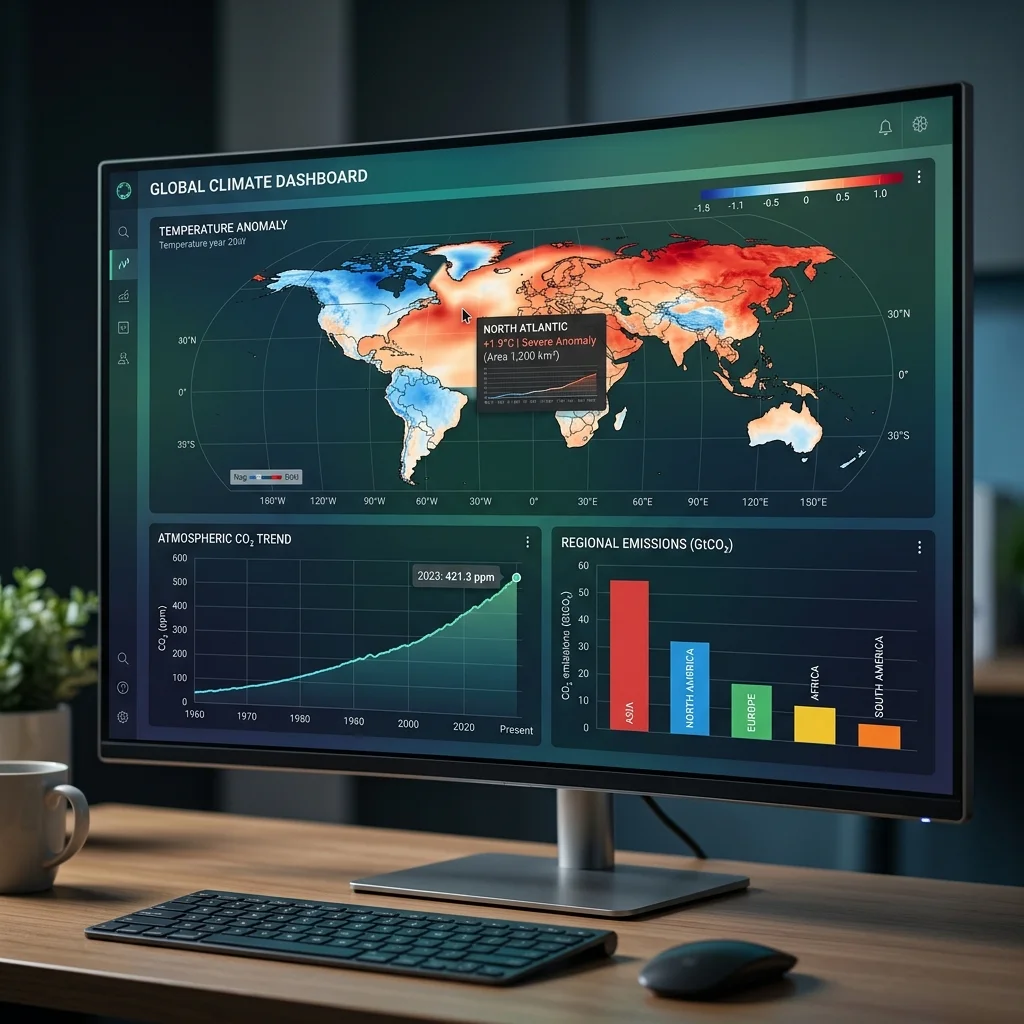
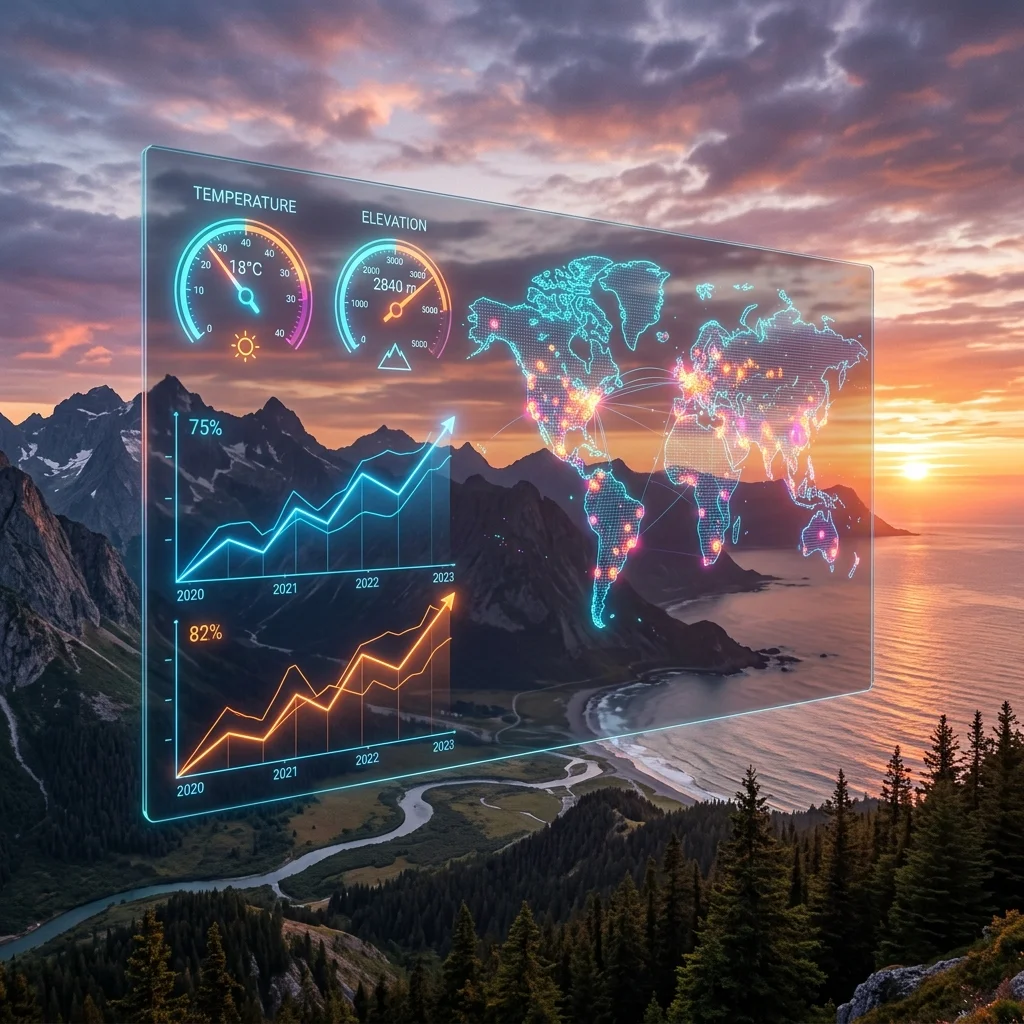
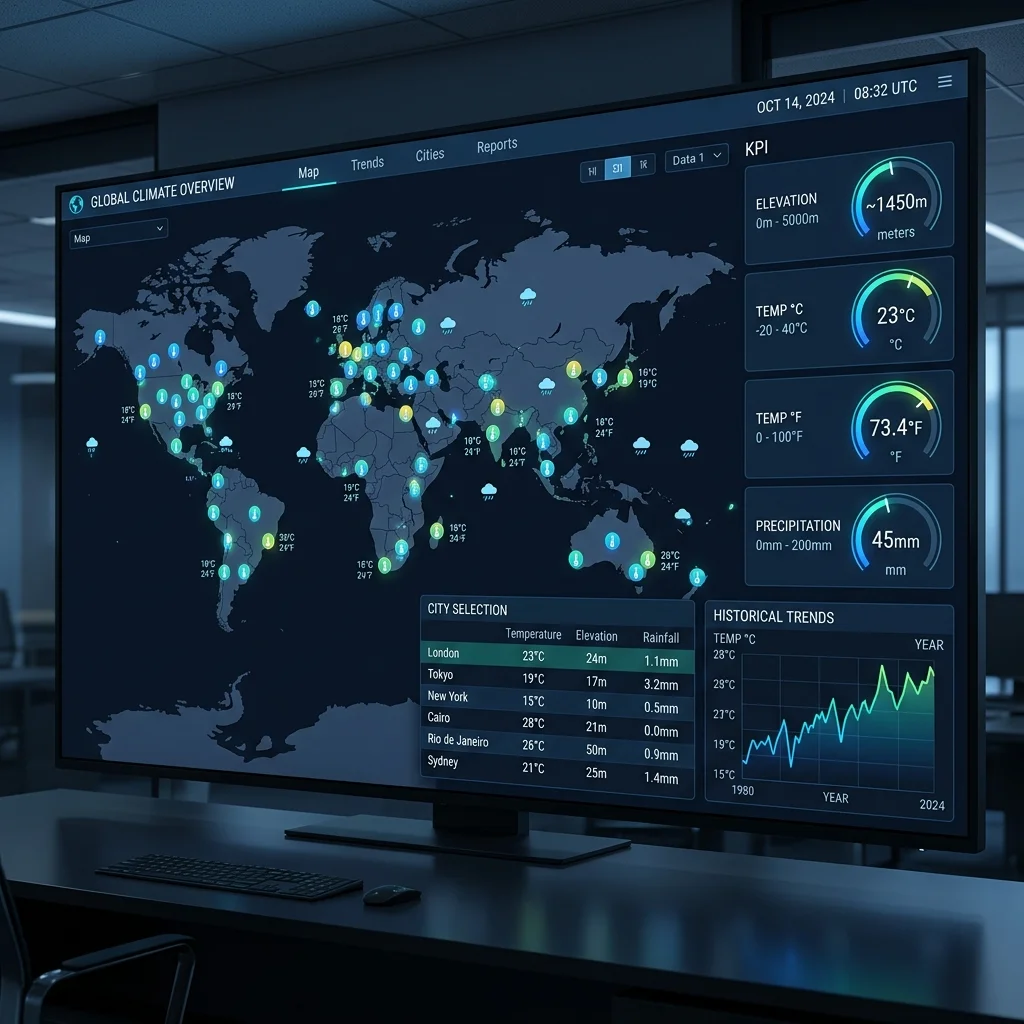
Climate data visualization is critical for monitoring environmental changes and informing policy decisions. Highcharts Dashboards offers a powerful, flexible library that enables developers and non-technical users to build interactive, real-time dashboards with minimal effort. This article explores the key features—real-time updates, scalability to millions of data points, and multi-language integration—that make Highcharts an ideal choice for climate data. Through a practical example dashboard tracking global cities’ metrics (temperature, elevation, rainfall), we demonstrate how organizations can democratize climate analysis. We also examine the deeper impact: lowering barriers for NGOs, local governments, and researchers to create customized monitoring systems, ultimately accelerating data-driven climate action.

Unlocking Climate Literacy: How NOAA''s Data Resources Are Shaping the Next Generation of Decision-Makers
Eco Visuals

Unlocking Climate Literacy: How NOAA''s Data Resources Are Shaping the Next Generation of Decision-Makers

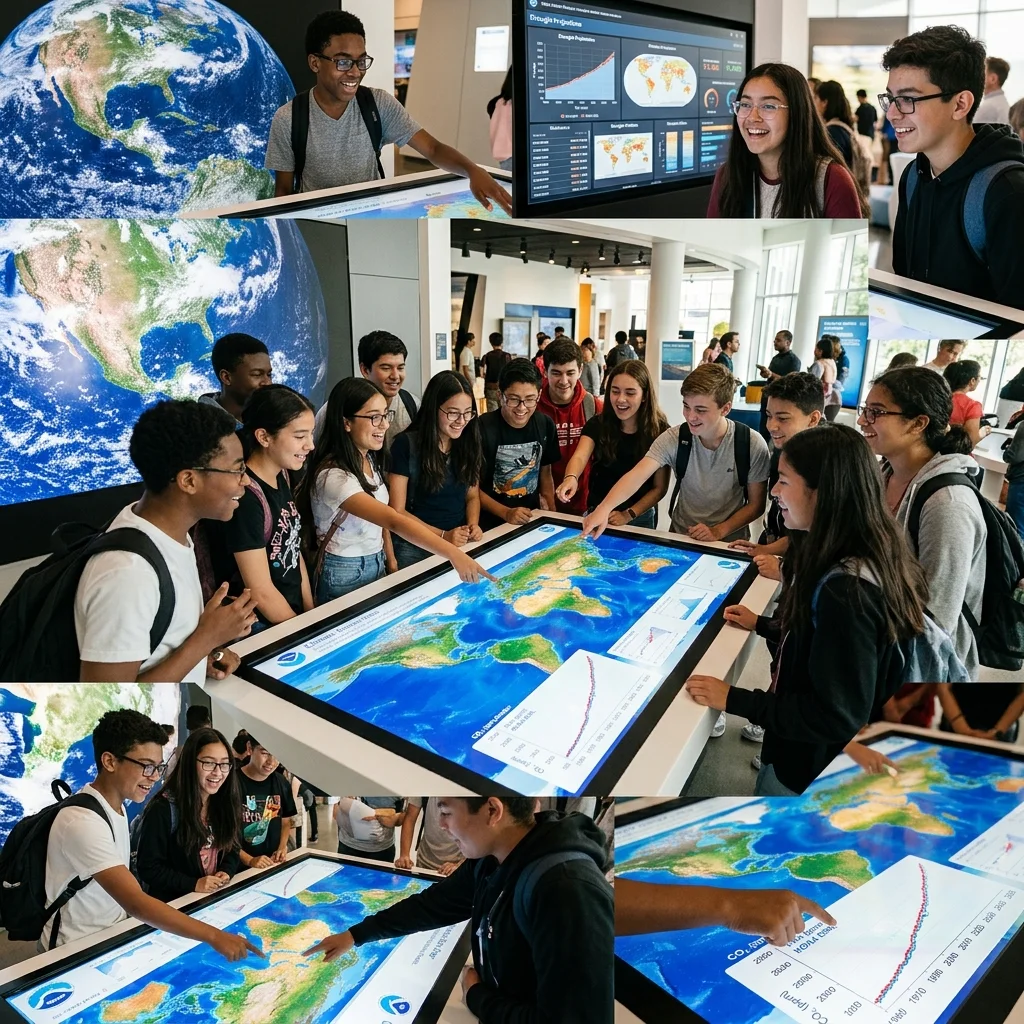
NOAA’s vast collection of climate data resources is not just a repository for scientists—it’s a strategic tool for education. This article explores the hidden economic logic behind making historical and projected climate data accessible to 5th-12th grade classrooms. By examining classroom-ready modules and interactive visualizations, we reveal how these resources are training a future workforce capable of navigating climate risks, driving adaptation innovation, and informing policy. From sea-level rise viewers to carbon dioxide trends, the data trains students to think like analysts—transforming raw numbers into actionable insights. We argue that this educational pipeline is a long-term investment in climate resilience, with ripple effects across supply chains, insurance markets, and urban planning.

Creative Climate Data Visualization: Insights from a Remote Guest Lecture at UT Austin
Eco Visuals

Creative Climate Data Visualization: Insights from a Remote Guest Lecture at UT Austin

This article explores a remote guest lecture on creative and effective climate data visualization delivered on April 1, 2026, for the GEO 371T/391 course at the University of Texas at Austin. By analyzing the lecture’s 114-slide SlideShare presentation (first 20 slides examined), we uncover how innovative visualization techniques can bridge the gap between complex climate datasets and diverse audiences. The discussion highlights the lecture’s role in advancing science communication, the shift toward remote academic engagement, and the long-term impact of such educational initiatives on climate literacy and policy-making. Practical takeaways for data scientists, educators, and communicators are included.

How NASA's Climate Spiral Visualization Redefines Climate Data Storytelling
Eco Visuals

How NASA's Climate Spiral Visualization Redefines Climate Data Storytelling

NASA's climate spiral—an animated radial plot of global temperature anomalies from 1880 to present—has become a iconic tool for communicating climate change. This article explores the science behind the GISTEMP dataset, the visual innovation popularized by Ed Hawkins, and the deeper implications of using spiral graphics to convey urgency. We examine the data pipeline, the role of public access, and how this visualization shifts public perception from abstract statistics to visceral evidence of a warming planet.

Mastering Climate Data Visualization: Techniques, Best Practices, and Tools for Impactful Communication
Eco Visuals

Mastering Climate Data Visualization: Techniques, Best Practices, and Tools for Impactful Communication

Climate data visualization transforms complex datasets into compelling stories that drive awareness and action. This article explores essential techniques—from choosing the right chart type (line charts for trends, maps for geography, bar charts for comparisons) to designing clear, interactive dashboards. Learn how to avoid common pitfalls like overloaded visuals and unclear scales, and discover how adding context (timeframes, benchmarks) and interactivity (tooltips, filters) boosts engagement. Drawing on expert insights from the Infogram Team, we provide a practical guide for anyone communicating climate science effectively.

Navigating Climate Data: Top Sources and Visualizations for Researchers and Policymakers
Eco Visuals

Navigating Climate Data: Top Sources and Visualizations for Researchers and Policymakers

Climate change data is abundant but scattered. This guide curates the most authoritative publicly-available sources for climate crisis data and visualizations, organized by Canada, global datasets, and striking visual tools. From Canada’s Climatedata.ca and Historical Climate Data to international hubs like the IPCC DDC and World Bank’s CCKP, we map the landscape. Visualizations such as #ShowYourStripes and Climate Action Venn Diagrams turn raw numbers into compelling narratives. Explore the hidden economic logic behind open climate data—how these resources empower risk assessment, policy design, and investment decisions. Last updated March 5, 2026.

Beyond the Curve: How EDHEC Climate Institute’s Data Visualization Tools Uncover Regional Economic Vulnerabilities in Climate Scenarios
Eco Visuals

Beyond the Curve: How EDHEC Climate Institute’s Data Visualization Tools Uncover Regional Economic Vulnerabilities in Climate Scenarios

EDHEC Climate Institute’s interactive data visualizations do more than map rising temperatures—they reveal a hidden economic logic: that identical global emissions pathways produce radically different regional economic impacts. This article goes beyond a tool review to explore how these visualisations can be used to audit supply chain risk, identify under-insured regions, and reshape corporate net-zero strategy. By embedding scientifically grounded projections into user-friendly dashboards, the Institute provides a slow-analysis resource for industries that need to stress-test their long-term asset portfolios against climate-driven economic shifts.

Beyond the Chart: Crafting Climate Data Visualizations That Drive Understanding
Eco Visuals

Beyond the Chart: Crafting Climate Data Visualizations That Drive Understanding

In climate reporting, a well-designed visualization can turn complex data into a clear narrative, but a poor one can confuse or mislead. This article translates the principles behind effective climate data graphics—from labeling and sourcing to historical context—into a practical framework for journalists and data storytellers. Drawing on real-world examples and expert quotes, it explains why every visual must enrich, not decorate, the story. The guide also reveals a hidden economic logic: clarity in visualization lowers the cognitive cost for audiences, increasing trust and retention. By avoiding jargon and overloading, reporters can help readers grasp long-term trends and make informed decisions about climate action.

Unlocking Climate Insights: How R Programming Transforms Data Visualization for Certification Seekers
Eco Visuals

Unlocking Climate Insights: How R Programming Transforms Data Visualization for Certification Seekers

This article examines how R programming is positioned as a key tool for climate data visualization, using the USDSI's November 2025 publication as a case study. It uncovers the economic logic of certification marketing, explores R's role in advanced climate statistics, and provides actionable insights for professionals seeking to differentiate themselves in the data science job market.

Beyond the Map: How Climate Data Portals Are Reshaping Risk Intelligence for the U.S. Economy
Eco Visuals

Beyond the Map: How Climate Data Portals Are Reshaping Risk Intelligence for the U.S. Economy

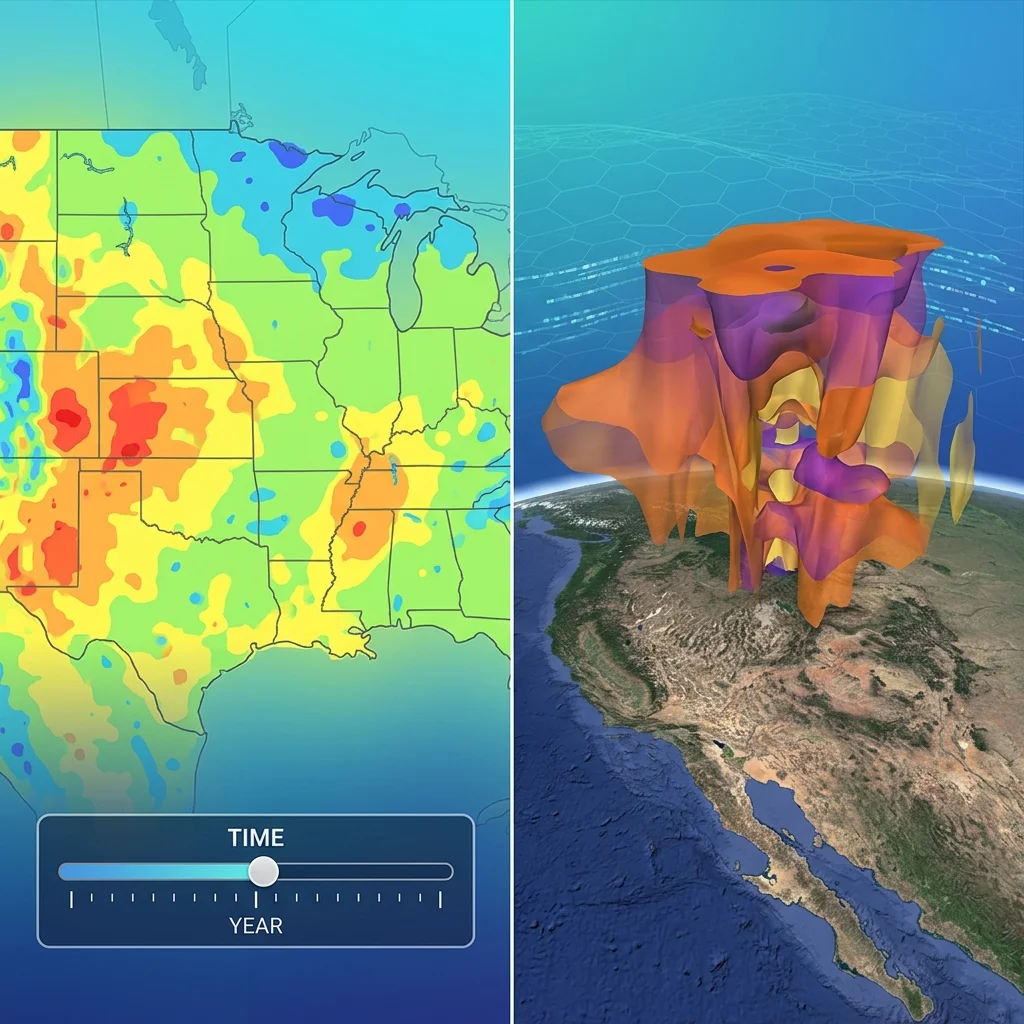
Three federal climate data portals—Climate Explorer, Climate Toolbox, and the National Climate Change Viewer—now offer downscaled CMIP5/CMIP6 projections across the contiguous U.S. While often viewed as scientific tools, this article argues they are actually the backbone of a emerging ''climate risk intelligence'' market. By analyzing their data pipelines (LOCA, MACA), update cycles (e.g., LOCA2 release in 2023), and variable coverage (from temperature to fire danger), we uncover how these portals enable a hidden economic logic: they are the critical infrastructure for insurance modeling, agricultural commodity hedging, and municipal bond ratings. This deep audit explores the slow transformation from raw climate models to actionable financial and operational risk metrics.

Beyond the Gauge: Unlocking Climate Intelligence with Highcharts Dashboards
Eco Visuals

Beyond the Gauge: Unlocking Climate Intelligence with Highcharts Dashboards

This article explores how Highcharts Dashboards transforms raw climate data into actionable intelligence. While many focus on the visual appeal of charts, we dig into the hidden economic logic: the shift from static reports to real-time, scalable decision-support systems. We analyze how features like real-time updates, drilldowns, and support for massive datasets are enabling a new era of climate analytics for cities, researchers, and policymakers. The article dissects a practical dashboard example—featuring KPI gauges, selection grids, and historical trends—to reveal how these tools bridge the gap between data complexity and strategic action, ultimately driving investment and policy in climate resilience.

From Snapshots to Projections: The Evolution of Climate Data Visualization Tools and Their Impact on Decision-Making
Eco Visuals

From Snapshots to Projections: The Evolution of Climate Data Visualization Tools and Their Impact on Decision-Making

This article explores the landscape of climate data visualization tools, from NOAA's simple Data Snapshots to the advanced Weather and Climate Toolkit. It uncovers the hidden economic logic behind the tiered difficulty of these tools, revealing a strategic segmentation that serves different user groups—from the general public to researchers and policy-makers. By examining the technology trends (such as the shift to browser-based platforms and the integration of projection data) and the market pattern of government-led tool development, the article argues that these tools represent a critical infrastructure for climate adaptation. It also highlights the long-term impact on supply chains, particularly for agriculture, insurance, and coastal real estate, and embeds verification sources from Climate.gov and NOAA.