How NASA's Climate Spiral Visualization Redefines Climate Data Storytelling
NASA's climate spiral—an animated radial plot of global temperature anomalies from 1880 to present—has become a iconic tool for communicating climate change. This article explores the science behind the GISTEMP dataset, the visual innovation popularized by Ed Hawkins, and the deeper implications of using spiral graphics to convey urgency. We examine the data pipeline, the role of public access, and how this visualization shifts public perception from abstract statistics to visceral evidence of a warming planet.
How NASA's Climate Spiral Visualization Redefines Climate Data Storytelling
Introduction: A Spiral That Speaks Volumes
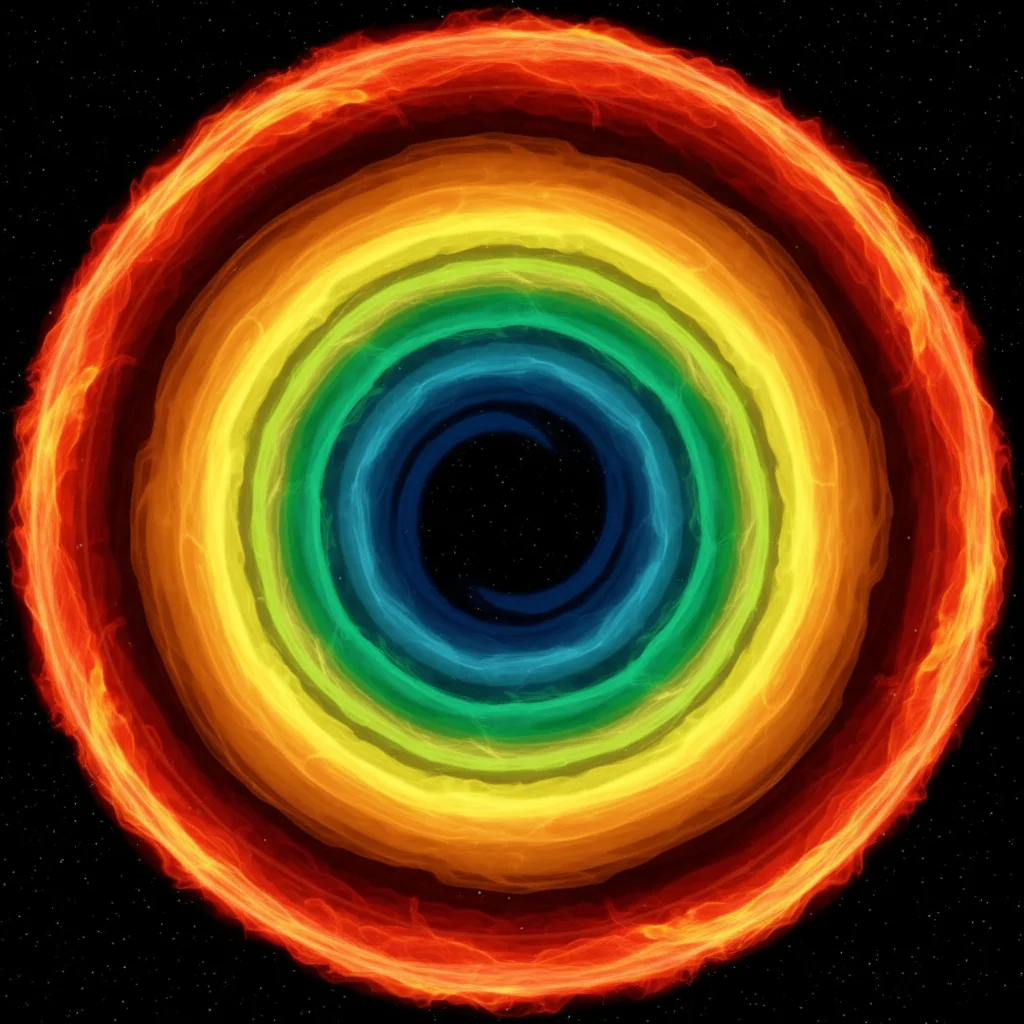
The NASA climate spiral visualization is an animated radial plot displaying monthly global temperature anomalies from 1880 to the present. Based on the GISS Surface Temperature Analysis (GISTEMP v4), the animation condenses more than 140 years of climate data into a single circular graphic that shifts from cool blue tones through green and yellow to deep red as temperatures rise (Source: NASA Scientific Visualization Studio, ID 5190). The visualization has been widely adopted in media coverage, educational materials, and policy briefings as an instantly recognizable icon of long-term global warming. This article examines the scientific foundation of the spiral, the data pipeline that produces it, the visual innovation that makes it effective, and the broader implications for how climate data are perceived and communicated.
The Science Under the Spiral: GISTEMP and the Data Pipeline
The spiral visualization is powered by the GISTEMP v4 global temperature record, which integrates two primary data sources: the NOAA Global Historical Climatology Network version 4 (GHCN v4) for land-based meteorological stations, and the Extended Reconstructed Sea Surface Temperature version 5 (ERSST v5) for ocean areas (Source: NASA GISS, DOI: 10.5281/zenodo.15881696). Temperature anomalies are computed as deviations from the 1951–1980 baseline period, a standard climatological reference that allows consistent comparison across decades. The use of anomalies rather than absolute temperatures eliminates biases introduced by station elevation, latitude, and local geography.
The dataset is updated approximately two weeks after the end of each calendar month, ensuring near-real-time relevance. The raw data file used to generate the spiral is publicly accessible at NASA GISS, and the entire pipeline—from raw station records to the final animation—is documented for reproducibility (Source: NASA GISS). The combination of land and ocean measurements, processed through a consistent algorithm, produces a global mean temperature anomaly time series that is among the most cited in climate science.
The Art of the Spiral: From Static Charts to Compelling Motion
The concept of the "climate spiral" was popularized in 2016 by Ed Hawkins, a climate scientist at the University of Reading, who initially applied the radial-plot technique to the UK Met Office’s HadCRUT4 dataset (Source: National Centre for Atmospheric Science, University of Reading). NASA later adopted the same approach using its own GISTEMP data, with visualizers Mark SubbaRao (NASA’s Scientific Visualization Studio) and Ed Hawkins collaborating on the adaptation. The NASA version was published on November 15, 2023, and last updated on April 15, 2026, under SVS ID 5190.
The spiral format offers several structural advantages over conventional line graphs. By wrapping monthly data points around a circular axis, the plot compresses 140+ years of information into a single, continuous loop. The radial arrangement emphasizes seasonal cycles—each revolution represents one year—while the outward drift of the color bands visually encodes the long-term warming trend. A traditional line graph of temperature anomalies, plotted linearly over time, requires the viewer to mentally integrate the year-over-year progression; the spiral renders this progression as an immediate geometric expansion.
The visualization is produced in two language versions (English and Spanish) and two unit variants (Celsius and Fahrenheit), with movies and frame sets available at 2160×2160 resolution (Source: NASA SVS). Credits include visualizers Mark SubbaRao and Ed Hawkins, scientist Gavin A. Schmidt (NASA GISS), and technical support from Laurence Schuler, Ian Jones, Ella Kaplan, and Peter H. Jacobs (Source: NASA SVS).
Beyond the Visual: Deeper Implications for Climate Communication
The spiral visualization shifts viewer perception by leveraging a circular form that implies continuity and progression. Unlike flat charts, which can be processed as discrete data points, the spiral creates a cumulative narrative: each new revolution builds on the previous one, reinforcing the directionality of warming. Research in data visualization suggests that radial plots can increase the salience of cyclic patterns and long-term trends compared to linear coordinates, particularly when color is used to encode magnitude (Source: IEEE Transactions on Visualization and Computer Graphics, various studies on radial perception).
The visualization’s power lies in its ability to compress temporal scale into spatial form. A viewer sees not a list of annual anomalies but a physical expansion of color zones—a transformation from abstract statistics to a geometric reality. This "slow analysis" quality encourages repeated viewing: the spiral rewards attention to detail (seasonal oscillations, the acceleration of warming after the 1980s) while delivering an immediate gestalt of change.
From a data storytelling perspective, the spiral functions as both an archival record and a persuasive tool. Its public availability under open-access licenses ensures that journalists, educators, and policymakers can embed the animation without institutional barriers. The dual-track language and unit options extend its reach to global audiences, reducing the cognitive load of unit conversion or translation.
Conclusion: The Spiral as a Benchmark for Climate Data Communication
The NASA climate spiral represents a convergence of rigorous data processing (GISTEMP v4), visual innovation (radial wrapping), and strategic public access. Its adoption by NASA—an institution with high credibility in both science and public communication—has established it as a benchmark for how long-term climate datasets can be translated into compelling single-frame narratives. Future developments in data visualization are likely to build on this radial approach, extending it to other climate variables such as atmospheric CO₂ concentrations, sea ice extent, or ocean heat content. The spiral’s success also underscores a broader principle in technical communication: the most effective data stories are those that respect the underlying scientific precision while exploiting the perceptual strengths of the human visual system. As climate data continue to accumulate, the spiral format offers a template for turning time series into evidence that is both reproducible and immediately legible.