Beyond the Plug: How the 2026 Auto Show Signals a Strategic Shift in America''s EV Charging Infrastructure
The display of a ChargePoint EV charger at the 2026 Detroit Auto Show is more than a product launch; it's a strategic marker in the U.S. energy transition. This article analyzes the deeper market logic behind the expansion of America's fast-charging network from urban centers to truck stops. We explore how this growth, accelerated by sustained high gas prices, represents a calculated move to build a resilient, multi-use grid that serves both consumer EVs and the impending wave of commercial electric fleets. The analysis connects the dots between auto industry showcases, infrastructure rollouts, and the underlying economic forces reshaping national energy policy and supply chains.
Beyond the Plug: How the 2026 Auto Show Signals a Strategic Shift in America's EV Charging Infrastructure
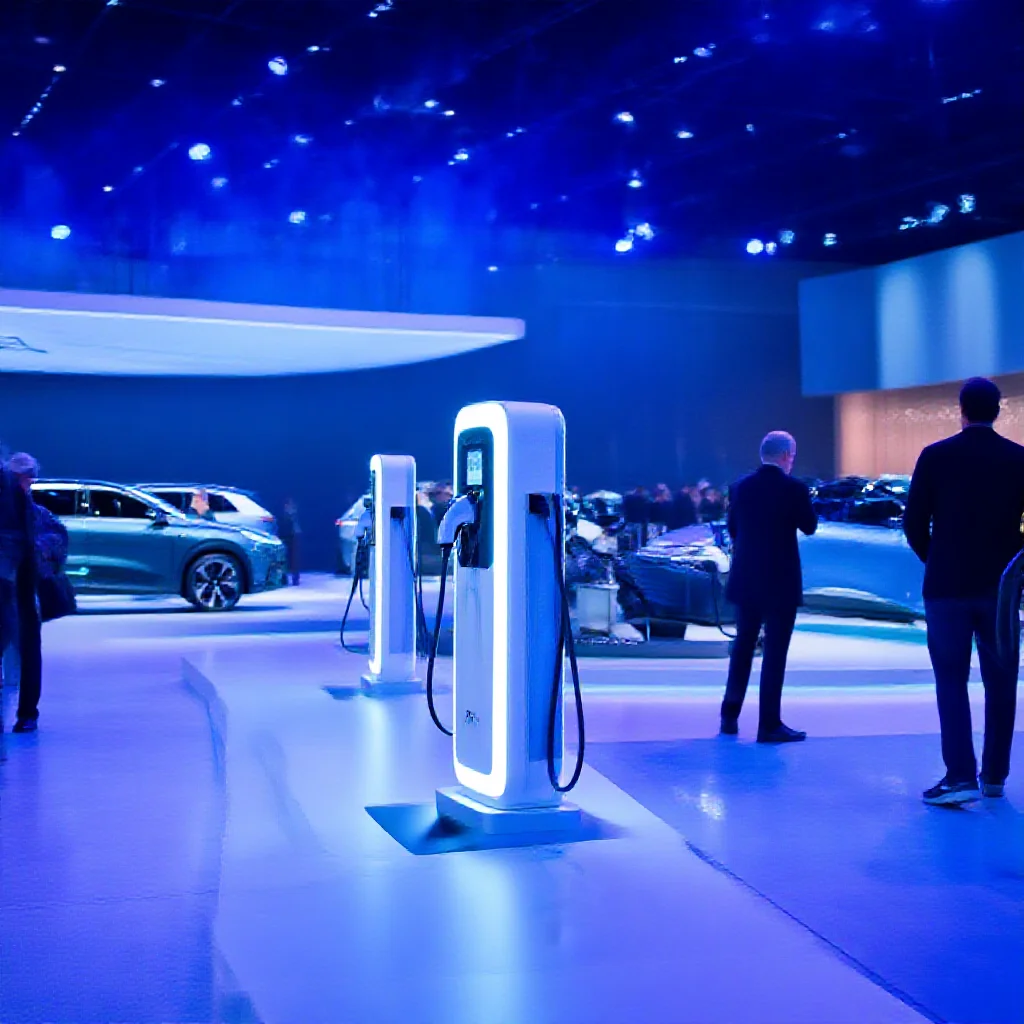
**A ChargePoint electric vehicle charger was displayed during the 2026 Detroit Auto Show in Detroit, Michigan, on Wednesday, January 14, 2026 (Source 1: [Primary Data]).** The show opens to the public on January 17 and runs through the 25th. This placement of charging hardware at a premier automotive exhibition is not a mere product display. It functions as a strategic marker, indicating a calculated expansion of the U.S. electric vehicle fast-charging network from urban centers to highway truck stops. This growth, occurring within a sustained environment of high fuel costs, represents a foundational build-out aimed at supporting both consumer adoption and the impending scale-up of commercial electric fleets.
The Auto Show as a Strategy Stage: Decoding the ChargePoint Display
The integration of charging infrastructure into a major auto show’s exhibit floor signifies a fundamental reclassification. The technology is transitioning from a peripheral utility to a core automotive component. Its prominence in Detroit, the historical heart of internal combustion engine manufacturing, signals an industry-wide operational alignment on electrification as the primary pathway. The timeline of the display—a media preview on January 14 followed by public days—frames this as a coordinated revelation of infrastructure readiness to both industry stakeholders and consumers. The move underscores that vehicle capability is now intrinsically linked to network capability.
The Dual-Axis Expansion: From City Centers to Truck Stops
The concurrent growth of fast-charging stations in dense urban areas and along major highway corridors at truck stops addresses two distinct but critical requirements. Urban deployment mitigates daily range anxiety for residents without dedicated home charging. The expansion to truck stops, however, reveals a deeper economic logic. These locations are high-utilization nodes essential for enabling long-distance travel and, consequently, for achieving network profitability. They also represent strategic grid interconnection points capable of handling high power loads. This geographic strategy is not solely for passenger vehicles; it pre-emptively constructs the backbone required for electric medium and heavy-duty trucks, a segment poised for significant growth.
High Gas Prices as a Permanent Catalyst, Not a Temporary Shock
Current elevated gasoline prices are being treated by infrastructure investors and policymakers as a structural market condition rather than a cyclical shock. This perception alters investment risk calculus. When fuel cost volatility is viewed as a permanent feature, the long-term value proposition of electric vehicle operating costs becomes more stable and attractive. This de-risks the substantial capital expenditure required for nationwide fast-charging deployment, accelerating both private investment and supportive policy timelines. Analysis of this trend has been documented in financial market reporting, such as coverage from Bloomberg (Source 2: [Entity Attribution]).
The Deep Supply Chain Ripple Effect
The charging infrastructure build-out acts as a silent catalyst for extensive secondary supply chains. Demand escalates for high-power electrical components, specialized construction services, grid-storage solutions, and sophisticated energy-management software platforms. Over the long term, the manufacturing of durable, high-power charging hardware will influence forecasts for raw materials, notably copper. A new service ecosystem is emerging around the installation, maintenance, and operational management of these distributed energy assets, creating adjacent markets and specialized vocations.
Verification and Credibility: Anchoring the Forecast
The strategic analysis presented is anchored by the verified fact of the ChargePoint display at a specified industry event on a recorded date. This concrete occurrence provides a tangible proof point for observing broader market movements. The expansion of the network, as reported, provides a verifiable trendline against which the logical deductions regarding commercial fleet preparation and supply chain activation can be assessed. The sustained high-gas-price environment provides the persistent economic pressure that makes these strategic investments viable.
The display of a ChargePoint charger at the 2026 Detroit Auto Show is a surface indicator of a profound infrastructural pivot. The dual-axis expansion strategy builds a multi-use grid designed for resilience and scale. The treatment of high fuel costs as a structural economic element provides the financial impetus for accelerated deployment. The resulting activation of deep supply chains and service ecosystems indicates that the build-out of EV charging infrastructure is evolving from a supporting utility into a primary, reshaping force within the broader national energy and industrial landscape.