Beyond Public vs. Private: The Real Drivers of Your Electricity Bill
Conventional wisdom pits public power against investor-owned utilities, assuming ownership dictates cost. However, a deeper analysis reveals a more complex reality. While data shows public power customers pay lower average rates, this gap is not a simple function of ownership. The true cost drivers are foundational: access to legacy low-cost generation like federal hydropower, geographic service area characteristics, and the massive, universal financial burdens of grid modernization, wildfire hardening, and the clean energy transition. This article dissects the economic and infrastructural forces that truly shape electricity prices, arguing that the debate over public versus private ownership often obscures the more critical challenges facing the entire grid.
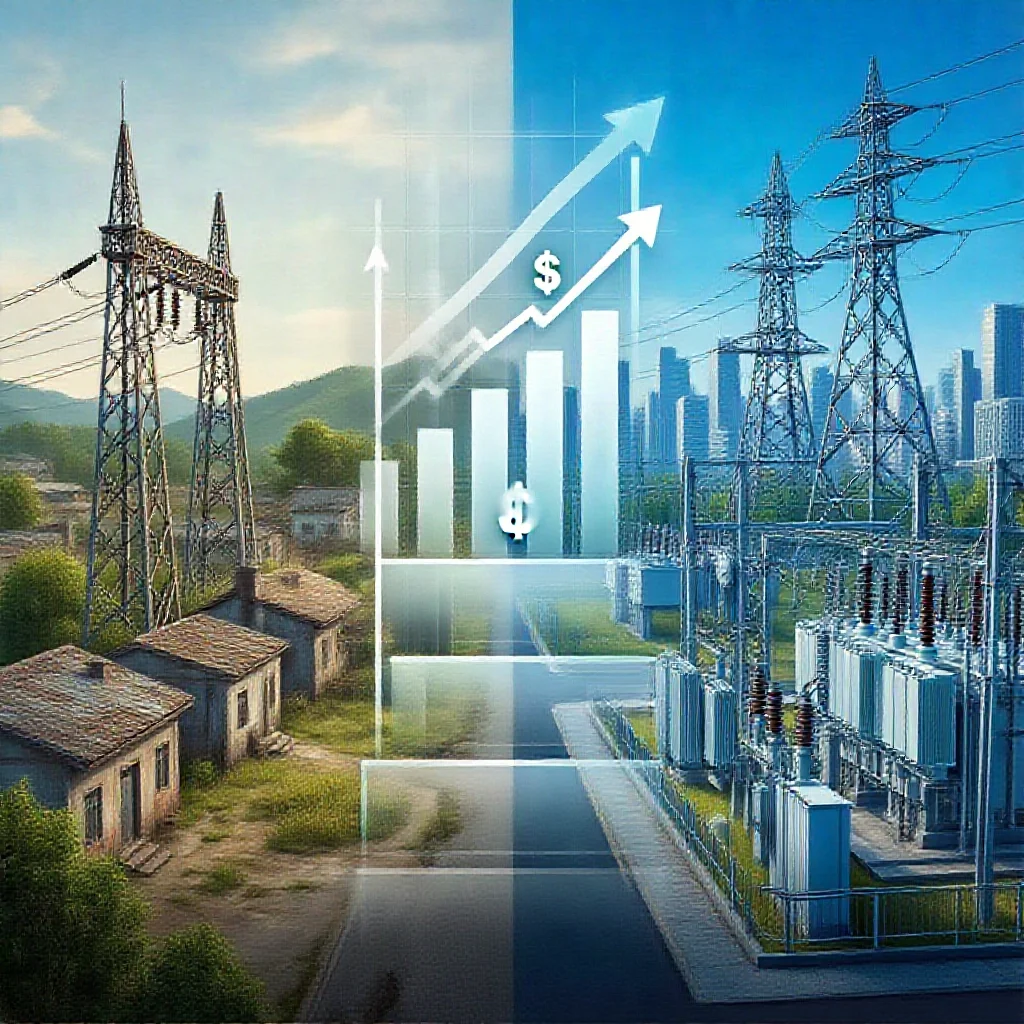
Beyond Public vs. Private: The Real Drivers of Your Electricity Bill
The Ownership Illusion: Debunking the Simple Narrative The debate over electricity costs frequently centers on a binary framework: publicly owned utilities versus investor-owned corporations. The political narrative often suggests that ownership structure is the primary determinant of consumer price. Superficial data appears to support this. In 2023, the average residential price for customers of investor-owned utilities (IOUs) was 16.8 cents per kilowatt-hour, while customers of public power utilities paid an average of 12.4 cents per kilowatt-hour (Source 1: U.S. Energy Information Administration). IOUs serve approximately 72% of U.S. electricity customers, with public power and cooperatives serving the remaining 28% (Source 2: Industry Data). This price gap fuels the conventional argument. However, this correlation does not establish causation. The critical analytical question is whether the price differential is a direct product of ownership incentives, or if ownership type serves merely as a proxy for other, more foundational economic and geographic factors.
![Infographic comparing the 72% (IOU) vs. 28% (Public/Co-op) customer share and their respective average price points.]()
The Foundational Cost Divide: Geography and Legacy Assets A deeper examination reveals that pre-existing conditions, not operational models, create the initial cost baseline. The first major hidden driver is access to legacy generation assets. Many public power utilities, particularly in specific regions, benefit from long-term, locked-in contracts for federal hydropower. This resource provides a significant, historical cost advantage that is unrelated to contemporary management efficiency or ownership structure. It is a legacy asset that predates the current debate.
The second foundational driver is service territory geography and demography. Investor-owned utilities predominantly serve denser, urbanized and suburban areas. These territories come with inherently higher costs: older, complex underground infrastructure, stringent regulatory environments, higher regional labor and land costs, and greater reliability demands. In contrast, many rural electric cooperatives and some municipal utilities serve vast, low-density areas where infrastructure costs are spread across fewer customers, but face challenges of long transmission lines. These geographic and demographic realities establish a "starting line" disparity. Ownership models inherit these conditions; they do not create them.
![A map of the United States with overlays showing regions with access to federal hydropower and typical density zones for IOU vs. public power service territories.]()
The Great Convergence: Universal Cost Pressures That Erase Distinctions The modern era is defined by capital-intensive challenges that impact all grid operators, irrespective of ownership. These forces act as great equalizers, applying universal financial pressure that often overwhelms initial advantages or structural differences.
Three primary convergent pressures are identified: 1. **Grid Modernization:** The transition to a digital, resilient smart grid requires massive investment in sensors, automation, and advanced control systems. 2. **Wildfire Mitigation and Physical Hardening:** In regions prone to wildfires or severe weather, utilities are mandated to undertake extraordinarily expensive programs of grid hardening, conductor replacement, and strategic undergrounding. 3. **Generation Resource Transition:** The shift from depreciated fossil-fuel plants to new renewable energy generation paired with storage capacity involves high upfront capital costs for technology, interconnection, and financing.
A municipal utility financing a new solar-plus-storage facility faces similar global supply chain and interest rate pressures as an IOU undertaking the same project. The capital for these investments, whether raised through municipal bonds or private equity, must ultimately be recovered from ratepayers. This introduces the concept of **cost convergence**, where the scale of these universal burdens diminishes the relative impact of initial ownership-based differences.
The Capital Imperative: Financing the Future Grid The mechanism through which these universal costs reach the consumer reveals another layer of complexity. All utilities rely on debt financing for large projects. The cost of that capital—the interest rate—is a critical variable. While municipal utilities can issue tax-exempt debt, typically securing lower interest rates, investor-owned utilities access capital markets with a different risk-return profile. However, the perceived financial health and regulatory stability of the utility often outweigh ownership type in determining credit ratings and financing costs.
Furthermore, the regulatory compact for IOUs allows them to earn a regulated return on equity for capital investments, approved by state public utility commissions. This model is designed to attract necessary investment. Public power entities, while not generating profit for shareholders, must still service debt and fund operations entirely through rates. The financial models differ, but both are conduits for channeling the high cost of 21st-century infrastructure investment to the end user. The efficiency of that conduit is subject to myriad factors beyond the public-private dichotomy.
Conclusion: A Future Shaped by Capital, Not Control The analysis indicates that the focus on utility ownership as the chief determinant of electricity costs is an oversimplification. Initial price disparities are largely artifacts of historical resource allocation and geographic service territory characteristics. The dominant trend for the future is the overwhelming, shared financial burden of systemic transformation.
Future electricity rates will be less reflective of a utility's ownership structure and more directly correlated with its specific portfolio of challenges: the age and condition of its inherited infrastructure, the wildfire risk in its territory, the cost trajectory of its chosen generation mix, and its ability to manage capital projects efficiently. The debate will likely shift from "public versus private" to "efficient versus inefficient" capital deployment and "resilient versus vulnerable" infrastructure planning. In this coming era, the most significant determinant on a customer's bill will be the sheer capital cost of rebuilding and decarbonizing the national grid, a financial reality that binds all utility models together.