Renewable Energy Market 2025–2033: Asia Pacific Dominance, Solar Surge, and the Hidden Supply Chain Shifts
The global renewable energy market is projected to nearly triple from USD 1,602 billion in 2025 to USD 4,860.85 billion by 2033, growing at a CAGR of 14.7%. Asia Pacific holds a commanding 41.51% revenue share, while solar energy leads among sources with 31.61%. This article goes beyond headline figures to uncover the hidden economic logic: the concentration of manufacturing capacity in Asia is reshaping global supply chains, creating both cost advantages and geopolitical vulnerabilities. We analyze how industrial end-use demand is driving deployment, and what the long-term battery storage and grid integration trends mean for investors and policymakers.
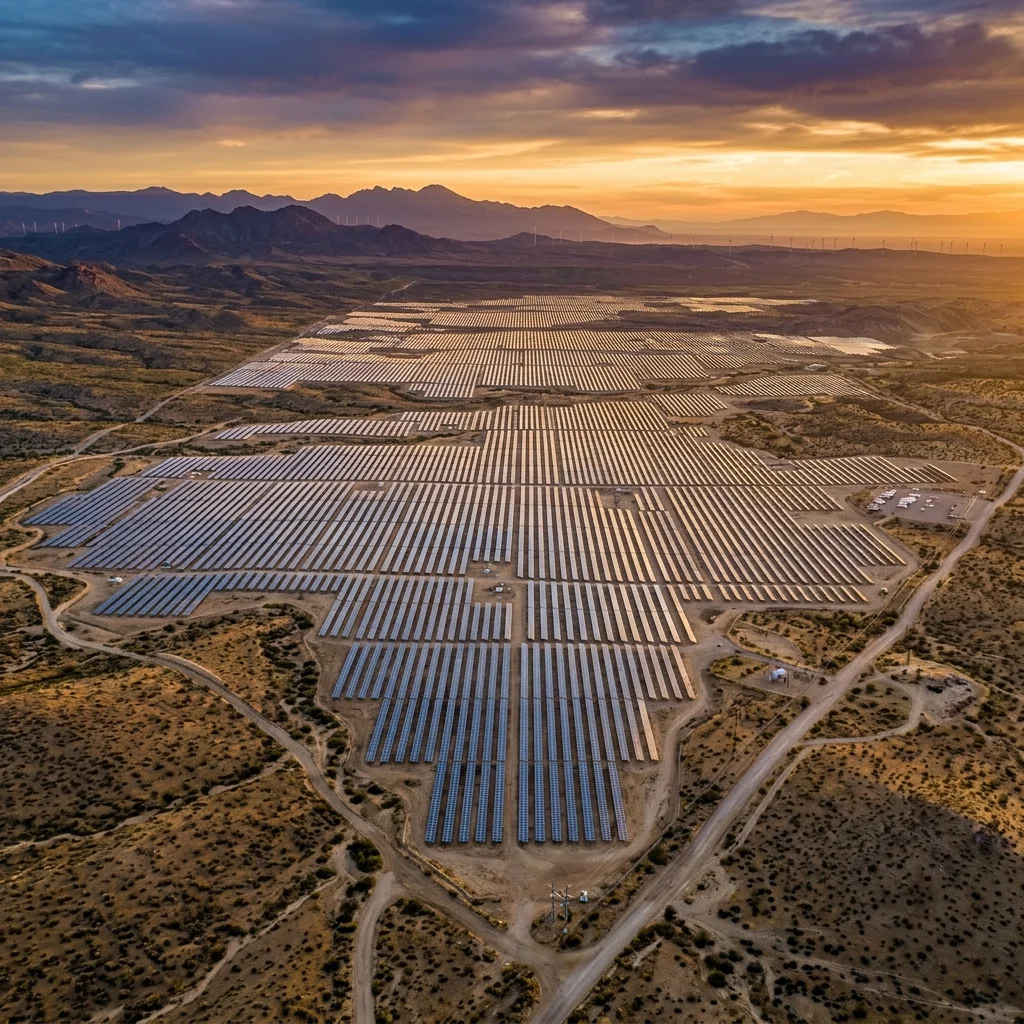
Renewable Energy Market 2025–2033: Asia Pacific Dominance, Solar Surge, and the Hidden Supply Chain Shifts
**Market valuation scaling from USD 1,602 billion to USD 4,860.85 billion represents a structural economic realignment, not merely sectoral growth.**
1. The 3x Growth Trajectory: What the Numbers Really Mean
The global renewable energy market is projected to expand from an estimated USD 1,602 billion in 2025 to USD 4,860.85 billion by 2033, registering a compound annual growth rate (CAGR) of 14.7% over the forecast period (Source: Grand View Research, Report ID: GVR-4-68039-975-0). This near-tripling of market capitalization within eight years signals a fundamental shift in global energy economics, not a cyclical uptick.
The historical baseline period of 2021–2024 already demonstrated accelerated deployment, with policy frameworks and cost curves aligning at rates exceeding prior decades. The 14.7% CAGR implies compound adoption rates that will place significant strain on existing manufacturing capacity, installation labor pools, and grid interconnection infrastructure. Market analysts project that sustaining this trajectory requires annual capacity additions that, by 2030, will exceed the total installed renewable capacity of 2020 by a factor of four.
Critically, this growth rate exceeds global GDP projections by approximately 12 percentage points annually, indicating that renewable energy is capturing an increasing share of total energy investment rather than merely expanding alongside economic output.
2. Asia Pacific’s 41.51% Share: Beyond Regional Dominance
Asia Pacific commanded a 41.51% revenue share of the global renewable energy market in 2025 (Source: Grand View Research). This dominance extends beyond consumption patterns to reflect the region's concentrated manufacturing infrastructure. China, India, and Vietnam collectively house over 75% of global solar photovoltaic manufacturing capacity and approximately 60% of wind turbine component production.
The economic logic driving this concentration is straightforward: lower labor costs, government-subsidized industrial parks, and proximity to rare earth mineral processing facilities. However, this geographic clustering introduces systemic supply chain risk. Trade tariffs between the United States and China, potential shipping route disruptions in the South China Sea, and mineral export restrictions could create supply bottlenecks affecting global deployment timelines.
Asia Pacific additionally leads in industrial end-use demand, linking factory electrification programs directly to renewable energy procurement. Countries like China are simultaneously the world's largest manufacturers of renewable equipment and the largest industrial consumers of the electricity those systems generate. This dual role creates a self-reinforcing cycle: industrial electricity demand drives renewable deployment, which in turn supports manufacturing scale economies that lower equipment costs globally.
3. Solar Energy at 31.61%: The Technology Winner and Its Hidden Bottlenecks
Solar energy led all renewable sources with a 31.61% revenue share in 2025 (Source: Grand View Research). This market leadership is attributable to three structural factors: levelized cost of electricity (LCOE) reductions of approximately 85% over the past decade, modular deployment characteristics enabling rapid scaling, and shorter project lead times compared to hydropower or offshore wind.
The hidden constraint lies in supply chain concentration for critical components. Polysilicon production remains heavily concentrated in China's Xinjiang region, while solar-grade inverters and tracking systems are manufactured predominantly in China, Germany, and Japan. Any disruption to these supply nodes—whether from geopolitical tension, trade disputes, or raw material shortages—would directly impact solar project economics globally.
Battery storage, listed as a distinct product entity within the market classification, functions as the critical enabler for solar's continued growth trajectory. Without sufficient storage capacity, solar generation value caps out at approximately 20-30% grid penetration due to the duck curve phenomenon—oversupply during midday hours and rapid ramp requirements during evening demand peaks. The industrial segment's dominance in end-use means that factory rooftop installations and utility-scale solar parks, rather than residential rooftop systems, constitute the primary deployment channels driving market expansion.
4. The Industrial End-Use Driver: Why Factories Are the New Frontier
The industrial segment accounted for the largest revenue share among end-use categories in 2025 (Source: Grand View Research). This distribution reflects the increasing prevalence of corporate power purchase agreements (PPAs), green steel production initiatives, and cement manufacturing decarbonization programs.
Industrial renewable energy demand operates under fundamentally different economic parameters than residential or commercial segments. Industrial offtakers exhibit higher price sensitivity, longer contract durations (typically 15-20 years), and greater willingness to co-locate generation assets with manufacturing facilities. These characteristics create stable, bankable revenue streams that reduce project financing costs by 50-100 basis points compared to merchant power sales.
The structural implication is clear: renewable energy has transitioned from an "alternative" energy source to a standard industrial input. Major manufacturing corporations now treat renewable electricity procurement as a core operational requirement rather than a corporate social responsibility initiative. This shift is particularly pronounced in energy-intensive industries: aluminum smelting, data center operations, and chemical manufacturing are increasingly locating new facilities in regions with high renewable energy availability and favorable PPA pricing.
The global shift toward low-carbon energy alternatives and increasingly stringent environmental regulations across developed economies continue to be significant growth catalysts for the renewable energy sector (Source: Grand View Research). These regulatory drivers interact with industrial demand through mechanisms like carbon border adjustment mechanisms in the European Union and renewable portfolio standards in multiple U.S. states.
5. Supply Chain Deep Audit: The Unseen Corner of the Market
The concentration of renewable energy manufacturing capacity—particularly for solar panels, wind turbine gearboxes, and battery cells—creates a paradoxical market structure. Equipment costs have declined dramatically due to Asian manufacturing scale, yet this same concentration introduces vulnerability to supply disruptions that could reverse cost trends.
Polysilicon prices experienced a 300% spike between 2020 and 2022 before normalizing, demonstrating the volatility inherent in concentrated supply chains. Similar dynamics exist for rare earth elements used in wind turbine permanent magnets and for lithium, cobalt, and nickel used in battery storage systems. The geographic concentration of mineral processing—China controls approximately 60% of lithium refining and 70% of cobalt processing—represents a structural risk that market participants must price into project economics.
Solar power enables greater renewable integration into existing grid infrastructure, but this integration requires transmission upgrades that typically have 5-10 year lead times (Source: Grand View Research). The mismatch between rapid solar deployment and slower grid expansion creates curtailment risks—situations where solar generation must be deliberately reduced because transmission capacity is insufficient. This curtailment risk is highest in markets with aggressive solar targets and underdeveloped inter-regional transmission infrastructure.
Market Outlook and Forecast Implications
The projected 14.7% CAGR through 2033 assumes continued cost reductions in manufacturing, stable policy support across major economies, and successful resolution of grid integration challenges. Any deviation from these assumptions—whether from trade disruptions, policy reversals, or technology bottlenecks—would alter the growth trajectory.
Investors should monitor four key indicators: polysilicon and battery metal pricing trends, corporate PPA volume and pricing data, grid interconnection queue lengths in major markets, and trade policy developments affecting renewable equipment tariffs. Policymakers face a different set of priorities: diversifying manufacturing geography through domestic production incentives, accelerating transmission permitting processes, and establishing strategic mineral reserve programs.
The renewable energy market's expansion to nearly USD 5 trillion by 2033 represents not merely an energy transition but a fundamental restructuring of global industrial geography. The regions and companies that control manufacturing capacity, mineral processing, and grid infrastructure will capture disproportionate value from this transformation, regardless of where final energy consumption occurs.